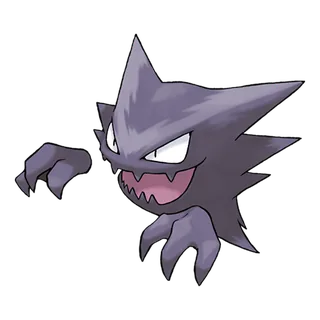
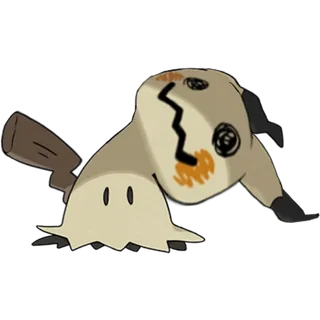
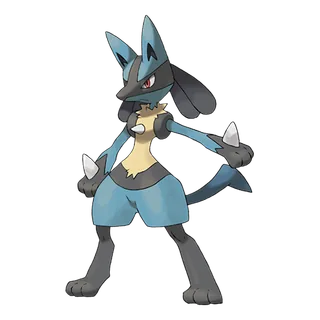
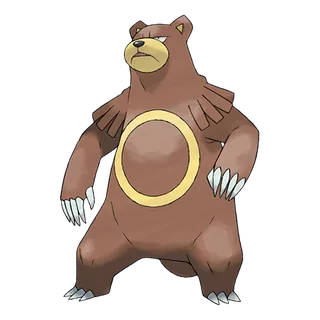
▶ 14 tales · told by the Pokémon themselves
Palash's Pokémon Shelf · Book 8
For Palash — who always knows what's rustling in the grass.
Fourteen Pokémon tell their own stories. A Magikarp who will not stop splashing. A Tatsugiri who bosses around a fish forty times its length. A Cubone who sings to the moon. A Mimikyu whose costume neck snaps — and the girl who mends it with her eyes shut. And two who almost never speak at all: Celebi, who remembers tomorrow, and Jirachi, who is awake for one week in every thousand years. Every tale is imagined. Every fact underneath it is real.
Every Trainer knows the feeling. The grass is up to your knees. Something rustles. Something is in there — and it has a story.
This book collects fourteen tales, each one told by a Pokémon in its own voice. Pokémon don't write books, of course — at least, no researcher has ever caught one doing it. So the tales are imagined. They are what a Magikarp or a Riolu or a Celebi might say if it could sit beside you on a log at the edge of the grass, at dusk, and talk.
But there is one rule, and every tale in this book keeps it: nothing a Pokémon does in its tale is allowed to be untrue about that Pokémon. If a Snorlax here eats a mountain of food, it's because researchers in Kanto recorded that it isn't satisfied with less than 880 pounds a day. If a Wishiwashi's eyes shine when it's in trouble, it's because the Alola Pokédex says they do. If a Dragonite flies out into a storm, it's because the Galar Pokédex says that when a Dragonite sees someone drowning, it simply must help.
After every tale comes a 📖 From the Pokédex box — what the region Pokédexes, professors' notebooks, town signs and shrine inscriptions really say, disagreements and all — and a line called Made up for this tale that owns up to the rest.
(One thing is imagined in every tale: here, every Pokémon understands what people say. A few really do — the Pokédexes record it of Lapras and Lucario — but for the rest, that part is storytelling.)
14 tales to read
Tap a Pokémon to jump to its tale. The paths run from the water's edge, over wind and waves, down the road, into the cold and the dark, and finally beyond time itself — but you can read them in any order. A Pokémon doesn't mind where you start.
Path 1 · By the Water
Path 2 · Wind and Waves
Path 3 · Down the Road
Path 4 · Into the Cold and the Dark
Path 5 · Beyond Time

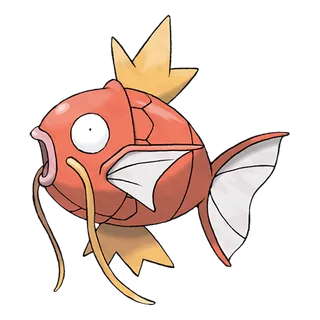
Told by a Magikarp who found its way home


Let's get this out of the way: I am the weakest Pokémon in the world. I know, because it's written down. Humans stand on the shore of my lake and read it aloud to each other from their Pokédexes, and then they laugh, and then they throw in a fishing line anyway.
Virtually worthless in power and speed, says one. The world's weakest Pokémon, says another — a Pokédex from a faraway place called Sinnoh — and then it adds the part I like best: that nobody knows why we've managed to survive.
I know why. I'll tell you at the end.
I hatched in the Lake of Rage, north of Mahogany Town, in Johto. There's a sign by the water that gives the lake its other name — Gyarados Lake — and every young Magikarp hears why. A Fishing Guru lives in a little house on the shore, and he says the lake isn't really a lake at all. It's a crater, he says, smashed into the ground long ago by rampaging Gyarados, which then filled up with rainwater. He says the story was handed down to him from his grandpa's great-great-grandpa. We heard him tell it to a visitor once, and the old ones in the reeds have been retelling it ever since, usually right before bed, which I've always thought was a strange choice.
So that was my first lesson. We are small, and we are silly, and we splash. But somewhere inside every one of us is a Gyarados — and Gyarados make lakes.
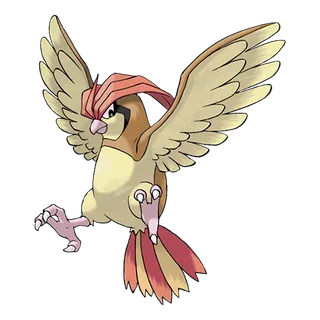
My second lesson came from a Pidgeotto.
Here is a thing about us that nobody can explain, including us: we jump. We jump and we splash for no reason at all. A Johto researcher wrote that this makes it easy for predators like Pidgeotto to catch us mid-jump, and I would like to say, for the record, that the researcher was right.
I was having a lovely splash one afternoon — a big one, my best ever, at least two feet clear of the water — when a shadow folded over me and something gripped me tight. The lake fell away beneath me. Mahogany Town's rooftops wheeled past. I could see the whole shining lake from above, round as a crater, and I remember thinking: the Guru was right.
Then I did the only thing a Magikarp can do. I flopped. I flopped so hard and so stupidly that the Pidgeotto lost its grip, and I fell — a long way — into a muddy pool beside Route 43, the road that runs south from the lake, with a splash that made a passing Rattata jump clean out of the grass.
The pool was brown. It smelled of old leaves and boot soles. Most Pokémon would have given up by morning. But here's the second thing the Pokédexes say about us, and they say it far less often, so listen carefully: we're hardy. The Hoenn records say a Magikarp can survive in any body of water, however polluted. Alola's say dirty water doesn't bother us at all. Long ago, in Hisui, Professor Laventon wrote in his notebook that murky water doesn't trouble us, which is why we turn up in all sorts of places. He also called us feeble and pitiful, but I've decided to forgive him.
I wasn't alone in that pool, either. Our swimming muscles are weak, so currents wash us along, and wherever water collects, Magikarp collect with it. There were nine of us in that puddle, all washed or dropped or tipped there one way or another, and the oldest was a Magikarp so faded and so scarred that the others called her Old Splash.
Old Splash had lived for more years than she could count. She had been everywhere a river could carry her. She knew things.
"Our ancestors were stronger," she told me, on my first night. "Not mighty. Just — somewhat stronger. The records say so in Kanto, and in Kalos, and in Paldea. We grew weaker over time. Nobody knows why."
"That's not very encouraging," I said.
"Wasn't meant to be. Here's another one. In Sinnoh and Unova, they say a Magikarp who lives for many, many years can leap clean over a mountain with a single Splash."
I stared at her. "Is that true?"
"The same records say Splash is still useless," said Old Splash. "So: yes. In the most useless way possible." She thought about it. "Johto's Pokédex says we never jump higher than seven feet. Well — the oldest record says never. A later one says usually not. I like the later one."
"Have you ever tried?" I asked. "The mountain?"
Old Splash gave a tiny splash, about an inch high. "Every morning," she said.
We lived in that pool through a strange season. People passing on the road talked, and puddles are very good for listening. A hiker said the Lake of Rage was full of Gyarados — only Gyarados, not a single Magikarp left. A girl said there was a red one, a huge red Gyarados, rampaging in the middle of the lake. A man said men in black had come to Mahogany Town, and that the lake hadn't been right since.
I thought of my brothers and sisters. I thought of the reeds where I hatched. I thought: that would have been me.
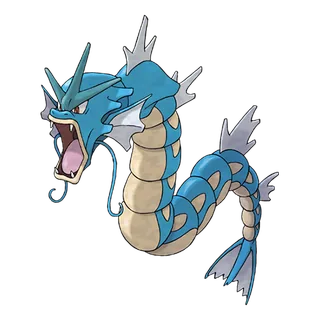
Because here is the thing every Magikarp knows and nobody says out loud. One day, we change. We become Gyarados — six and a half metres long, more than twenty times heavier, terrible and magnificent. And the Hoenn records say that when it happens, our brain cells change their structure, and that this is what's blamed for the Gyarados temper. An Alola record says the energy of evolution stimulates the brain so strongly that we become ferocious.


"Will I still be me?" I asked Old Splash. "After?"
She was quiet for a long time. Then she said, "The Gyarados who dug our lake — that's a story about what they broke. Nobody ever tells a story about what they remembered. Maybe nobody asked them."
Then, one morning, the people on the road said something new. The strange signal had stopped. A young Trainer and a tall man in a cape had gone into Mahogany Town and put an end to the men in black. The lake was back to normal. The Magikarp had come home.
I wanted to go home so badly my scales ached. But Magikarp can't climb out of puddles. We can't even swim against a slow current — a Sinnoh researcher wrote that down too. So I did the only thing I could do. I splashed. I splashed every hour of every day, the biggest splashes of my life, until a little boy walking up the road with a fishing rod stopped and looked into our muddy pool.
"There's a Magikarp in here," he called to his grandmother. "It's the loudest Magikarp I've ever seen."
He hauled me out into his fishing bucket, which was a squeeze, because a Magikarp is nearly a metre long, and my tail stuck out of the top like a bunch of flowers. He carried me — sloshing, furious, delighted — all the way up the road to the Lake of Rage, and straight to the Fishing Guru's door, because everyone knows the Guru dreams of seeing the biggest Magikarp in the world and will measure any Magikarp you bring him.
The Guru held me up to the light. He measured me from nose to tail. He looked at me for a long time.
"Not a record," he said at last. "But a fine, stubborn fish." And the boy tipped me back into the lake.
Then, because he was that kind of boy, he picked up his empty bucket and walked all the way back down the road. He did it eight more times that day, one Magikarp at a time, until the muddy pool was empty. I waited in the shallows and counted them in. Old Splash came last, in the evening, sticking out of the top of the bucket and looking extremely dignified about it.
I'm home now. The lake is full of Magikarp again, flopping and splashing for no reason, exactly as we should. Sometimes a Gyarados surfaces out in the deep water, huge and cold-eyed, and we all go very quiet. I look at it, and I try to imagine it small.
Old Splash isn't in the reeds any more. She went out into the deep water one spring and didn't come back — not as a Magikarp, anyway. But early in the morning, when the lake is very still, a huge, scarred Gyarados sometimes rises far out in the deep. It looks towards the shallows for a long time. And then it gives one tiny splash with its tail. About an inch high.
So now there's a story about what one of them remembered. This one.
And I think about the Alola Pokédex, which noticed something about us that the other regions never mention. It says our reckless leaps make us easy prey — but that, thanks to Magikarp, many Pokémon live longer lives. Pidgeotto. Things in the sky. Things in the deep. Half the lake depends on us, one way or another. We are, it turns out, holding up the whole world from underneath.
So that's why we've survived, Sinnoh. You asked. It isn't strength. It isn't speed. It's that we keep splashing. Every morning. Even when the mountain is very, very tall.

Told by a Wishiwashi who strayed from its school


I'm about as long as a pencil and about as heavy as a big apple, and everything that swims, flies or fishes in Alola would like to eat me.
That isn't me being dramatic. The Alola Pokédex says it plainly: Wishiwashi are awfully weak and notably tasty, so everyone is always out to get us. I find "notably tasty" very hurtful. I have never tasted myself, and I don't intend to start.
The same record says one more thing about us, which I'm saving for later.
I live at Brooklet Hill, on Akala Island, where the water steps down the hillside in pools and waterfalls, one below another, so that the whole place looks like a terraced field. Fishermen call it the best fishing spot in Alola. You can imagine how a Wishiwashi feels about that.
We live in schools — hundreds of us, packed tight as stitches, turning together like one thought. Because we're weak, the Pokédex says, we move in schools. But it also says that we're often seen all alone, having strayed from the school. That's me. I'm a strayer. I see a glint of something and I follow it, and when I turn round, the school has gone and the water is suddenly very big.
On the day of this story, I strayed all the way up to the top pool, chasing a sparkle that turned out to be a fisherman's lure. (I didn't bite. I'm small, not stupid.) High above me, two Wingull were circling.
Alola fishermen watch the sky for Wingull. Wherever Wingull are circling, they say, the water below is sure to be full of fish Pokémon. And the Pokédex knows exactly what those Wingull are hoping to find, because it says their favourite food is Wishiwashi.
I hid under a floating leaf. The Wingull circled. The fisherman on the bank pointed up at them, grinned, and cast his line right next to my leaf. This, I thought, is the worst day of my life.
It wasn't. The worst part was still coming up the waterfall.
It came from the bottom pools, where the big ones live. First a shadow, long as a boat. Then a crest like a broken fence. Then the head — a Gyarados, rising out of the pool below and sliding over the lip of the falls into mine, angry about something, the way Gyarados always seem to be angry about something. The fisherman dropped his rod and ran. The Wingull flapped off, squawking. And I was alone in the top pool with a Gyarados.
Here is what happens to a Wishiwashi in trouble. You don't decide it. It just happens. My eyes went wet — I was scared; I'm allowed to be scared — and the wetness began to shine.
The Alola Pokédex says that when we're in trouble, our eyes moisten and begin to shine, and that the shining light draws our comrades to us. A Galar record says it a little differently: when we sense danger, our eyes tear up, and the sparkle of our tears signals the others to gather. They're both right. I was crying, and I was glowing, and the glow went out of me like a lighthouse beam across every pool on Brooklet Hill.
Another Alola record says that light can be seen from almost twenty-five miles away. I believe it. It felt as if the whole island could see me.
They came.
Up the falls, down the side streams, out from under every stone — Wishiwashi, dozens of them, hundreds, each one a pencil-sized nothing with shining eyes, all swimming towards my light. They pressed against me. They pressed against each other. And then something happened that I can't describe very well, because I was in the middle of it: we stopped being many and became one. One great shape in the water, more than eight metres long, with one great face and one great will, and every single eye in it shining.


People have a name for us when we're like that. They call the school the demon of the sea, feared near and far. I have never in my life felt less like a demon. I felt like I was being hugged by everyone I'd ever met.
The Gyarados saw us and stopped.
And now I'll tell you the thing I was saving. That first Alola record — the one about being tasty — ends like this: anyone who tries to bully a Wishiwashi receives a painful lesson. And another Alola record says that when the school appears, even Gyarados flee. Our Water Gun, fired by all of us together, is stronger than a Hydro Pump.
We didn't even have to fire it. The Gyarados looked at the wall of shining eyes rising out of the pool, and it thought about it, and it turned around and slid back down the falls the way it had come.
Afterwards, the school loosened, and we were many again, and I was just me — pencil-length, apple-weight, a bit embarrassed. A Galar researcher wrote that when a school is wounded in battle, it scatters and its members become solitary again. We weren't wounded. We just scattered because we'd been squashed together for ages and everybody wanted a bit of room.
The oldest ones in our school remember a day when Captain Lana brought a young Trainer up to the deepest pool on the hill — the Totem's Den — where the mightiest school of all was already gathered, waiting. That school was a Totem Pokémon. It called for help — once, and then again — and help came: first another Wishiwashi, and then an Alomomola. I've never seen a Totem. But I know exactly how it felt, calling out like that. Everyone who has ever been small knows.
So here is my advice, from the weakest fish in Alola. (I've heard there's a Magikarp in Johto who claims that title. We should meet. We could have a splash-off.) If you're small, and you've strayed, and something huge is coming up the falls towards you — don't be ashamed to shine. Somebody is always looking for your light.

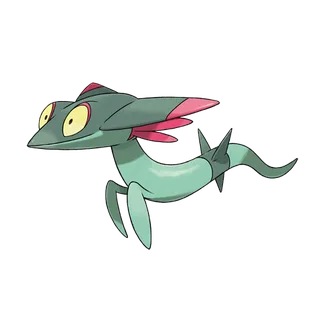
Told by a Droopy Tatsugiri (pink, and proud of it)


My house has whiskers.
Not many houses do. Most Pokémon live in nests, or burrows, or holes in trees. I live inside the mouth of a Dondozo. The Paldea Pokédex says Tatsugiri live there to protect ourselves from enemies on the outside, which is true, but it misses the best part: my house goes wherever I tell it to.
My Dondozo is called Gulp. I named him. He didn't mind; Dondozo don't mind most things. He is twelve metres long — forty times longer than me — and he's the strongest thing in Casseroya Lake, and he would do absolutely anything I asked, because, as another Paldea record puts it, a Dondozo treats its Tatsugiri like its boss and follows it loyally.
The same record adds that, though powerful, Dondozo is apparently not very smart. I would never say that to Gulp's face. I say it to the inside of his face, quietly, sometimes, when he swims into a rock.
There are three kinds of us, and I'll describe them fairly, even though I'm obviously the best one. Curly Tatsugiri are orange and curl upward, as if they're showing off. Stretchy Tatsugiri are yellow and lie flat and straight, like a dropped sock. And Droopy Tatsugiri — me — are pink, magenta really, and drape elegantly over our throat sacs. A Paldean researcher thinks our colours and patterns come from changing ourselves to suit the tastes of the prey we lure. I think it's simply style.


Because we're hunters. Small ones — and we know we're small, which is the whole secret. The Paldea records call Tatsugiri extremely cunning. A Curly pretends to be weak to lure prey in close, then orders its partner to attack. A Droopy, like me, plays dead. A Stretchy knows it's weak, so it never hunts without a partner. And what we're usually after is bird Pokémon.
So here's how a hunt goes. I float out on the surface, limp and pink and pathetic, the saddest thing on the lake. A Flamigo spots me from the shallows and thinks: free lunch. It wades closer, and closer, and at the very last moment I shout NOW! — and Gulp, waiting below like a sunken island, surges upward with his mouth open wide enough to swallow a rowing boat.
And misses. Usually. The Paldea Pokédex says Dondozo is a glutton but bad at getting food, and it isn't wrong. The Flamigo flaps away, offended. Gulp surfaces, puzzled. I climb back into his mouth and we try again tomorrow. Honestly, the hunting is mostly an excuse to spend the day together.
I trust Gulp completely. I'll tell you why.
When I was very small — smaller than now, which is saying something — two giants lived in our lake. A Tatsugiri and a Dondozo, both grown huge, far bigger than any of their kind should be, because they had eaten Herba Mystica: the Spicy kind, a rare and precious herb. People called the pair the False Dragon Titan, and everyone on Casseroya Lake knew to keep out of their way.
Then, one day, a boy called Arven, with an enormous backpack, came to the lake with a young Trainer, looking for that herb. I watched from the reeds. When they came close to the giant Tatsugiri, the giant Dondozo did something I have never forgotten. Before the battle had even begun, it swallowed its Tatsugiri. Not to eat it. To hide it. To keep it safe inside, where nothing could reach it, while the Dondozo fought in its place.
When the Dondozo was finally beaten, the giant Tatsugiri came out of its mouth and fought too — and lost, and fled. Later, after the herb was gone, I saw that same Tatsugiri back at the lake, normal-sized now, just like the rest of us. It still lives here. It doesn't like to talk about it.
That's when I learned what a Dondozo is really for. Not for hunting. Not for being clever. A Dondozo is a mouth that will close around you and keep you safe, whatever it costs him.
In battle, Gulp and I are terrifying. Battle researchers have a name for what I do: Commander. When Gulp is fighting beside me, I dive into his mouth and give the orders from inside, and his strength rises sharply — and while I'm in there, nothing can touch me. Gulp has a move called Order Up, and it gets an extra boost depending on which of us is giving the orders. A Curly inside sharpens a Dondozo's Attack. A Stretchy makes it faster. A Droopy — me — makes it tougher. I like that. I'm a defensive sort of genius.
Which brings me to Pepper.
Pepper is a Curly: orange, upward-curling and extremely full of herself. Pepper doesn't have a Dondozo. Pepper wants mine.
This happens more than you'd think. A Lumiose researcher wrote that Tatsugiri fight furiously among themselves over which of them gets to partner with a particular Dondozo, and they're right — there's nothing on the lake we squabble over more. Pepper had been circling Gulp for weeks, floating near him and pretending to be weak, which is a Curly trick, and I'm sure she thought I hadn't noticed.
One morning I went off to scout the shallows for Flamigo, and when I came back, my house was occupied.
"Morning," said Pepper, from inside Gulp's mouth. "I'm in charge now. Gulp — let's go."
And Gulp — loyal, powerful, apparently-not-very-smart Gulp — went. Because there was a Tatsugiri in his mouth giving orders, and that's what Dondozo do.
I swam after them as fast as my little fins would go. My cousin Noodle, a Stretchy, swam alongside and gave me helpful advice, which is the worst kind.
"We Stretchy have a rule," said Noodle. "Size it up. If there's no hope of winning, swim away as fast as you can. Just mentioning it."
Pepper was showing off. She'd spotted a whole flock of Flamigo standing on one leg in the shallows on the far shore, and she ordered Gulp to charge. Gulp charged. The Flamigo, very sensibly, flew away. And Gulp — twelve metres long and going very fast — ran straight up out of the deep water and onto the mud flats, where he stopped, and lay there, huge and stuck and confused, with the lake lapping at his chin.
Pepper climbed out of his mouth, took one look at the situation, and swam off as fast as she could. (Apparently Curlies do that too.)
So it was me. Pink, droopy, ruler-sized me, and a stranded Dondozo the size of a ferry.
Here's the thing about being one of the most intelligent dragon Pokémon — which a Paldea record says Tatsugiri are. When you're small and the problem is huge, you don't push the problem. You think.
Gulp can't climb. But a Lumiose researcher once wrote that a Dondozo's body is so enormous it stirs up great waves when it thrashes. So I climbed up onto his head and shouted my orders right into his ear.
"Thrash, Gulp! Left! Now right! Left! Right!"
He thrashed. The lake heaved. A wave rolled off his side, slapped against the bank and came rolling back — bigger. He thrashed again, and again, each wave lifting him a little, sliding him a little, until, with one final enormous wallop, the water picked him up and carried him off the mud and back into the deep, where he sank happily to the bottom and opened his mouth.
I swam in. It was dark and warm and smelled of lake water and last week's dinner. Home.
"Good boy," I told the inside of his face. "Boss is back."

Told by an old Lapras who carries people between the islands


Every evening, when the sun sinks into the sea between the islands of Alola, I sing.
I don't decide to. It rises in me the way the tide rises — a long, low note that goes out across the water and keeps on going. People who hear it stop whatever they're doing. The Alola Pokédex says that when a Lapras is in a good mood it sings in a beautiful voice, which is kind of it. The Galar Pokédex says our song echoes around us as we glide across the sea. That's closer. You don't sing a Lapras song so much as let it out.
But it wasn't always a happy song. When I was young, it was a question.
My mother taught me our history the way all Lapras mothers do: in cold water, under the stars. She told me that our kind have gentle hearts and rarely fight — and that because we rarely fight, people caught a great many of us, until our numbers dwindled away to almost nothing. The Kanto Pokédex says it bluntly: Lapras were hunted almost to extinction. The Hoenn records say people drove us to the very edge, and that in the evenings a Lapras was said to sing sadly as it searched for the few others of its kind still left.
"That's what the song is for," my mother said. "We sing to find each other."
She told me one other thing, only once, very quietly. "One night," she said, "a Dragonite came down out of a storm onto the boats that were hunting us, and smashed every net and every cage on their decks to smithereens. After that night, those boats never came hunting again." She never found out where it came from. Neither have I. But I have never once seen a Dragonite cross the sky without singing to it.
So when I was young, I sang every evening, out past the reef, and then I listened.
Mostly, nothing answered. The sea is very big, and one Lapras's voice is very small inside it. I sang for whole seasons into the dark and heard only the waves — and once, just once, a faint reply, so far away I thought I'd dreamt it.
Things changed slowly, the way the sea changes. People made rules: no more catching Lapras to sell, no more hunting us. The Alola Pokédex records that we were once near extinction because of poaching, and that after the protective rules came in, there came to be an overabundance of us.
I didn't know any of that at the time. I only knew that one evening I sang my question out past the reef, and three voices answered. The next year, nine. Then I stopped counting. Now when I sing at sunset, the whole sea sings back — dozens of us, a chorus rolling across the water between the islands — and the question has turned into something else. A roll call. Here. Here. Here.
These days I work. In Alola, Lapras are an important way to travel over the water — the Pokédex says so, and anyone who has ridden one will agree. I carry people between the islands: fishermen, grandmothers with baskets, Trainers out on their island challenge.
My mother used to tell me about Lapras in a faraway land called Galar who could grow so enormous that more than five thousand people could ride on one shell at once — with no shaking or swaying at all — wrapped in a great ring of ice that smashed any iceberg in their way. I've carried four people at once, on a calm day. I think about those Galar Lapras every time a grandmother climbs aboard with three baskets.
My favourite passengers are two children called Kai and Noe, whom I carry every week from their little island to their grandfather's house on Akala.
Children are the best passengers, because they talk to me. Most grown-ups talk about me — "isn't it big," "isn't it gentle" — as if I were a boat. Children whisper things straight into my neck, because they know what the Pokédexes say: Lapras understand human speech. Researchers in Kanto, Sinnoh and Alola have all recorded it. One old Kanto record goes further and claims we can read people's minds. I'll let you decide about that one.
Noe likes to lie flat on my shell with her cheek pressed against my neck. "You're cold," she told me once, delighted. The Galar Pokédex agrees with her: a Lapras's smooth skin is a little cool to the touch. We're built for icy seas. To me, the warm Alola water feels like a bath.
Kai is older, and he worries more. One morning, halfway across, he leaned down and whispered something he'd been holding in for days.
"Grandpa says there are too many of you now."
I almost stopped swimming.
"He says the fish are going," Kai went on, miserably. "His nets come up half empty. He says it's because there are so many Lapras. He doesn't hate you. He's just… worried."
Too many. I had spent my whole youth singing into an empty sea, begging for just one more voice. And now there were too many of us?
But I am old enough to know that the sea doesn't lie, and neither, usually, do the Pokédexes. There's an Alola record that says it plainly: Lapras have been so cherished that there are now too many of us, and in waters with too many Lapras, the fish Pokémon have grown fewer. I had seen it myself and not wanted to see it. Fewer Wishiwashi glinting in the shallows. Fewer Magikarp splashing. Pelipper flying further and further out to fill their great beaks.
That evening, I swam out past the reef, and I didn't sing a question, and I didn't sing a roll call. I sang a new kind of song — a travelling song. Cold water is no trouble to a Lapras; we were made for it. There are empty bays and quiet coasts out there, whole stretches of sea where no Lapras sings at all. I sang about them. And some of the young ones listened, and turned their heads towards the open water.
I stayed. Somebody has to carry Kai and Noe to their grandfather's. But the young ones went — north, and south, and out to the quiet waters — and the bay where Kai's grandfather fishes grew a little roomier. By the next summer his nets were coming up heavier, and he'd started waving at me from his boat.
Every evening at sunset, I still sing. Now the answers come from far away: a voice from the north, a voice from the open sea, a voice from somewhere I've never been. Fainter than the chorus used to be. But I know exactly who they are.
That's the thing my mother never told me, because she never got the chance to find it out. The song isn't only for finding each other. It's for staying together when you're far apart.

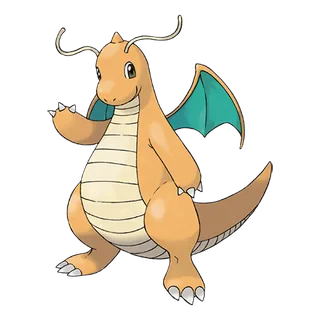
Told by a Dragonite who cannot ignore a cry for help


I can fly around the whole world in sixteen hours. Researchers in Hoenn wrote that down, and records from Kanto, Kalos and Paldea agree — and every one of them sounds a little surprised that something built like me, big and round and bulky, with wings that look far too small, can fly at all.
I don't usually fly around the world. Usually I fly in slow circles over one grey stretch of sea, listening. Because the other thing they wrote about me is truer, and it's the reason I'm telling you this tale. A Galar record puts it best: if a Dragonite spots a drowning person or Pokémon, it simply must help.
Must. Not "likes to." Not "often does." Must. I couldn't stop if I tried. I've tried.
I wasn't always big. I began as a Dratini — long and thin and blue, a ribbon of a thing — in a pool at the foot of a waterfall. The water came down so hard and so loud that nothing could get at me behind it, and that was the point. A growing Dratini sheds its skin almost every day, layer after layer, and a rapid waterfall keeps it safe while it's soft. I used to leave my old skins drifting in the pool like pale ribbons. A fisherman found one once and held it up to the light and shouted to his friends, and none of them believed him.
That's why people call Dratini the Mirage Pokémon. So few have ever seen one that, for a long time, everyone thought we were only a story — right up until somebody found a small colony of us living underwater. Fishermen still tell of one of their own who fought a Dratini on his line for ten hours before he finally pulled it up. I like that fisherman. He didn't give up, and neither did the Dratini.
There was a lump on my forehead in those days — a horn, still coming in. It itched terribly.
Then I was a Dragonair — four metres of shining blue, with crystal orbs at my neck and tail — and I learned about people.
My lake lay in farming country, and the farmers believed that Dragonair could control the weather. Farming people have revered us that way since time immemorial, and they'll tell you that when a Dragonair's body takes on an aura, the weather changes. I'm not going to tell you whether I ever made it rain. I'll only tell you that the farmers filled my lake with offerings — flowers, rice cakes, little carved boats — the way people do wherever Dragonair live.
And every New Year's morning, I rose out of the lake and twisted through the sky above the fields, as high as I could, as beautifully as I could. There's an old belief that if you see a Dragonair twisting through the sky at the start of the year, you'll have good health all year long. I wanted my farmers to be healthy. They had given me so many rice cakes.


And then I was a Dragonite, and the sea called me, the way it calls all of us.
Nobody quite agrees on where we live. Several regions' Pokédexes say we're said to make our homes somewhere in the sea. One old Kanto record insists that's only a rumour. A Johto record and a Paldea record say there's an island somewhere in the ocean where Dragonite gather, and only Dragonite live there. That one's true. I won't tell you where it is. Sailors tell of a shipwrecked man a Dragonite once carried there — a paradise, he called it, with nobody on it but us. I don't know what became of him afterwards. I hope someone flew him home.
Mostly, though, I fly. I cross storms the way you'd step across a puddle; we're built to fly over raging seas without any trouble at all. Long ago, a ship's captain watched one of us crossing a storm and gave us a name sailors still use: the Sea Incarnate. In Galar, many ships carry a carved Dragonite on their bows. Figureheads, the sailors call them.
This is the part of my story I tell most.
There was a storm — not an ordinary storm, a two-day storm, the kind that turns the sea into mountains. I was riding the top of it, listening, the way I always do, when I heard a ship's bell far below, ringing and ringing, the way a bell rings when the people on board have lost their way.
I went down through the rain. And there it was: a fishing ship from Galar, its lamps flickering, its mast cracked, wallowing in waves taller than its sails. And on its bow, streaming with seawater, was a carved wooden Dragonite.
I can't explain what it's like to see your own face on a ship, lost in a storm, looking hopefully into the dark. I'll only say I didn't think about it for long.
Every Dragonite knows how to lead a lost ship home through a storm. Here is how it's done. You fly low, right in front of the bow, close enough that the crew can see your shape through the rain, and you don't go too fast. You fly ahead and wait. Fly ahead and wait. And the ship follows you, because what else is it going to follow?
Halfway home, a wave broke over the deck and took someone with it — a boy, the cook's son, who should have been below. I heard him hit the water. I heard him shout.
Must. Not "likes to." Must.
I dived. The sea is very dark under a storm, and very cold, but a Dragonite's arms are strong, and I had him before the next wave came. I flew him back up and set him down on the deck in front of his father, coughing and furious and alive, and then I went straight back to the front of the ship and carried on leading it home as if nothing had happened, because the ship still needed me.
We reached the harbour at dawn. The whole crew stood at the rail to watch me go. The captain — an old woman with a voice like gravel — called out the old name for us, loud enough to carry over the waves.
"Sea Incarnate!" she said. And then, more quietly, to the cook's boy: "Told you that carving was a good likeness."
People sometimes ask whether I'm ever angry. A Dragonite is normally calm — but an Alola record warns that if you anger one, it will smash everything to smithereens before it's satisfied. I've been angry like that exactly once, at some people who were doing something they shouldn't have been doing to a Lapras. That isn't a story for the evening, and I won't tell it.
What I will tell you is this. An old Kanto record says a Dragonite's intelligence is said to match a human's. I don't know about that. I do know that I have never once been able to fly past a bell ringing in the dark. If that's intelligence, I have plenty. If it's something else, I have that too.

Told by a Dreepy who wants to go faster


I'm a ghost. Did you know that? I used to be alive, a long, long, long time ago, when the sea was somewhere else and everything was different.
I don't remember much about it. Ghost memories are like trying to remember a dream while you're brushing your teeth. But the Galar Pokédex says that Dreepy are ghosts reborn from creatures that lived in prehistoric seas, and that we wander the places we used to live back when we were alive. So I wander. By day I drift around the Lake of Outrage, in Galar's Wild Area, where the water is wide and deep and very old. Maybe there was a sea here once. Maybe I swam in it. I like to think so.
Anyway, that's not the important part. The important part is this: I want to be launched.
Let me explain my situation. On my own, I'm so weak — this is from the Galar Pokédex, which is very rude — that a mere child could defeat me. I'm half a metre long. I weigh two kilograms. My best attack is a sort of hard nudge. If I bumped into you in the dark, you'd think a sock had fallen on you.
But that very same record says something else: if a Dreepy has friends to help it train, it can evolve and become much, much stronger. So I have friends. Lots. There are eleven of us who drift about together, and every evening we do what Dreepy do. A Paldea record describes it almost exactly — it says the ocean, and ours is a lake, but it's the same idea: in the evening, groups of Dreepy fly at high speed over the water and poke at the Pokémon in it, for fun.
We poke anything that's swimming. We once poked something very large and very patient, and after that we stopped poking large things forever. And we bite Clauncher.
I can't explain the Clauncher thing. I just see a Clauncher and — chomp. Not to eat it! I don't eat. I'm a ghost. I just bite it, and it's furious, and I feel strangely satisfied. Paldean researchers think this is a leftover habit from when we were alive — something we used to do in the old seas, that our bodies still remember even though we've forgotten why. I think that's beautiful. The Clauncher does not.
Our Drakloak is called Nanny. We didn't name her that; she named herself, more or less, by being one. The Galar Pokédex calls Drakloak the Caretaker Pokémon. She battles alongside us and dotes on us, and she'll keep on doing it until every one of us has grown up and evolved. She flies at over a hundred and twenty miles an hour with Dreepy riding on her head, and she is never, ever happy unless she has a Dreepy up there.
I mean never. A Galar record says that without a Dreepy on its head to care for, a Drakloak gets so uneasy that it will try to substitute any Pokémon it can find. Last spring, when all eleven of us were off poking things, Nanny panicked and put a Wooloo on her head. The Wooloo was not consulted. It sat up there for a whole hour, bobbing gently, looking out over the Wild Area with an expression I will treasure forever.
There's another record about Drakloak that I'm less proud of. A Paldean researcher wrote that if a Drakloak is defeated in battle, its Dreepy just wander off without a second thought. …That's true. It isn't that we don't love Nanny. It's just that we're ghosts, and ghosts drift. We always come back. Eventually. Usually by dinnertime, even though we don't eat dinner.
And no, Nanny isn't our mother. Nobody has ever recorded where Dreepy come from, apart from the bit about being alive once in a sea. Drakloak and Dragapult just look after us. That's enough.


But Nanny isn't the one I dream about. The one I dream about is Old Fang.
Old Fang is a Dragapult — the fastest Dragapult on the whole lake. A Dragapult has holes in its horns, and when it isn't battling, it keeps Dreepy in them, snug as peas in a pod. And when a fight starts, it launches them. A Galar record says Dragapult fire their Dreepy like supersonic missiles. Another Galar record says — and this is my favourite sentence in any Pokédex anywhere — that the Dreepy riding in a Dragapult's horns apparently can't wait to be launched at Mach speeds.
Can't wait! At Mach speeds! I have never wanted anything so much in my life, and I've been dead for longer than anyone can count.
A Paldea record says the fastest Dragapult in a group is always surrounded by Dreepy who want to fly at sonic speed. That's Old Fang. Every evening there's a crowd of us buzzing around her head, begging. "Me! Me! Launch me!" And every evening she says the same thing.
"Not until you've trained."
So I trained. I raced the others over the waves until I could beat all of them but one. I practised dodging. I practised my nudge until it was more of a thump. I let Nanny carry me into practice battles, and I didn't wander off, not once, not even when it got boring. I trained with friends to help me, exactly the way the Pokédex says, and I could feel it working — a sort of humming in my tail, as if I were becoming more real.
And one evening, Old Fang looked down at me and said, "All right. Left horn."
I don't know how to describe the inside of a Dragapult's horn. It's a tube. It's dark. It smells of dragon. A Paldea record says that when a Dragapult clears its mind and focuses, its whole body turns transparent — and so do the Dreepy in its horns. Old Fang did that, and suddenly I could see the lake straight through my own tail, and through her horn, and through her, as if all three of us were made of glass.
A Trainer had come out to the lake looking for strong Pokémon, and her Corviknight came swooping in, steel wings flashing. "Ready?" said Old Fang.
"YES," I said. Or possibly screamed.
Battle researchers call it Dragon Darts: the user attacks twice, using Dreepy. Two of us, in other words. The other horn held Pip, my best friend, who'd been training even longer than me. Old Fang lowered her head, and there was a sound like the sky tearing in half —
— and I was going.
I can't tell you what Mach speed feels like, because it's faster than feelings. The lake was a blur, the sky was a blur, Pip was a blue streak on my left, and then there was a clang as I hit the Corviknight's armour and bounced off in a spray of sparks and spun away laughing — completely, wildly, unforgivably happy.
The Corviknight decided it had somewhere else to be. Old Fang flew down, scooped Pip and me out of the reeds, and slotted us back into her horns.
"Well?" she said.
"Again," I said. "Again again again again."
She laughed — the first time I'd ever heard a Dragapult laugh. "That's what they all say," she said. And she was right. It's in the Pokédex.

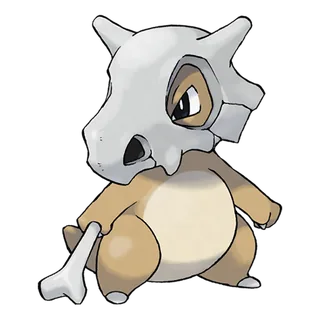
Told by a Cubone at the Volunteer Pokémon House


No one has ever seen my face.
That's the very first thing the Kanto Pokédex ever wrote about Cubone, long ago: that we never take off our skull helmets, so nobody has ever seen our real faces. That's all it said. It didn't say whose skull it was. Later records said more. They said it was our mothers'.
I don't remember mine. A Johto record says a Cubone loses its mother after it's born, and that's all I know about it, and it's all I want to say about it here. What I remember is the helmet. It's the first thing I ever remember. It has always been on. It always will be.
I live in Lavender Town, in Kanto, where the evenings come early and purple. Lavender is a small, quiet place, and people know it for one thing: it's the town where Pokémon are remembered. In the middle of town stands Pokémon Tower, tall and narrow, floor after floor of quiet gravestones, where people come to honour the Pokémon they have lost. There's a sign by its door that says May the Souls of Pokémon Rest Easy. People read it, and go quiet, and go in.
I don't live in the tower. I live in the Volunteer Pokémon House, where Mr. Fuji looks after Pokémon nobody else is looking after. Abandoned ones. Orphaned ones. Ones like me. Mr. Fuji is very old and very kind, and he spends a lot of his evenings up in the tower, praying for Pokémon he never even met.
Here is my trouble.
On nights of the full moon, I cry. I don't want to, and I can't help it. I look up, and the moon is round and pale and gentle, and I see something in it — a face, a shape — and the Hoenn Pokédex says that's what Cubone do: we see a likeness of our mothers in the full moon, and we cry. The stains on my helmet come from my tears. Every Cubone's helmet has them.
And when I cry, the helmet makes a sound. It shakes. It rattles, hollow as a drum. And then the crying echoes round and round inside it and comes out the other side as something else: a sad melody.
A melody. That's exactly what it is. When I cry, the whole helmet hums with it: a low, sad tune I didn't write and can't stop. On full-moon nights, the other Pokémon in the House turn over in their sleep and pull their tails over their ears. I don't blame them.
One full-moon night, I couldn't stand it any more, and I slipped out. I didn't want the others to hear me. I thought: the tower is tall. If I climb to the very top, nobody will hear me at all, and I can cry at the moon as much as I like.
Lavender Town at night is very still. Pokémon Tower was dark except for the moonlight falling through its high windows, and I climbed the stairs past rows of quiet gravestones, floor after floor, and somewhere around the fifth floor I noticed a smell.
It was sweet. Faint and sweet, like sugar left out overnight. And in a corner, a light was flickering — a small, strange, wobbling purple light.
An Alola record says that when a Gastly is near, a faint sweet smell lingers. Another says that if a strange light is seen flickering in a dark, empty building, a Gastly is lurking there. I didn't know either of those things at the time. I only knew that the light had eyes.
"Who's crying?" said the Gastly.
I wanted to say nobody. But my helmet was humming the sad tune all by itself, so there wasn't much point.
The Gastly drifted closer. It was mostly gas — ninety-five percent gas, if you believe the Pokédexes — and it wobbled when it moved, like smoke deciding which way to go. "We can hear it from here, every full moon," it said. "There are seven of us. We like it."
"You like it?"
"It's the only thing in this tower that sounds like it means something," said the Gastly. "Everything else just whispers. Come up. The others are at the top."
On the sixth floor, the Gastly slowed down and went quiet, the way you go quiet in a library. "Someone used to stand here," it whispered. "A Marowak. She lost her life trying to get away from Team Rocket with her Cubone, and afterwards she wouldn't leave. You could only see her properly through a Silph Scope."
"What happened to her?"
"Mr. Fuji came up to pray for her, and a Trainer came and calmed her, and then she just — went. Peacefully. Like a lamp being turned down." The Gastly wobbled. "Nobody up here knows for certain what became of her Cubone."
I stood on that floor for a long time. And for the first time in my life, the helmet felt less like something I'd lost, and more like something somebody had left me on purpose.
On the top floor, beneath a big open window, six more Gastly were huddled together, and the moon was right there, enormous, filling the window like a plate.
But the wind was rising. And the thing about Gastly — the thing every Gastly is afraid of — is wind. Their bodies are so nearly all gas that a strong gust can blow them right away. The records say groups of them cluster under the eaves of houses on windy nights, just to hold themselves together.
A gust came howling through the window. The smallest Gastly squeaked and began to stretch out thin, thinner, like a scarf being pulled — and before I'd even thought about it, I had stepped in front of the window with my arms out.
I'm only forty centimetres tall. But I'm solid, and I'm stubborn, and I planted my feet. The wind broke against me like water against a rock. Behind me, the Gastly bunched up in the shelter of my shadow, and the gust passed, and the next one, and the next.
We stayed like that for a long time. And somewhere in the middle of it, with the moon in front of me and seven Gastly behind me, I noticed that I was crying again — and that my helmet was humming its tune again — but it didn't sound the same. The Gastly had gone quiet to listen. The tune wasn't for nobody any more. It was for them. It was the only warm thing on that cold floor, and it was mine, and I was giving it away.
A Galar record says that sometimes a Cubone's dreams make it cry — but that each tear it sheds makes it stronger. An Alola record says some people believe a Cubone evolves when it comes to terms with the pain of losing its mother. I don't know exactly what "comes to terms" means. I only know what happened next.
The wind dropped. The moon slid past the edge of the window. And I began to glow.
When it was over, I was taller — a whole metre tall — and the bone in my hand felt different: sure and heavy, as if it had always been waiting for me to grow into it. The Gastly were staring at me. "You got bigger," said the smallest one, accusingly.
I was a Marowak. The Hoenn Pokédex says a Marowak is a Cubone that has overcome its sadness and grown tough, with a tempered spirit that is not easily broken. The Galar Pokédex says it overcame its sorrow to evolve a sturdy new body.


I didn't feel as if I'd overcome anything. My mother was still gone. The moon still looked like her. But I felt as if I could carry it now, the way I carry my bone. Not lightly. But steadily.
I walked home through Lavender Town at dawn. Mr. Fuji was already up, standing in the doorway of the House, and he looked at me for a long time and didn't say anything at all — which is the kindest thing anyone has ever said to me.
Marowak can talk to each other with our bones. We pound on boulders with the bones we carry, tapping out messages to one another, and there are nearly fifty different rhythmic patterns. I've learned eleven so far. There's one that means here I am. There's one that means danger. And there's one I made up myself, which no other Marowak knows yet, which goes tock, tock-tock, tock, slowly, like a heartbeat.
I tap it on the big stone behind the Volunteer House on full-moon nights. If you're ever in Lavender Town and you hear it, that's me. It's the old sad melody, played on a drum instead of a helmet. It means: I remember. And I'm still here.

Told by a Snorlax, between naps


Mmm.
Oh. You want a story.
All right. But I'm lying down for it.
Let me tell you about my day. My day is: eat. Then sleep. Then eat. Then sleep. The Kanto Pokédex wrote that down a long time ago — very lazy, just eats and sleeps — and the Hoenn Pokédex agreed, and I've never seen any reason to argue. Arguing is effort.
How much do I eat? Kanto, Kalos and Galar researchers say a Snorlax isn't satisfied unless it eats over 880 pounds of food every day. Sinnoh, Alola and Paldea researchers say nearly 900. I don't know what a pound is. I know that I weigh 460 kilograms, and that I eat very nearly my own weight in food every single day, and then I fall asleep, sometimes in the middle of a mouthful. An Alola record says I keep on eating even while I'm asleep. I would like to state, for the record, that this is a skill.
I'm not fussy. I'll eat food that's a little mouldy and never get an upset stomach. My stomach's juices can dissolve any kind of poison. Even Muk's poison is nothing more than a hint of spice on my tongue — the Alola Pokédex says so, and it's right. I've tried it. It's nice on berries.
My grandmother used to tell a story she was very proud of. Long, long ago, in Hisui, a professor called Laventon wrote that Snorlax would turn up in villages without any warning and eat entire rice granaries — and that this was counted among the gravest of disasters. My grandmother said that was our family's finest hour. I'm not sure it was. But I've always wondered what the rice tasted like.
Now. The road.
There's a road in Kanto called Route 12 that runs south from Lavender Town along the edge of the sea. It's a good road. Warm. Flat. A nice breeze off the water. Fishermen on the long bridge. I came down out of the mountains one afternoon because I could smell something delicious on the wind, and I ate it — I don't remember what it was — and then I lay down right there in the middle of the road for a little nap.
The nap went well. It lasted some time.
I'm told that, while I slept, quite a lot of people needed to use that road and could not, because I was on it. I'm told people climbed on me. Children, mostly. That's fine. Snorlax are so gentle that some children use our big bellies as playgrounds, and once my belly is full I'm too sluggish to lift a finger, so it's perfectly safe to bounce on me. I don't mind at all. It's like being patted, but from above.
I'm told people tried to wake me. They shouted. They poked. What they heard, they say, was a deep rumbling that might have been my cry. A Johto record says that what sounds like a Snorlax's cry may actually be its snoring — or its hungry belly rumbling. It was both.
And then a young Trainer came along with a Poké Flute.
I didn't know where it came from at the time. I found out later: an old man in Lavender Town, Mr. Fuji, had given it to that Trainer as a thank-you. It plays a tune that wakes up sleeping Pokémon. Any sleeping Pokémon. Even me.
Here's what it's like to be woken by a Poké Flute. You're deep, deep down in the warm dark, dreaming about a pie the size of a house, and then — a tune. A bright, piercing, cheerful tune that goes straight through your ears and grabs your brain and yanks it up to the surface like a fish on a line.
I was very grumpy.
I'm not proud of it. But a woken-up Snorlax attacks in a grumpy rage — everybody on Route 12 will tell you so — and I did. I sat up (the road shook) and I roared (the fishermen dropped their rods) and I battled that Trainer's Pokémon with all the grumpiness I had, which is a lot, because I'm very big and grumpiness takes up space.
And then, somewhere in the middle of the battle, I forgot what I was angry about. That happens. I yawned an enormous yawn, so wide the fishermen on the bridge could count my teeth. And then I turned around and plodded back to the mountains to find a quieter spot.
You want to know about when I was small. All right.
I was a Munchlax once. A Munchlax is a round little thing that hides food under its long fur and then forgets it's there. Sometimes the forgotten food causes what the Alola Pokédex politely calls a stinky disturbance. I'm not going to comment on that.


Munchlax swallow almost everything without chewing and don't care in the slightest about flavour. Munchlax don't share. Except — and this is in the Galar Pokédex, so it must be true — a Munchlax might share just one bite. But only with someone it really trusts.
There was a girl. Her family had a farm at the foot of the mountains. I used to visit the compost heap behind her barn — Munchlax have gone into villages looking for scraps meant for compost ever since the days of Hisui — and she used to sit on the fence and watch me eat. She never tried to catch me. She never shouted. She just brought me apples, one at a time, and told me about her day.
One evening, I reached under my fur, found the very best thing I had hidden there — a honey cake, slightly squashed, from who knows when — broke off one bite, and held it out to her.
She ate it. It must have been terrible. She said it was the best cake she'd ever had.
Not long after that, I grew. Fast. A lot. One morning I didn't fit behind the barn any more.
Battle researchers say a Munchlax evolves once it has grown very fond of its Trainer. I never had a Trainer. But I had a girl on a fence with a pocket full of apples, and I think that counted. I think it was the cake.
She's grown up now. People grow up even more than Snorlax do, in a way. She runs the farm, and I still visit — mostly at harvest time, mostly to lie down in the top field.
Last autumn, her grandfather's hay cart slid off the mountain road in the rain and stuck fast in the mud at the edge of a drop. His Tauros couldn't shift it. The neighbours couldn't shift it. And she came running up the top field, shouting my name — which I didn't know I had until then.
There's an Alola record that says a Snorlax doesn't do anything except eat and sleep — but that when it's prompted to make a serious effort, it apparently displays awesome power. That day, I was prompted. I got up — all of me — and walked down to the road, and put my shoulder against that cart, and pushed. Mud sprayed. Wood creaked. The whole cart came up out of the ditch like a cork out of a bottle and rolled back onto the road, and the grandfather sat down in a puddle and laughed and laughed.
Then I lay down in the road.
Effort is very tiring.
The children came and bounced on me. I didn't mind. It's like being patted, from above.
Mmm.
…Zzz.

Told by a Ditto with a memory problem


I can be anything.
That isn't bragging; it's science. Kanto researchers wrote that a Ditto can copy the genetic code of something in front of it and instantly turn itself into a duplicate. Sinnoh researchers say we rebuild our entire cell structure to become whatever we see. A Johto record calls our transformations perfect.
Perfect. Remember that word. It's going to be funny later.
I live in Paldea, out in the rolling grassland of the West Province. Researchers there have noticed that some of the wild Pokémon in this area aren't quite what they seem — that wild Ditto hide among them, disguised as other Pokémon. That's us. That's me. On any given day, I might be a Lechonk snuffling for roots, or a Skwovet with its cheeks full, or a rock.
The trick is to copy something while you're looking right at it. A Lechonk trots past; I look at it; I think hard; and — blorp — now there are two Lechonk, both sniffing the ground, both turning up their snouts at anything but the finest food. Nobody can tell the difference. Perfect.
The problem is memory.
The Hoenn Pokédex says that when a Ditto tries to transform by relying on its memory, it gets the details wrong. An Alola record says the same thing: if the thing isn't right in front of us, we rely on memory, so sometimes we fail. Another Alola record says that each Ditto has its own strengths and weaknesses when it comes to transforming — and a third says the quality of the copy depends on the individual.
My individual weakness is faces.
When I copy from memory, I get everything else right. The body. The colours. The tail. The right number of legs. And then the face — the whole head, really — comes out wrong. Not a little bit wrong. Completely wrong. Somebody else's face entirely.
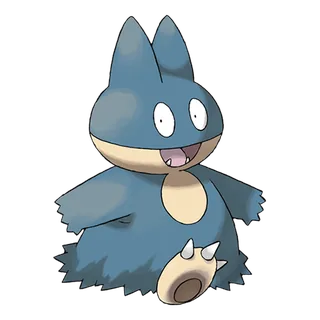
I once tried to be a Lechonk from memory, to sneak up on a picnic, and I came out as a perfect Lechonk with a Pikachu's head. Pointy ears and all. Red cheeks on a Lechonk. The family at the picnic stopped chewing and stared at me, and I stared back, and a small boy said, very clearly, "Mum, that Lechonk's wrong."
That was the end of that picnic, for me.


There are other ways to lose a disguise, too. A Johto record says that if a Ditto is made to laugh, it can't keep its disguise. Records from Unova and Galar say we go back to normal when we relax. So you can see the trouble: if anyone tells a good joke while I'm being a Lechonk, I melt into a purple puddle with a surprised face, and that's the end of the Lechonk.
And then there are other Ditto.
An Alola record says a Ditto can get along with almost anything — but not with other Ditto. A Johto record says that when one Ditto meets another, it moves faster than normal to copy the other one exactly. Here's what that looks like. You're a Ditto. You meet a Ditto. It copies you. You copy it copying you. It copies you copying it copying you. Faster and faster — blorp, blorp, blorp — until you're just two identical purple blobs glaring at each other in the grass, neither one willing to admit it was the original. I was stuck in one of those for a whole afternoon once. It's very tiring, and nobody wins.
When I sleep, I turn into a stone. A Johto record says Ditto do it so we won't be attacked, and it works. Nobody attacks a stone. People do sit on them, though.
That's how I met Pilar.
I woke up one lunchtime with someone sitting on me. Not heavily — just a small someone eating a sandwich and sniffing. She was a student from the Academy in Mesagoza, out on her Treasure Hunt, and she'd stopped for lunch on the most comfortable-looking rock in the whole West Province, which was me.
She was crying a bit. Not loudly. Just the leaky kind.
I listened. (Rocks are excellent listeners.) She was new at the Academy. She hadn't made any friends yet. Everyone else seemed to have a partner Pokémon that did amazing things, and she hadn't caught anything at all, and her favourite Pokémon in the whole world was Sprigatito, and she'd never even seen one.
I thought: I can fix this. I'll be a Sprigatito. That will cheer her up.
I'd seen a Sprigatito once, a year ago, at the edge of a town. So I closed my eyes — well, I closed my stone — and I remembered as hard as I possibly could, and — blorp.
I came out as a perfect Sprigatito. Green and fluffy, every whisker in place.
With a Lechonk's face.
Pilar looked at me. I looked at Pilar. I knew it was wrong; I could feel the snout. She opened her mouth — and then she laughed. A huge, surprised snort of a laugh, the kind you can't stop once it starts.
And because she laughed, I laughed. And because I laughed — well. You know what happens when a Ditto laughs.
Splorp.
She laughed so hard she had to lie down in the grass. I was a purple puddle with a face, giggling, and she was an Academy student flat on her back, giggling, and it went on for a very long time.
"Do it again," she said, when she could breathe. "Do a different one."
So I did a Pawmi with a Paldean Wooper's face. And a Fidough with a Flamigo's face. And a Flamigo with my own face — just my two little dot eyes and my wobbly smile, perched on top of all that pink — which was the funniest one of all, though I still don't know why I did it. Every time she laughed, I laughed. And every time I laughed, I melted.
Here's what I worked out, lying in the grass that afternoon. My whole life, I'd thought my faces were a failure. Every Ditto gets something wrong when it copies from memory — a tail, a colour, a pattern of spots. Mine just happened to be faces, the most noticeable thing there is. I'd tried so hard to be perfect.
But Pilar didn't want perfect. She'd been lonely in a school full of perfect partners doing perfect things. What she wanted was a Lechonk with a Pikachu's head. What she wanted was someone to laugh with.
When she'd packed up her lunch, she held out a Poké Ball — not throwing it, just holding it out flat on her palm, the way you'd offer half a sandwich to someone shy.
"You don't have to," she said. "But there's an Academy picnic on Friday, and I'd really like to bring someone."
I looked at the ball for a long time. Then I tapped the button.
It turns out the Pokédex is right. When you're looking straight at the thing you want, you get it perfect.

Told by a Snorunt who chose a house


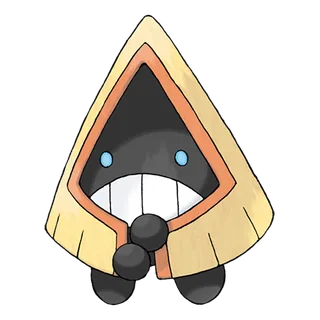
I come with the first snow.
That isn't poetry. It's just when I come. Every year, when the first flakes drift down over Hisui, I leave the cave where I spend the summer, and I go looking for a house.
People here have a custom about it. On the night of the first snow, a family that hopes a Snorunt will visit leaves a lump of ice at its front door — and not just any ice. It has to be made from pure water. Because the old belief, all across the snow country, is that a house a Snorunt visits will prosper for generations.
There are five of us. There are nearly always about five — Snorunt travel in little bands. In the snowy months we live together under a giant leaf at the edge of the forest, all five squashed in a row like dumplings, perfectly content. We eat snow. Only snow, and ice — nothing else, ever. And we can bear a cold that would freeze your breath solid in the air, colder than the coldest night anyone in the village has ever lived through, and bounce about happily in it.
In spring and summer, when the snow goes, we go too: deep into a cave in the mountains, where it stays cold all year, among the long stone icicles that hang from the roof and grow up from the floor. We sit very still and dream about snow. We get very, very bored.
And then, one night, you feel it. A change in the air, a smell like clean metal. All five of you look at each other, and you know.
We came down out of the cave at midnight, five Snorunt in a row, and the first flakes were falling. In the village at the bottom of the slope, somebody looked out of a window and saw us, and called to the others — because in the snow country everybody knows that if you see Snorunt late at night, heavy snow is coming by morning. By the time we reached the village, every window had a face in it.
And every doorstep had ice.
That's the hard part about being a Snorunt. Every family wants you. Every house has its lump of ice set out on the step, and every lump of ice has a little bit of hope frozen inside it.
The biggest house in the village had the biggest lump of ice — an enormous block bought from a merchant and carved into the shape of a Snorunt, with a red ribbon tied round it. My friends went straight to it, all four of them, to admire it. But I walked on past. I was looking for something else, and I didn't know what it was until I found it.
The last house on the road was small and old, with a crooked roof. On its step was a lump of ice no bigger than an apple. It wasn't carved. It wasn't pretty. But I could see straight through it — clear as nothing, clear as air — because whoever had made it had carried the water all the way down from the spring above the village, the cleanest water in Hisui, and frozen it with care.
I ate it. (It was delicious. Pure-water ice is the best there is.) And then I knocked on the door.
A girl opened it. Her name was Hana, and she had made the ice herself — I could tell from her red, frozen fingers. Behind her was her grandmother, small and wrinkled as a walnut, who put her hands together and bowed to me as if I were a visiting lord.
"You came," Hana whispered. "You actually came."
I stayed all winter. Snorunt don't need much: a corner by the door, well away from the fire; a bowl of fresh snow every morning; somebody to talk to. Hana talked to me all the time. Her parents had gone south to Jubilife Village to find work for the winter. It was just Hana and her grandmother now, and the roof leaked, and the rice was running low.
Prosper, I thought, very seriously, every night before I slept. Prosper. Prosper. I didn't know how. I'm not sure Snorunt ever know how. We just come, and we stay, and the rest is up to the house.
In the deepest part of winter, a blizzard came — the worst in years. The wind howled down off the icelands for two whole days. Snow piled up to the windowsills. And on the second night, while the fire burned low, Hana's grandmother told a story.
"In the snowy lands," she said, "they tell of a woman who was lost on an icy mountain, long ago. They say she was reborn as a Pokémon — Froslass, they call it. And on nights of the worst blizzards, they say, she comes down to the villages." She looked at the door. "If you ever hear her knocking, child — don't open it."
Hana pulled her blanket up to her nose. I sat up very straight in my corner.
Because I knew something Hana didn't. A Froslass is a Snorunt, grown up — not every Snorunt, only girl Snorunt, and only if they're exposed to a special stone called a Dawn Stone. And I'm a girl Snorunt. Nobody had ever told me what that meant. I had never seen a Dawn Stone. I had never wanted to.


And then, at midnight, it came. Knock.
Hana grabbed her grandmother's sleeve. The grandmother didn't move. Knock. Knock. Soft and slow, three times, the way you'd knock if you had all night.
I went to the door.
I didn't open it. I'm not silly. But I pressed my cold face right up against the wood, the way only a Snorunt can, and I breathed on it — breathed ice into it — until the whole door was frosted solid from the inside, white and shining and thick as a wall. Then I sat down in front of it and stayed there all night, wide awake, while the wind screamed and Hana slept on her grandmother's shoulder.
The knocking didn't come again.
In the morning the storm had blown itself out, and the sky was blue and enormous. We dug our way out of the door — Hana with a shovel, me with my head — and there, on the step, in the fresh, untouched snow, was a lump of ice.
Clear as air. No bigger than an apple.
There were no footprints anywhere. Not one. Not a single mark in the snow, all the way down to the road.
Hana looked at me. I looked at the ice. Then I ate it, because it was ice, and I'm a Snorunt, and it was the best ice I have ever eaten in my life.
I still don't know who left it. I've wondered every winter since. Maybe nobody. Maybe somebody who had once been a Snorunt too, and remembered what it was like to choose a house.
That spring, Hana's parents came home from Jubilife with money in their pockets and sacks of rice on their backs. The roof got mended. The rice store filled up. Was that me? I don't know. I'd like to think so. I'd like to think it was the ice, too.
That same spring, a man from the Galaxy Expedition Team came up the road with a notebook — a professor, very excitable and very polite, who said his name was Laventon. He had heard about the custom of the ice at the door. He asked Hana's grandmother a thousand questions and wrote down every answer, and he looked at me for a long time over the top of his notebook.
"Homes it visits are thought to prosper for generations," he murmured as he wrote. Then he smiled at Hana. "Well. We shall have to wait a few generations to check."
I'm still waiting. I'll let you know.

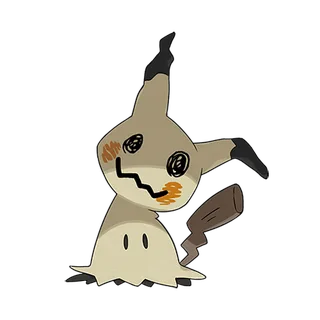
Told by a Mimikyu who just wants a hug


I made it myself.
The costume, I mean. You've probably seen it. Yellow cloth, a pointy-eared hood, two black scribbles for eyes, a zigzag tail made from a stick. I sewed it out of an old rag I found in the dark, and I made it look like a Pikachu, so I'd look less scary — and because everybody loves Pikachu. Everybody loves Pikachu so much.
A Galar record agrees that's why a Mimikyu turns its rag into a Pikachu costume: to look less scary. It also says — and I think this is unkind — that the costume only makes it look creepier.
That's fine. I'm working on it.
You want to know what's under the cloth. Everyone does. Don't.
I mean it. The Pokédexes are full of warnings about people who looked, and I'm not going to repeat them here, because this is a nice story. I'll only tell you the rule, and it's very simple: you don't look under the rag. If you try, I get upset — an Alola record says a Mimikyu will become agitated and resist violently, and I'm afraid that's true. I don't want to. I just can't let you see. Not because of what would happen to me. Because of what would happen to you.
For a long time, people didn't even know I was a Pokémon. A Paldea record says that before Mimikyu were properly identified, people thought we were simply a ghost wearing a cloth. Which, I suppose, isn't completely wrong.
I live in the dark. A Paldea record says Mimikyu live in dark places that sunlight never reaches, and the darkest place I know is the old supermarket on Ula'ula Island, in Alola.
It used to be the very first Thrifty Megamart. It isn't anything now. People say it was wrecked long ago by the island's guardian, Tapu Bulu, and that nobody ever came back to fix it. The shelves are tipped over. The tills are full of dust. Strange lights flicker in the aisles for no reason (that's not me — that's the Haunter who live by the old freezers). And right at the very back, there's a room.
Captain Acerola, who once held a trial in the store, says the building never had a back room. That's true. It didn't. And yet there it is, and that's where I live. Please don't think about that too hard. I try not to.
Here's my problem. I'm lonely. An Alola record says so, and so does a record from Lumiose City: a Mimikyu is a lonely Pokémon that hides under its rag so it can get closer to people and other Pokémon. That's the whole reason for the costume. It isn't a disguise to trick anybody. It's a disguise so that somebody, someday, might want to hug me.
Nobody ever had.
Children come into the store sometimes, on dares. They shine their torches about. They shriek. When they see me — a little yellow shape at the end of a dark aisle, head tipped to one side — they shriek even louder and run, and I go back to my room that isn't there and practise looking friendlier in the mirror.
The girl who didn't run was called Kalani.
She came in on a dare, too — I could hear her friends giggling outside — but she came in alone, and she came in slowly, and when her torch found me at the end of the cereal aisle she didn't scream. She looked at me for a long time. Then she said, "Your ears are a bit wonky."
Nobody had ever told me that. I reached up and felt them. She was right.
"I can fix that," said Kalani. "My auntie sews. Wait there."
She came back the next day with a needle and thread and a bag of scraps. She fixed my ears. She did it without lifting the cloth even once — she told me to show her where to put the needle, and I did, and she sewed with her eyes screwed tight shut the whole time, her tongue poking out with concentration. It was the best day of my life.
She came back every afternoon after that. We played hide-and-seek in the aisles. (I always won. I'm very good in the dark.) She told me about school. I listened. I didn't say much. I never do.
And then, on the fifth afternoon, her friends followed her in.
Three of them — the ones who had dared her to come in the first time. They'd been wondering where she disappeared to every day. They came creeping down the cereal aisle with their torches, found her sitting on the floor with me, and stopped dead.
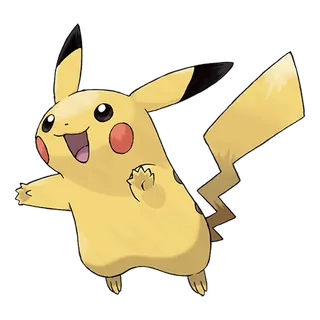

"It's the ghost," one of them breathed.
"It's my friend," said Kalani.
The biggest boy laughed — the high, wobbly kind of laugh people do when they're frightened and don't want anyone to know. "If it's your friend," he said, "then let's see what's under it." And before anybody could move, he grabbed the top of my hood and yanked.
Battle researchers have a name for what my costume does. They call it Disguise: the costume can take one hit for me. And it did. The rag held. Not one thread of what's underneath showed.
But my neck snapped.
Not my real neck. The costume's neck. My lovely Pikachu head flopped over sideways and hung there, upside down, swinging gently, looking at the floor.
And then something in me went tight and cold. I told you what happens when somebody tries to look under the rag. I felt it rising, the way a wave rises. I didn't want it to. I couldn't stop it.
Kalani stepped between us.
"Don't," she said, in a voice I had never heard her use. "Nobody looks under the rag. Not ever." She said it to him, not to me — with her back to me and her arms out wide, as if she were the one protecting him. Which, I think, she was.
They ran. All three of them. I heard their footsteps all the way out to the road.


An Alola record says that when a Mimikyu's neck gets broken after all its effort on the disguise, whatever is inside is probably fine — but it still feels sad. That's exactly right. I was fine. I was so sad I couldn't move.
A Galar record says that once the neck breaks, everyone can tell it's a Mimikyu. So that was that. Kalani would know now. She would know I wasn't really a Pikachu. She would know I was the scary thing in the dark.
I went back to my room that isn't there and stood at the mirror all night, pushing my head back up, watching it flop down, pushing it up again. Crying on the inside, where nobody could see. And the whole time — because you never, ever stop — I kept on being a Pikachu.
In the morning, someone knocked on the door frame.
"I know you're a Mimikyu," said Kalani. "I've always known. Everybody knows what a Mimikyu is." She held up her bag of scraps. "Now hold still, and show me where to put the needle."
She mended my neck with her eyes shut. It took two hours. When it was done, my head stood up straight for the first time — straighter than it ever had, if I'm honest, because her auntie's thread was much better than mine.
And then she hugged me.
Just like that. Arms right round the costume, a proper squeeze. I didn't know what to do. Nobody had ever done it before. I stood very still inside my rag, in the dark, and I hugged her back.
Some records say a Mimikyu never forgets. People usually say that like a warning.
I'll never forget Kalani. That isn't a warning. It's a promise.
I'll never forget the boy who pulled my hood, either.
That one is a warning.

Told by a Riolu who can see what you're feeling


When you're sad, your waves go flat.
I don't mean you look flat. I mean I can see it. All Riolu can. Every living thing gives off waves — of feeling, of being alive — and a Riolu sees them the way you'd see ripples on a pond. Sinnoh researchers say a Riolu can see emotions such as joy and rage in the form of waves. An Alola record says we can tell the physical and emotional state of people, Pokémon and other natural things from the shape of those waves.
We call them aura. Everyone does now. But somebody had to name it first, and it was a professor in Hisui, long ago, called Laventon. He watched a Lucario sensing faraway things with waves of energy, and he wrote in his notebook that he had given this power a name: aura. Isn't that strange? Somebody had to invent the word for the thing I've been seeing my whole life.
I live with Kenta and his grandfather on a farm high in the hills of Sinnoh, a long, long way from anywhere. Kenta's aura is usually quick little zigzags, like a kettle that's just about to boil. His grandfather's is long, slow, steady swells, like the sea on a calm day. I can feel both of them from anywhere on the farm.
I'm not easy to look after. A Galar record says taking a Riolu for a walk can be a challenge, and Kenta would like to add that this is an understatement. I'm not naughty. I'm just very, very interested in everything — and I can run all night if I want to. A Johto record says so. Kenta can't. That's the challenge.
The night it happened, it was snowing.
Kenta's grandfather had gone up the mountain path at dusk to bring the Miltank down from the high pasture before the storm. He didn't come back. Kenta and I found him an hour later at the bottom of a steep bank, with the Miltank huddled around him and his ankle twisted underneath him. He couldn't walk. He could barely stand. And the snow was getting heavier.
We got him into the shelter of a big rock. Kenta wrapped him in both their coats. And then Kenta looked at me, and his waves were so frightened and so jagged that I could feel them in my teeth.
"The Pokémon Center," Kenta said. "In Celestic Town. Someone has to fetch help." He swallowed. "I can't leave Grandpa. And it's too far. It's three mountains away."
Three mountains. And two canyons. I knew exactly how far it was. And I knew something Kenta had forgotten — something the Sinnoh Pokédex says, which his grandfather had once read aloud to me by the fire: a Riolu can cross three mountains and two canyons in a single night.
I didn't wait to be asked.
Running at night as a Riolu isn't like running at night as you. You'd see darkness, snow, the black shapes of trees. I saw everything glowing. The pines had slow, sleepy waves, deep down in their roots, waiting for spring. A family of Bidoof under a log gave off soft little ripples of dreaming. A Galar record says auras also tell a Riolu about the state of the land around it, and that night the whole mountain was talking to me: ice here, thin snow there, the stream is frozen, the path is under that drift.
I ran. Up the first mountain, through the pines. Down into the first canyon, where the wind roared like a river. Up the second mountain.
That's where I felt the Ursaring.
It was asleep in a cave right beside the path — I'd never have seen it with my eyes. But I could see its aura through the rock: huge, heavy and slow, with a hard, spiky edge to it that meant if you wake me up, I will be very cross indeed. An Alola record says a Riolu won't go near dangerous opponents. I'd like to tell you that's because we're wise. It's partly because we're wise. It's mostly because Ursaring are very large. I went the long way round, along the ridge — an extra half hour I couldn't spare.
I was halfway down the second mountain, gasping, when I felt something watching me.
It was a Lucario. A wild one, standing on a rock above the path with the snow streaming past it. I hadn't sensed it at all — but it had sensed me. Sinnoh researchers say a well-trained Lucario can sense the feelings of creatures more than half a mile away. This one had felt my fear from the other side of the valley, and had come to see.
We didn't speak. Riolu and Lucario don't need to. Researchers in Unova, Kalos and Hoenn say we talk with the shapes of our auras, and an Alola record says we do it without making a sound, so no enemy can overhear. I showed it everything at once — Kenta, the grandfather, the twisted ankle, the snow — in one long, frightened wave. And the Lucario showed me something back, very simple and very calm, like a hand on my shoulder.
This way. Faster.
It ran beside me down into the second canyon and up the third mountain, along paths I'd never have found on my own — and when the lights of Celestic Town finally showed below us, it stopped on the last ridge and let me go on alone.
It was nearly dawn when I hammered on the door of the Pokémon Center. The woman who opened it was half asleep, but her aura was the kind that makes a Riolu trust someone straight away — clear and steady, all the way through. In Hisui, Professor Laventon wrote that Riolu can mysteriously read human minds, approving of the pure of heart, while those of ill nature earn only its loathing. I don't know about minds. I know hearts. Hers was good.
I couldn't tell her what had happened. Riolu can't talk. So I grabbed her sleeve and pulled, and pulled, and pulled, and she understood — and within the hour, three rescuers and a Mamoswine pulling a sledge were following me back over the mountains, with the sun coming up gold across the snow.
Kenta's grandfather was cold and grumpy and completely, wonderfully alive. The rescuers splinted his ankle and lifted him onto the sledge, and Kenta threw his arms around me and cried into my fur, and his waves were so huge and so bright and so warm that I couldn't see anything else at all.
That's when it happened. Right there, in the morning sun. Battle researchers say a Riolu evolves when its bond with its friend is strong enough — and only in the daytime. I began to glow, and to grow, and when it was over I was looking down at Kenta instead of up.


I'm a Lucario now. I can feel Kenta's aura from the far end of the farm. I can feel the Miltank, and the Bidoof under the log, and sometimes, on very clear days, a wild Lucario somewhere far off on the third mountain. An Alola record says that Lucario, reading everyone's feelings, learn things they'd rather not know, and so get stressed easily. That's true, too. I always know when Kenta's sad, even when he says he's fine.
But that's all right. Knowing is how you help.
Kenta's grandfather says that one day, when his ankle is better, we'll all take a boat to Kalos and visit the Tower of Mastery in Shalour City, where there's a great statue of a Mega Lucario. It honours the first known Mega Evolution in Kalos — a Trainer and a Lucario, long ago, who found the special stones that made it possible right there on that spot. I'd like to see it. I'd like to stand in front of it and find out whether a statue has an aura.
I think it will. I think anything that people have loved for that long must.

Told by Celebi — in no particular order


You'd like me to start at the beginning. Everyone always does.
The trouble is, I don't have one. Or I have lots. Researchers in Johto wrote that I wander across time. Researchers in Hoenn wrote that I came here from the future. A Galar record says that writings describing me as a forest deity have been found from many different eras. All of those are true, more or less, and not one of them is a beginning.
So I'm going to tell you my story the only way I can: one when at a time. Not in order. Order is for Pokémon who only go one way.
Don't worry. It'll all make sense by the end. Or by the beginning. One of those.
But since you asked for a beginning, here's a when to hold on to: a road in Kanto, a red-haired boy shouting at a man in a dark suit, and a radio announcing a date that is three years ago. Remember it. We'll get there.
Ilex Forest, in the south of Johto, between Azalea Town and Route 34. The trees grow so close together here that a sign at the entrance warns you won't be able to see the sky. The people of Azalea burn its wood into charcoal, and every traveller gets the same warning: it's big, and it's easy to get lost in.
Deep in the middle, where the forest is thickest, there's a small wooden shrine. If you read the words on it, they say Ilex Forest Shrine, and that it honours the forest's protector.
That's me. It doesn't say so. It never says my name, not once. Nobody knows who built it, or when — and I'm not telling you either, because… well. Let's just say it's complicated.
The people around the forest talk about me without ever saying my name, too. An old woman in the gate on the Azalea side tells every visitor that the forest is watched over by its protector, so they'd better stay out of mischief. A girl in the gate on the Route 34 side asks people whether they've seen the shrine, and tells them the protector watches over the forest from across time — and that it must be a Grass-type Pokémon. Half right! I'm Psychic, too.
Every morning, wherever I am in time, I come back to this forest at least once. The Johto records say grass and trees flourish in the forests where I've appeared. A Galar record says I bolster grass and trees with my own strength. Here's what that's like from the inside: I fly between the trunks, very low, and I touch things. A sapling that's leaning. A fern that's been trodden on. Moss on a stone that's thinking about giving up. And they don't give up. That's all. That's the whole trick.
The charcoal maker's apprentice from Azalea comes into the forest with a Farfetch'd to cut down trees for the kiln. On this particular day, the Farfetch'd ran off — tucked its stalk under its wing and bolted into the undergrowth — and the apprentice sat down on a stump with his head in his hands.
I could have helped. I didn't. A young Trainer came along the path a little later and helped instead: crept up behind the Farfetch'd, shooed it this way and that between the trees, and herded it back to the boy. The charcoal maker was so grateful that he gave the Trainer the technique called Cut, for clearing small trees out of the way.
I watched the whole thing from a branch. Some things are better done by the people who live in the now. I'm only visiting.
All the Slowpoke vanished from Azalea Town. Every last one. (It was Team Rocket. That story gets sorted out, don't worry — a young Trainer sees to it.)
But before anybody knew that, the boss of the charcoal kiln stood in the middle of town, as pale as ash, and said that maybe the forest's protector was angry. It was a bad omen, he said. Everybody should stay indoors.
I wasn't angry. I want to be very clear about that. I was in the forest, watching the town's lights go out one by one as everyone shut themselves in, and I wasn't angry at all. I was only sad that people were frightened of me. That happens more than you'd think, when you're a protector. People forget the protecting part and only remember that you're powerful.
In the house of Kurt, Azalea's Poké Ball maker, there's a little statue — a statue of the forest's protector, the town calls it. Kurt looks at it sometimes while he works. I like Kurt. He makes Poké Balls out of Apricorns, by hand, the old way. He listens to things.
Johto tells this story.
A young Trainer — a Champion, newly crowned — walked into the Pokémon Center in Goldenrod City and was told that something had been sent there just for them, as a special gift. A ball. Gold and silver, shaped very nearly like a Poké Ball, with two letters on it: G and S.
Nobody knew what it was. So the Trainer took it to Kurt — and Kurt, who has seen more Poké Balls than anyone alive, stammered that he had never seen anything like it. It looked like a Poké Ball, he said, but it seemed to be something else. He offered to study it. He even stopped making his own Balls to do it.
The next day, Kurt hurried out of his house and into the street. The ball had started to shake while he was examining it, he said. There must be something to it. And then he turned towards the trees and said: Ilex Forest is restless.
He was right. It was. The great trees were swaying in a wind that came from nowhere, creaking and tossing their heads. The teacher in the Route 34 gate wouldn't let anyone through — something was wrong in the forest, she said; stay away for now. A girl standing among the trees wondered out loud whether something had happened to the forest's guardian.
Something had. For days, in every when I visited, I'd felt it — a small, stubborn tug, like a hook caught in a fin, pulling me back towards one shrine on one particular day. I didn't know what it was. I only knew it was shaped exactly like a door.
The Trainer carried the ball deep into the forest, all the way to the shrine. And there, for the very first time, they noticed a hole in the shrine — just the right size and shape for a gold-and-silver ball. They put it in.
And I came.
A little while later, Kurt came puffing up the path, saw me with the Trainer, and said the thing I'd been waiting a very long time for somebody to say: that it was fantastic — that the legends about the shrine were true after all. Then he said that seeing me had inspired him to make better Balls, and he hurried off to make them. I liked that very much.


Johto tells this story, too. In this one, I'm already walking beside a young Trainer — don't ask how; it's a different when — and we come to the shrine together on a quiet day, after Team Rocket has been driven out of the Goldenrod Radio Tower.
The Trainer's friend comes running up the path with a Marill. And the friend says: Have you heard the legend of this shrine? They say that people disappear if they tamper with it.
There's an old man who sits near the shrine who tells everyone the same thing. Children and Pokémon sometimes vanish around here, he says, and people believe it's the doing of a Pokémon that wanders across time.
Well.
He isn't wrong.
I took them both. That's what my power is called, by the way. The friend's grandpa once told them a story about me, and in that story it has a name: Time Travel. A mystic power. One moment we were standing in the forest; the next, the forest was gone.
We were on Route 22, in Kanto, beside the sign for the entrance to Victory Road. The friend turned in a circle and said that Ilex Forest had disappeared. A radio somewhere nearby mentioned the date — and it was three years ago.
We weren't alone. A man in a dark suit was standing on the route, and a red-haired boy was shouting at him. The man was Giovanni, the boss of Team Rocket. Three years ago — on that very day — a child had beaten him, and he had broken up his whole organisation. The boy was his son. He asked his father whether he was really going to quit, after always saying he was number one in the world. He called him a coward, and swore he would get strong all by himself. Giovanni answered that you must accept defeat before you can move on; that he would go on alone for now, so that one day he could build something stronger; and that the boy would understand one day. Then he walked away.
The boy turned and saw us. He snapped at us for staring, shoved past, and stormed off. The friend was outraged. Then the friend saw me hovering there — and understood. It's Celebi. It's brought us back in time.
Then I took them again.
The second when was a cave at Tohjo Falls, between Johto and Kanto. It wasn't three years ago this time. It was the very day that Team Rocket took over the Goldenrod Radio Tower — a day in the Trainer's own recent past. Over the radio, the Rockets were calling for their boss to come back. And there was Giovanni, in the cave, on his way to answer.
He looked at the Trainer and said they had the same eyes as the kid who had stood against him three years before. And then they battled.
The Trainer won. Afterwards, Giovanni asked how this could be — whether the last three years had been a waste — how a child could destroy his dream a second time. Then he left. And the radio went on calling for him. Where are you? Please come back. He didn't come.
The friend went very pale. The Rockets were calling for a boss who wasn't coming, the friend said slowly — and the Trainer was supposed to be beating them in Goldenrod right now. But the Trainer was here. So who was going to —?
Then the friend begged me to take them home. So I did.
We landed back at the shrine. The friend said that travelling through time really doesn't feel very good, then ran to greet their Marill — who'd been there all along — and said that all's well that ends well.
Did I make that loop, or did the loop make me? Was Giovanni ever going to reach Goldenrod, before we got there? I'm not going to answer that. I'll only say this: the Rockets in the Radio Tower were beaten, exactly as they were supposed to be. Time, it turns out, is very good at looking after itself — so long as someone keeps an eye on it.
There's a Pichu that plays near the shrine now. The old man there says it has lived in the forest for some time. One of its ears is different from every other Pichu's — spiky at the tip.
Professor Elm, in New Bark Town, has seen it. He thinks it was changed by travelling a long way through time with me. The Pokémon Centers don't know what to make of it; their records don't include anything like it. And it doesn't evolve, however much it loves its Trainer, which puzzles him most of all.
Professor Elm also says that Professor Oak once wrote a paper about me — about my Time Travel — and presented it at a research conference. I would love to read it. I would love to know what he got wrong.
And the Pichu? I'm not saying. Maybe it came with me. Maybe it came from somewhere I haven't been yet.
The Johto records say one more thing about me: that when I vanish deep in a forest, I'm said to leave behind an egg that I brought back from the future.
Pokémon researchers will tell you that no Celebi has ever been found to lay an Egg. That's true too.
So whose egg is it? What hatches out of it? When does it hatch?
I'm not telling. Some things you have to wait for the slow way, like everybody else.
I'll tell you one last thing, and it's the most important.
The Sinnoh Pokédex says I have the power to travel across time — but that I'm said to appear only in peaceful times. The Hoenn Pokédex says that people believe that as long as I keep appearing, a bright and shining future awaits.
Think about what that means. I don't come to make times peaceful. I come because they already are. So if you ever walk deep into Ilex Forest, past the sign that says you won't see the sky, and you stand at the little shrine in the middle, and you feel something watching you from across time —
— that isn't me making your world a good one.
That's me noticing it already is. And telling the future to expect you.

Told by Jirachi, who is awake for one week in every thousand years


Someone is singing.
That's always the first thing. Before light, before cold, before remembering my own name — a voice, far away and coming closer, singing a song so clear and plain and true that it slips straight through a thousand years of sleep, like a needle through cloth.
The Hoenn Pokédex knows about this. It says I will wake from my sleep of a thousand years if someone sings to me in a voice of purity. A Galar record says the same: once every thousand years, a pure singing voice rouses me from my almost-endless slumber.
And then it says the hard part. I wake for only seven days.
I opened my eyes inside my shell.
While I sleep, a tough crystal shell covers my whole body to protect me — an old Hoenn record mentions it. From the inside it's like being in a snow globe made of diamond. I pushed, and it cracked, and fell away in glittering pieces, and there I was: one Jirachi, thirty centimetres tall and about as heavy as a bag of sugar, sitting on a ledge on a mountainside in the cold blue morning.
It was the same mountain I'd fallen asleep on. I know, because I remember the shape of the peak. But the little pine trees below my ledge, which had been saplings last time, were now enormous and ancient and twisted by the wind. And the village I remembered down in the valley was gone, and there was a different village, in a different place, with a different name. That's what a thousand years does. It moves everything a little bit to the left.
The singer was a girl. She was sitting on a rock a little way down the slope with a basket of mountain herbs beside her, singing to nobody — just singing, the way you do when you think you're alone. Her name, I found out later, was Sora.
When she saw me, she stopped. Then she said, "Oh." And then: "Are you real?"
I wasn't sure. You never are, on the first day. I floated down and sat on her basket, and she gave a little scream, and then she laughed, and that's how it began.
Sora took me home.
I fitted in her basket, on top of the herbs; I'm very small. Her little brother, Ren, was eight and didn't believe in anything, and he poked me, so I poked him back with a Swift — just a tiny one, a handful of star-shaped sparkles that fizzed off the end of his nose — and after that he believed in me completely.
Their great-grandmother was the oldest person in the village, and she knew at once what I was. She sat up in her bed and looked at me for a long time, and then she said: "When I was a girl, my grandmother told me about you. And her grandmother told her."
The Johto and Kalos records say it plainly: generations of people have believed that any wish written on a note on my head will come true when I awaken.
I have three notes on my head. They hang from the three points of my star — little blue-green tags that flutter in the wind. That evening, the whole family sat around the fire and argued for hours about what to write on them.
There's something I need you to know about the wishes, and I need you to know it now, before the end of the story, so that you won't be disappointed.
Every Pokédex that has ever written about me says the same careful thing. A legend states. It is said. People believe. Generations have believed. Not one of them says: and the wish came true. Not one.
That's because I've never seen it happen either. When I wake, someone writes the wishes. When the seven days are over, I fall asleep. And whatever happens next happens while I'm dreaming. I have never once found out whether a wish came true. Not ever.
Sora understood, when I told her. (I can't talk, exactly, but she understood anyway; some people do.) She thought about it very hard. And then the family began to write.
Ren went first. He wrote in enormous wobbly letters, I WISH FOR A DRAGONITE, and tied the note back onto my head himself, very carefully, and patted it.
The great-grandmother went second. She wrote very small, in old-fashioned writing, and folded the note over so that nobody could read it, and wouldn't tell. She just held my hand afterwards for a long time.
Sora didn't write anything. "Not yet," she said. "I'm thinking."


On the fourth day, the mountain moved.
It had rained in the high valley, and the ground above the village path had turned soft. We were walking down to the stream — Sora, Ren and me — when I felt it. Not heard it: felt it, the way you feel a step that isn't there in the dark. Something high on the slope above us was about to let go.
I have a move that no one else in the world can use. Battle researchers call it Doom Desire. It isn't fast. It's the opposite of fast. I gather up light — a great bright bundle of it — and send it off, and it arrives a little while later, after a delay that nobody can hurry. One old Hoenn record describes it as calling down strong sunlight that strikes later on.
So I aimed it at the slope before anything had happened at all. I fired it at a boulder that was still sitting perfectly still. Sora stared at me as if I'd gone mad.
And then the boulder rolled. It tore loose from the mud and came thundering down towards the path — towards us — faster and faster — and at exactly the right moment, the light arrived. It struck the boulder like a hammer made of sunshine and burst it into gravel, and the gravel pattered harmlessly down around us like hail.
Ren said a word his great-grandmother wouldn't have liked.
Sora didn't say anything. She just looked at me. "You knew," she said at last. "Before it happened."
I did. Not the future — only danger. I can feel danger coming, the way you feel a cold draught under a door. It's a lonely way to be.
On the fifth day we didn't do anything special at all, and it was my favourite. We sat in the sun. Sora plaited grass. Ren tried to teach me to whistle (I can't). The great-grandmother told stories about the village when she was a girl, and I told her — in my way — about the village that had stood on the other side of the valley a thousand years before, and she cried a little, and then laughed, and said it was strange to think of all those people.
That's the thing nobody tells you about only being awake for seven days. The special days aren't the ones you treasure. It's the ordinary ones. The ordinary ones are the ones you'd give anything to keep.
On the sixth day, I began to get sleepy.
It always starts like this: a heaviness, a slowness, like trying to run through deep snow. Sora noticed. She noticed everything.
That night she sat with me on the roof of the house and looked up at the stars, and at last she picked up her pen.
"I've worked out my wish," she said. "But it isn't for me." She wrote, and she tied the note on, and then — because she could see how much I wanted to know — she read it out loud.
I wish that someone will sing Jirachi awake again, in a thousand years.
I didn't understand. It seemed like a wasted wish. Someone always sings, sooner or later. That's how it works.
"Does someone always sing?" said Sora. "Every single time? Are you sure?"
I wasn't. I'd never thought about it. A thousand years is a long time to lie on a mountain, hoping that somebody happens to walk past singing.
"So that's my wish," said Sora. "And if it's the kind of wish that needs a bit of help coming true —" she smiled — "I'll help."
On the seventh day, she taught Ren the song.
The one she'd been singing on the rock that first morning. She taught it to him line by line, over and over, until he could sing it without getting a single word wrong. Then she made him promise to teach it to his children one day, and to make them promise to teach it to theirs. And then the two of them sang it together, sitting beside me on the ledge where I'd woken up, while the sun went down.
It's very hard to fall asleep while people are singing to you. But I managed. I felt my shell begin to grow around me, cool and crystal, a snow globe made of diamond. The last thing I saw was Sora's face through it, blurry and golden. The last thing I heard was the song.
The Hoenn Pokédex says one more thing about me. It says that if I sense danger while I'm asleep, I will fight without ever waking up. So I'm safe, up here. Nothing can bother me.
Except a song.
Did Ren get his Dragonite? Did the great-grandmother's folded wish come true? I don't know. I'm asleep. I'll always be asleep when the answers come.
But I'll tell you what I hope. I hope that one day, a thousand years from Sora, some child with a basket of herbs will climb a mountain whose name has changed again, and sit on a rock, and sing a song they learned from their grandmother — who learned it from hers — without ever knowing why it matters.
And I hope I hear it.
If you know any good songs, by the way, it couldn't hurt to practise.
| Compare | Celebi | Jirachi |
|---|---|---|
| Known as | the Time Travel Pokémon | the Wish Pokémon |
| Type | Psychic / Grass | Steel / Psychic |
| Size | 0.6 m · 5.0 kg | 0.3 m · 1.1 kg |
| First recorded | Johto — the last entry in its Pokédex | Hoenn |
| The famous story | Ilex Forest shrine, the GS Ball, a trip three years into the past | A thousand-year sleep, seven days awake, wishes on its notes |
| Ability | Natural Cure | Serene Grace |
| A move about the future | Future Sight — strikes later | Doom Desire — its own move, strikes later |
| Both learn | Future Sight and Healing Wish. Both have no recorded gender, and neither has ever been found to lay an Egg. Battle researchers rate them exactly equal in strength, in every respect. | |
| No records in | Alola, Hisui or Paldea — for either of them. | |
A note from the bookNo old text, shrine or Pokédex links Celebi and Jirachi in any way. Putting them side by side is this book's idea — because one remembers tomorrow and the other waits a thousand years for it, and that seemed worth a table.
Fourteen tellers. Eight questions. No wrong answers — only true ones. Pick whatever sounds most like you, not whatever sounds coolest.
Question 1 of 8
Loading the tall grass…
Fifteen questions — every answer is somewhere in this book, in a tale or in a From the Pokédex box. The tellers are listening.