▸ Field notes from ten regions

Tallest20.0 m

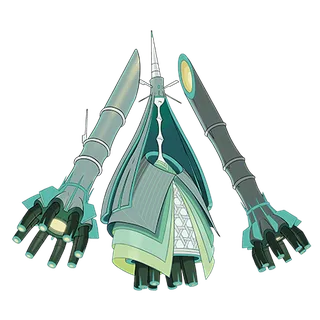
Heaviest999.9 kg

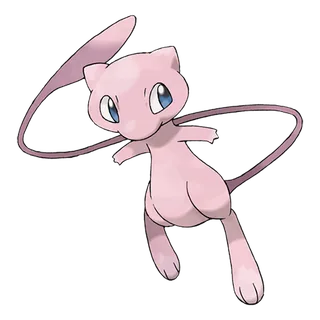
Lightest0.1 kg

Body heat18,000°F

Flies atMach 2

Deepest?60 miles
For Palash — who will check every number. Go on, check them.
From the ozone layer to sixty miles underground: what Pokémon eat, who hunts whom, who builds, who travels, which forms changed and why — and which famous “facts” turn out to be nothing but rumours. Gathered from the Pokédex records of every region.
Every region keeps a Pokédex, and every Pokédex is really a pile of field notes — what a researcher saw, heard, measured or was told. Put the notes from ten regions side by side and something wonderful happens: the Pokémon world comes alive as a place where things eat, hunt, build, travel and change.
This guide is built from those notes. It walks you through the places Pokémon live — from the ozone layer, where Rayquaza flies, down over snowy peaks, forests, towns and deserts, under the sea and finally deep underground, where Dugtrio is said to burrow sixty miles down or more. Along the way it stops to look at partnerships, packs and herds, at Pokémon that build things, at the seasons, and at the strange business of regional forms: why the same Pokémon can look completely different in Alola, Galar, Hisui or Paldea.
The researchers who wrote these records did not always agree. A Johto record and a Unova record can describe the very same Pokémon and come up with very different numbers. That is not a mistake in this guide — it is what real field research looks like. Whenever records clash, you will see a Scholars Disagree box, with both sides laid out so you can judge for yourself.
The records come from the Pokédexes of Kanto, Johto, Hoenn, Sinnoh, Unova, Kalos, Alola, Galar, Paldea and Kitakami — and from a much older source: the notes of a researcher with the Galaxy Expedition Team in Hisui, written long ago, often in the first person (“I suspect…”, “I believe…”). Those notes have their own look in this book, like pages torn from a notebook.
Read any Pokédex closely and you will notice that its sentences come in three kinds. Learning to tell them apart is the most important skill a naturalist can have — and it is the secret weapon you will need for the Myth Busters at the end of this book.
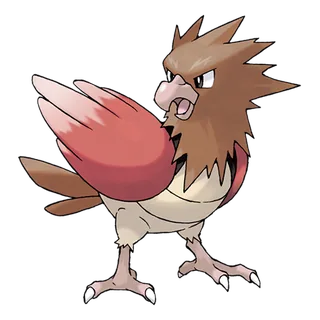
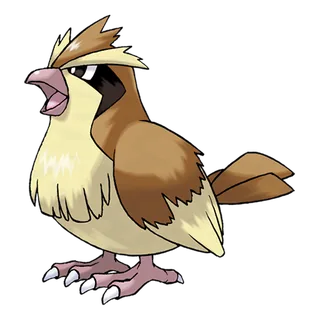
Something a researcher actually recorded. “Eats bugs in grassy areas” is how the Kanto Pokédex describes Spearow. Solid ground.
Folklore, legends, theories and rumours. The records are careful to flag them — “it is said”, “legend has it”, “some people theorize”, “this remains unverified”. Interesting, but unproven.
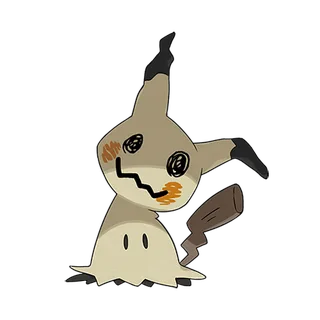
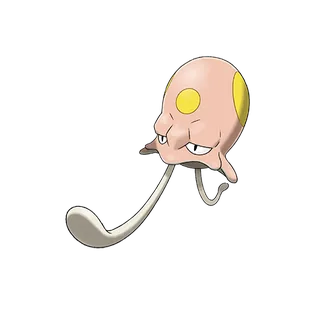
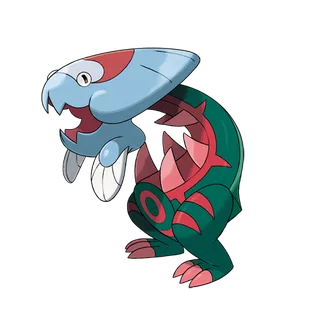
The great unsolved mysteries. What is under Mimikyu's rag? What is the secret of Wobbuffet's tail? What lies beneath a Dugtrio? Nobody has written the answer down — so neither will we.
Eats bugs in grassy areas.
It flaps its short wings to flush insects out of tall grass, then plucks them up with its stubby beak.
In Alola, farmers whose fields are troubled by bug Pokémon appreciate Spearow's vigorous appetite and look after it.
KANTO · JOHTO · ALOLA POKÉDEX
quote marksare copied exactly from a record. Everything else is retold in this guide's own words. The little tags at the bottom, and labels like HOENN, tell you which region's researchers wrote it down. A region's Pokédex doesn't only describe that region's own Pokémon, either: Kanto's researchers wrote records for Taillow, Luvdisc and even Jirachi. So a tag tells you who wrote the record — not where the Pokémon lives.
Most Pokédex records give distances in miles and feet, weights in pounds and temperatures in degrees Fahrenheit. This guide keeps those numbers exactly as they were written, and where it helps, adds a metric figure marked with ≈ (“about”). The ≈ numbers are our own sums, not the researchers' — so when you check them, check the original first.
Heights and weights in the Pokédex boxes come straight from the Pokédex height and weight records, in metres and kilograms. For scale, this guide often stands a Pokémon next to a 10-year-old trainer who is 1.4 m tall — about your height.
Start at the top of the world and climb down. Tap any layer to jump straight to it.
The highest habitat in the Pokémon world isn't a mountain. It's the ozone layer — far above the clouds, where no trainer has ever set up camp. And some Pokémon, the records say, came from even further away than that.
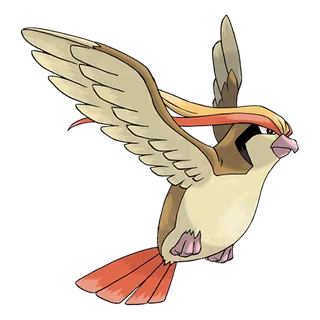
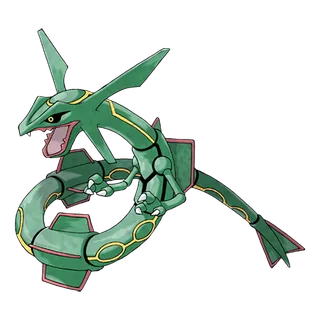
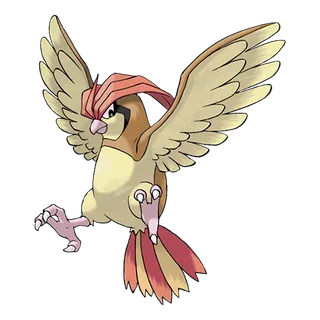
Lie on your back in an open field and look straight up. A Pidgeot might streak across the blue at Mach 2. A puff of Jumpluff might drift past, riding the seasonal winds. Keep looking — past the birds, past the clouds, past anything you could ever see from down here. Up there is the ozone layer — and something is said to have lived in it for hundreds of millions of years, without once coming down to the ground.
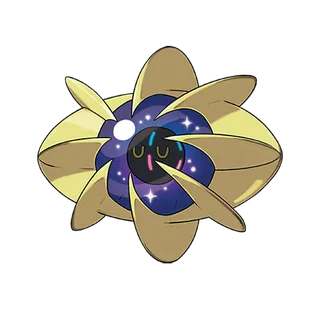
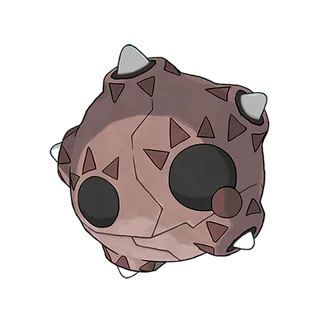
Now and then, though, something does fall out of that sky. A Minior whose shell has grown too heavy comes hurtling down towards the ground. Its shell is uncommonly tough, but the fall smashes it to pieces — and what is left is a small, brightly coloured core, a very long way from home. For most people, that is as close as they will ever get to the highest habitat in the world.
Rayquaza is said to have lived for hundreds of millions of years in the earth’s ozone layer
, never coming down to the ground. It lives so far above the clouds that it cannot be seen from the ground SINNOH — which is why, for a very long time, no one knew it existed.
The many meteoroids inside its body give it the energy to Mega Evolve. Mega Rayquaza stands 10.8 m tall.
HOENN · SINNOH · UNOVA · KALOS POKÉDEX
appears to feed on water and particles in the atmosphere.
flies forever through the ozone layer, consuming meteoroids for sustenance.
Two records from the same region, and they still don't agree. Nobody, it seems, has been close enough to watch it eat.
Minior is born in, and lives in, the ozone layer — where it becomes food for stronger Pokémon.
It feeds on dust in the atmosphere, and the colour of its core is said to be determined by the composition of the dust it eats.
One Alolan record says it was born from mutated nanoparticles.
When the shell around its core grows too heavy — or when it tries to run away — it hurtles down to the ground. Its shell is uncommonly tough, but the shock of the fall smashes it to pieces. It reacts when it's touched or called, but no one knows whether that means it is conscious.
ALOLA · PALDEA POKÉDEX
“Rayquaza eats Minior.”
It sounds as if it ought to be true — but it isn't in any record. Minior lives in the ozone layer, and so does Rayquaza, and Minior is food for “stronger Pokémon” — but no record ever names who those stronger Pokémon are.
Weigh it twice: in its Meteor Form, shell and all, Minior is recorded at 40.0 kg — but out of its shell, in Core form, it weighs just 0.3 kg, one of the lightest weights on record. Try both in the Size Lab.
Some Pokémon are said to have arrived from space. Read the records carefully, though: most of them say “said to”, “theorize” or “folktales”. Space is where the Pokédex is most careful of all.

First discovered 40 years ago at the site of a meteor strike. Some people theorize it came from space — However, no one has been able to prove this theory so far.
HOENN

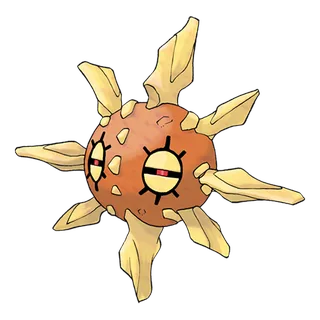
Solrock is a new species of Pokémon that is said to have fallen from space.
HOENN

An alien virus that fell to earth on a meteor underwent a DNA mutation to become this Pokémon SINNOH; Hoenn says the mutation happened after it was hit by a laser beam. The crystalline organ on its chest appears to be its brain. It appears where auroras are seen.

It's said to have appeared from a UFO that fell from the sky about 50 years ago.
ALOLA

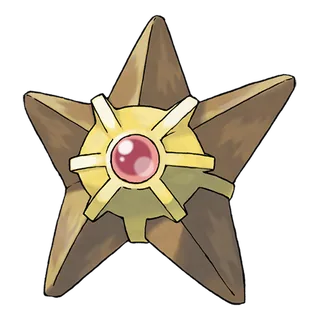
In many places, there are folktales of stardust falling into the ocean and becoming Staryu.
ALOLA

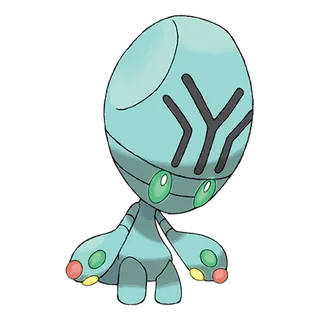
It was inside a meteorite that fell 20,000 years ago.
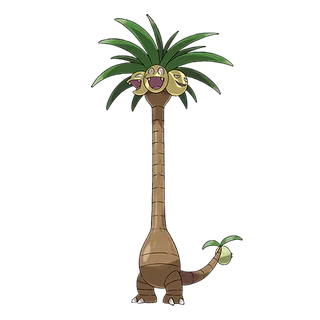
GALAR The tallest Pokémon on record in its everyday form.
On nights with a full moon, Clefairy gather from all over to dance — and bathing in moonlight makes them float UNOVA.
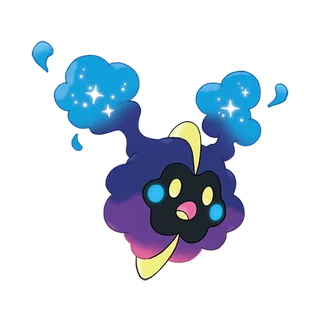
Its gaseous body is fragile, and it slowly grows by collecting dust from the air. So light that a gentle breeze can blow it away — though it doesn't seem to mind. Long ago it was called the child of the stars.
It is said to come from another world; when in trouble, it warps away to a safe hiding place.
ALOLA · GALAR POKÉDEX
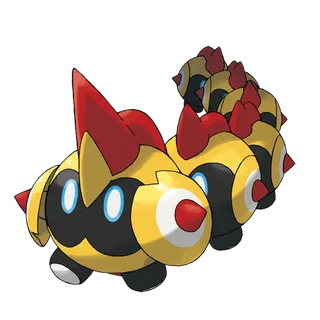
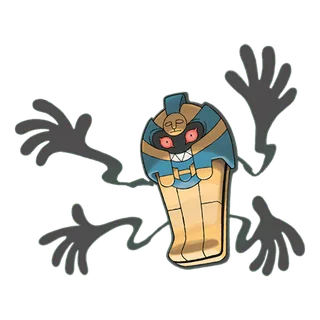
It lies motionless as if dead, faintly warm to the touch. Long ago it was called the cocoon of the stars
: the king who ruled ancient Alola gave it that name and built an altar to worship it. Something builds up around the black core inside its hard golden shell — a shell a Galar record calls harder than any known material.
ALOLA · GALAR POKÉDEX
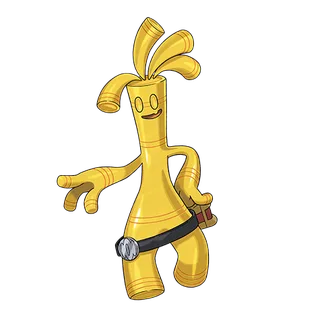
Follow the roller-coaster. A Pokémon so light that a breeze can blow it away becomes a 10-centimetre cocoon heavier than anything else ever recorded — tied with Celesteela at 999.9 kg — and then, when Cosmoem evolves into Solgaleo or Lunala, it gets lighter again. No record explains how something so small can be so heavy. The only hints: Cosmoem grows by absorbing light (Alola) or starlight (Galar), and sucks in dust at an astounding rate.
Then there's the story from Alola, where a girl named Lillie protected a Cosmog she called “Nebby” — and later carried her Cosmoem, Nebby, in her bag up to the altar. A 999.9 kg cocoon. In a bag. The records don't explain that either.
the only Pokémon people anticipate can fly into space, says a Kanto record — and none has managed it yet. A Johto record adds that, since it doesn't breathe, people are eager to try it in any environment.
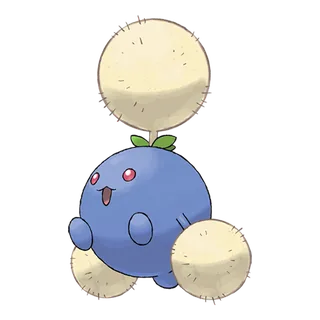
Blown by seasonal winds, it circles the globe, scattering cotton spores as it goes.
SINNOH
It rides warm southern winds to cross the sea and fly to foreign lands, and comes down to the ground when it meets cold air HOENN. Wherever it goes, it spreads its cotton-like spores all over the world to make more offspring JOHTO.
JOHTO · HOENN · SINNOH POKÉDEX
Only two Pokémon in this guide are recorded going all the way around the globe. One is a dragon: Dragonite, which can circle it in sixteen hours on its own wings. The other is a 3-kilogram ball of fluff that lets the wind do all the work. Its first stage, Hoppip, drifts on the wind too — and when Hoppip gather in fields and mountains, spring is on the way SINNOH.
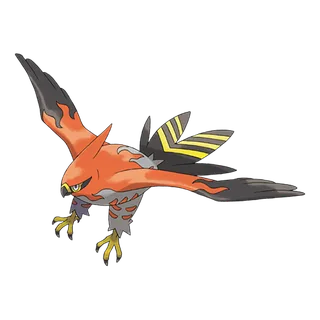
It dislikes cold seasons. They migrate to other lands in search of warmth, flying over 180 miles a day.
KANTO KALOS That's ≈ 290 km a day — our conversion — for a bird you could hold in two hands.
It races through the skies at Mach-2 speed.
KANTO JOHTO KALOS

Dives at prey at up to 310 mph and finishes it with a colossal kick KALOS ALOLA GALAR.

The “Mach Pokémon”. When it folds up its body and flies, it looks like a jet plane, and flies at sonic speed SINNOH KALOS.

Tucks in its forelegs to cut air resistance and can fly faster than a jet plane HOENN KANTO.

It flies across the sky at Mach speeds.
UNOVA KALOS — not bad for a clay statue.

Despite its big, bulky body, it is capable of circling the globe in just sixteen hours
.

Its wings are so powerful that a light flutter can blow apart ordinary houses, so it chooses to live deep under the sea HOENN. Flapping its wings is said to cause a 40-day storm
SINNOH UNOVA KALOS.

When volcanic ash darkened the sky, its fire is said to have replaced the sun. It once appeared in a bitterly cold winter and saved Pokémon from freezing UNOVA. Ancient people called it the rage of the sun ALOLA.

It was said to bring rain by opening portals to another world SINNOH UNOVA. One was dug up at a construction site after a 2,000-year sleep — and caused a news sensation.
Snow hides food, wind steals warmth, and in some places winter lasts most of the year. The Pokémon of the cold have answered with snow-eating, food-hiding, ice-building — and some very well-organised hunting.
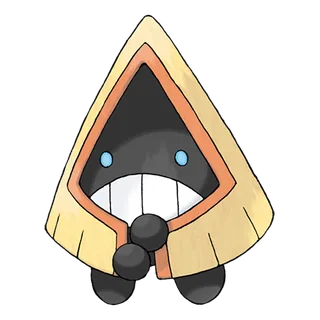
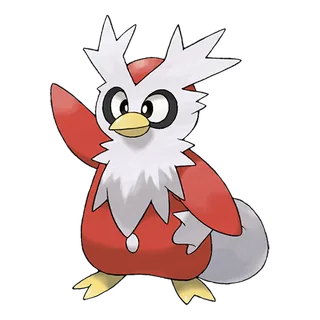
Picture a mountain path high above the snow line, late on a winter evening. Ahead of you, a little group of Snorunt — about five of them — shuffles across the drifts, and in snowy regions people say that seeing Snorunt late at night means snow will arrive by morning. On a tree beside the path is a mark: a sign one Weavile has left for the rest of its group. Down the slope, a Swinub is rooting under the ice for a mushroom, or a berry, or even a hot spring. And if you ever get lost up here, look out for a Delibird. It carries food bundled up in its tail all day long, and Unova and Kalos records say it shares that food with anyone lost in the mountains. (Just don't ask what's in the bundle. You'll find out below.)
Snorunt survives by eating only snow and ice.
In seasons without snow, such as spring and summer, it steals away to live quietly among the stalactites and stalagmites deep in caverns HOENN.
Snorunt tend to move in groups of around five, and in snowy regions, seeing them late at night means snowfall will arrive by morning. It can withstand -150°F — yet in warm Alola it survives in only a few places.
HOENN · ALOLA · GALAR POKÉDEX
Arrives alongside the first snow. It's thought that homes Snorunt visit will prosper for many generations. By tradition, one might offer a lump of ice made from pure water at one's front door.
HISUI · RESEARCH NOTES · SNORUNTHoenn's records tell the same folklore: old stories say a house visited by Snorunt is sure to prosper for a long, long time. Two regions, far apart in time and place, telling the same good-luck story.

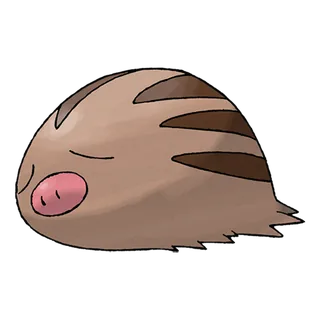
Its favourite food is a mushroom that grows under dead grass, and it occasionally roots out hot springs HOENN. It can find mushrooms, berries and even hot springs buried under ice UNOVA. Since ancient times, the people of Hisui have often relied upon this skill.

Uses its tusks to dig up food that has been buried under ice HOENN.

Before food becomes scarce in wintertime, it hoards food in many hidden places JOHTO. In Hisui it was known for stealing into Combee nests and taking the honey.

When the cold season arrived in Hisui, it wandered fields and mountains alike in search of its favourite berries — and its hunger made it a ferocious danger.
It carries food bundled up in its tail all day long. When someone is lost in the mountains, it shares that food.
UNOVA KALOS
A Hoenn record says a famous explorer managed to reach the peak of the world's highest mountain thanks to a Delibird sharing its food. But Delibird is omnivorous — so, an Alolan record admits, sometimes the food it hands to stranded people is bug Pokémon.
It nests at the edge of sharp cliffs and spends all day carrying food to its chicks JOHTO. The Delibird with the biggest tail is the boss of the flock!
ALOLA
JOHTO · HOENN · UNOVA · KALOS · ALOLA POKÉDEX
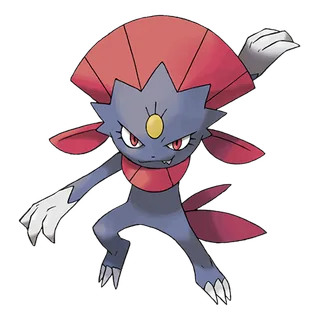
On Alola's snowy mountain tops lives one of the best-organised hunting teams in the world. Weavile travel in groups of four or five, leaving signs for one another on trees and rocks, and bring down their prey with coordinated attacks. An Alolan record names the menu:
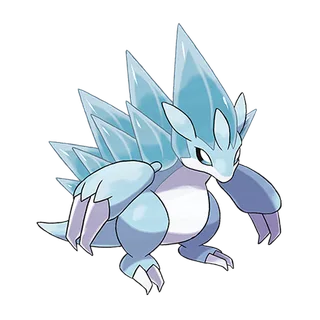
The record doesn't say which form, but the Vulpix and Sandshrew that live on Alola's snowy peaks are the icy Alolan kind. They don't go down easily. Alolan Sandshrew's ice shell is so hard it can't even roll into a ball, so it clings desperately to the ground to protect its soft belly. And when Sneasel attacks a Sandshrew, the hard skin can snap Sneasel's claws right off. In Galar, a pack of Weavile can bring down prey as large as Mamoswine.
It freezes its prey — but prefers Pokémon like Vanillite that are already frozen ALOLA. Hisui's researcher wrote that it devours prey as if they were frozen desserts
.
ALOLA · HISUI POKÉDEX
Breathes out air colder than -58°F. They live together in a skulk, helping one another, and freeze their prey solid with their breath.
ALOLA POKÉDEX
Put all of those hunters and hunted together and you get a food web: a map of who eats whom. You will find one in several chapters of this guide. Here is the web for the snowy peaks — tap any Pokémon to see its links, and the record behind each one.
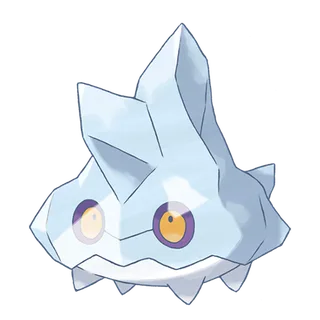
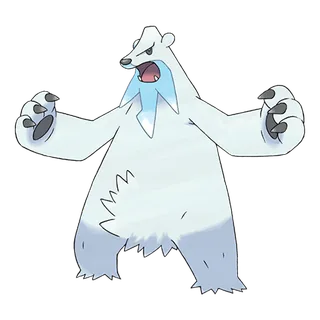
The way several Bergmite huddle on its back makes it look like an aircraft carrier made of ice.
KALOS
At high latitudes it swims among the icebergs with clusters of Bergmite on its back GALAR. A Bergmite secures itself by freezing its feet in place.
KALOS · GALAR POKÉDEX

Chills the air to -150°F to make its ice armour, and lives in herds above the snow line on mountains KALOS — on mountains blanketed in perennial snow, says Hisui.

Loves the cold seas of the north and creates pathways across the ocean by freezing its own breath UNOVA. When it gets tired, it freezes the seawater so it can rest on the ice GALAR.
A Hisui record noticed that during the season when drift ice approaches the shore, Spheal prefer to live on the ice — where fewer predators lurk — rather than on land. Out on the waves, a Spheal that spots prey tells the Walrein in its herd straight away GALAR. And when a group of Spheal eats, they all clap at once to show their pleasure, so mealtimes are noisy HOENN.
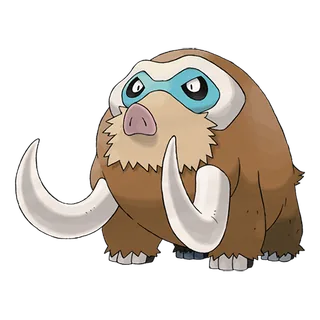
A frozen Mamoswine was dug from ice dating back 10,000 years.
A Johto record says it flourished worldwide during the ice age, but its population declined when the masses of ice began to dwindle. Sinnoh puts it more briefly: the population thinned when it turned warm after the ice age.
JOHTO · SINNOH · KALOS · HOENN POKÉDEX
I suspect that Hisui's frigid climate is in harmony with Mamoswine's constitution, thus awakening hidden potential.
HISUI · RESEARCH NOTES · MAMOSWINE
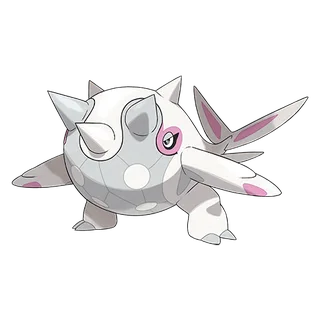
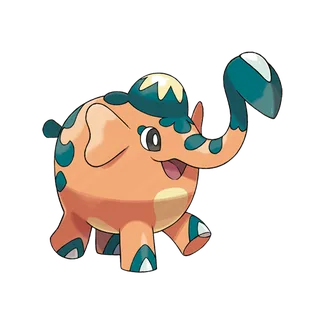
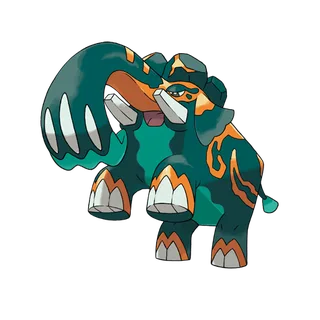
Wanders snowy, icy areas, protected by powerful muscles and a thick layer of fat under its skin PALDEA. Its young, Cetoddle, live in frigid regions in pods of five or so. At 700.0 kg, Cetitan is one of the heaviest Pokémon on record.
Why are Alola's Vulpix and Sandshrew icy in the first place? The records have a surprising answer for one of them — and no answer at all for the other. See Regional Forms.
Every trainer's journey starts in tall grass. To you it is the place where wild Pokémon jump out. To the Pokémon living there, it is a kitchen, a nursery, a battlefield and a hiding place — all at the same time.
Kneel down at the edge of a meadow and keep very still. Somewhere in the stalks, a small bug Pokémon is eating. Somewhere above it, a bird Pokémon is watching. And somewhere behind that bird, something else is watching the bird's nest. This is a food web: a tangle of who-eats-whom that connects nearly every Pokémon in the forest. Pull one thread and the whole web shivers.
The tall grass is full of bug Pokémon — and that makes it a hunting ground for small birds. Two of the most familiar Pokémon in any region turn out to be busy bug-catchers.
Kanto records say it hides in tall grass, foraging for small bugs. One Johto record describes a clever trick: it flaps its wings in the grass, stirring up a dust cloud that drives insect prey out into the open.
KANTO · JOHTO POKÉDEX
Flushes insects out of the grass with its short wings and plucks them with its stubby beak. Its keening cry carries over half a mile — and when it echoes all around, the flock is warning one another of danger.
KANTO · JOHTO · HOENN · ALOLA POKÉDEX
Maybe both are true. A naturalist would say: the same behaviour can do two jobs.
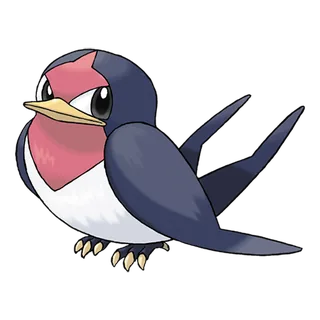
If the tall grass has a favourite snack, it is Wurmple. Hoenn records say Taillow feeds on Wurmple that live in forests
, and that Swellow targets it as prey too. In Sinnoh it has to defend itself from Starly. A Unova record puts it simply: it is often targeted by bird Pokémon.
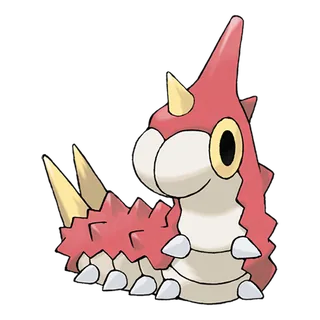
But Wurmple is no pushover. Its life, pieced together from four regions, looks like this:
It loves to eat leaves (Sinnoh). It also uses the spikes on its rear to peel bark off trees and feeds on the sap that oozes out, clinging on with its suction-pad feet HOENN. Hisui's researcher noted simply that it likes sap and is abundant in the wild.
It spits a white silk that turns sticky the moment it touches air SINNOH.
If a Starly attacks, it defends itself with its spiked rear SINNOH. Against Swellow, it weakens the foe by leaking poison from its spikes HOENN.

Its claws can carry prey such as an Exeggcute to its nest over 60 miles away KANTO JOHTO.

Skims the surface of water at high speed to pick off unwary prey such as Magikarp KANTO.

It sees in minimal light and its wings make no sound, so it never fails at catching prey in darkness HOENN. Alola calls it the emperor of dark nights.
In Alola, fish Pokémon are its prey.There it circles above the ocean looking for food — and if you carry food through its territory, it will snatch it away in a flash. Where a Pokémon lives can change what it eats.
Eggs and chicks can't run away, so a bird's nest is a treasure chest for some very sneaky Pokémon.

Moving silently and stealthily, it eats the eggs of birds, such as Pidgey and Spearow, whole
KANTO KALOS.

It waits for the parents to leave their nest, then sneaks in to steal the eggs GALAR. Sinnoh: it feeds on eggs stolen from nests.

Lays traps of electrified threads near the nests of bird Pokémon, aiming to snare chicks that are not yet good at flying GALAR.

Goes around stealing food and eggs. Its natural enemy? Boltund GALAR.
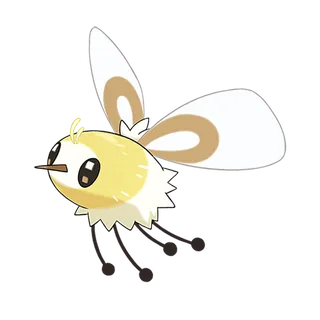
Alola's flower meadows look peaceful. They are not. Nectar and pollen are Cutiefly's favourite fare — but they are Butterfree's favourite food too, and the two have heated battles over territory. Cutiefly can even sense the auras of flowers to tell which are about to bloom. Meanwhile, two ambush hunters wait for the winner.
Cutiefly0.1 m · 0.2 kg
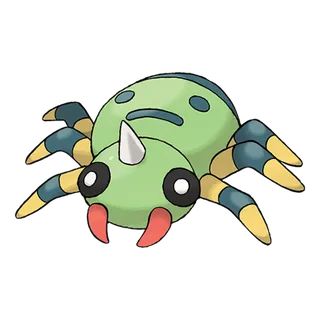
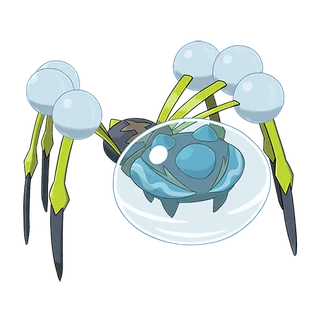
Spinarakwaits in its web
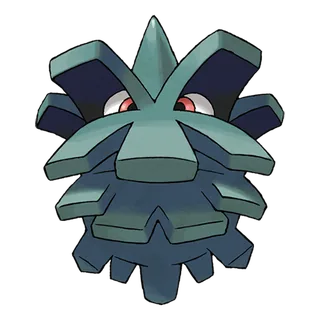
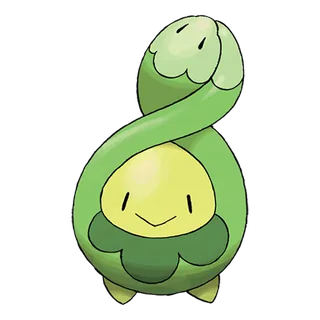
Pinecohangs motionless from treesAipom watches from the treetops. When it spots its favourite food, Bounsweet, Aipom gets excited and pounces ALOLA.
Any Corvisquire that pecks at a Steenee is greeted with a smack from its sepals followed by a sharp kick GALAR. Not every “prey” is easy prey.
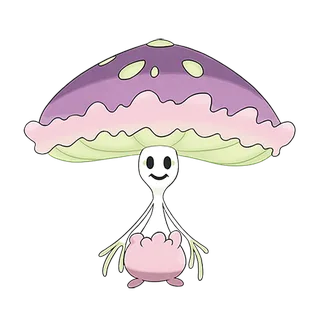
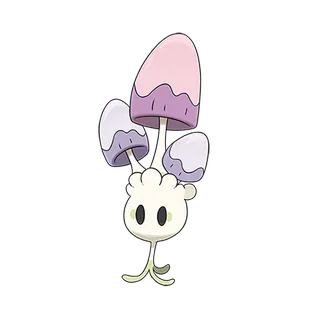
It drowses the day away, nourishing itself by sucking from tree roots, then wakes at nightfall and wanders off in search of a new tree. Morelull live in forests that stay dark even during the day, and scatter glowing spores that send anyone who sees them into a deep slumber.
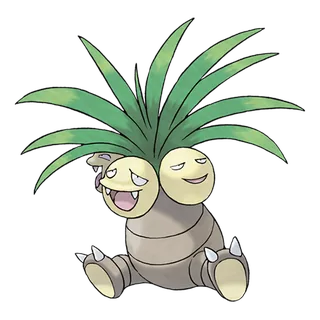
Pokémon living in the forest eat the delicious caps on Morelull's head. The caps regrow overnight.
ALOLA · GALAR POKÉDEX
Its evolution, Shiinotic, lures prey with flickering spores, sends it to sleep and then drains its energy. Yet it is kind to its own: if one of its kind is weakened, it helps by sending it vitality. Alolan records warn that forests where Shiinotic live are treacherous at night — people confused by its strange lights can never find their way home again — and when a Shiinotic fights a Parasect over territory, the whole area gets coated in spores.
And yet, the strangest line of all: nighttime tours of forests where Morelull live are popular in Alola. Glowing mushrooms, it turns out, are worth the risk.

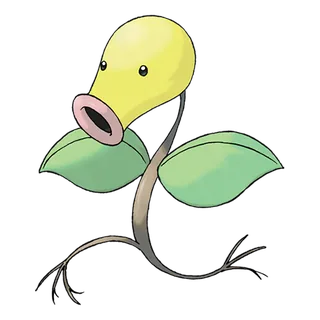
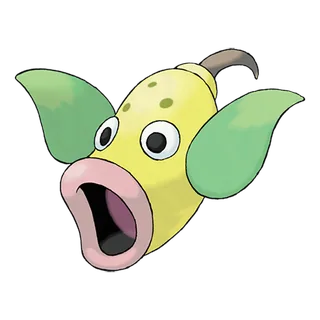
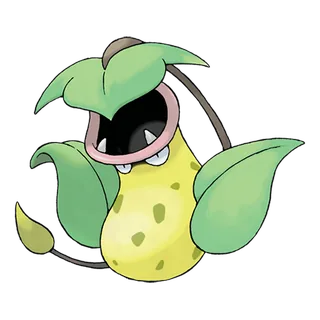
A carnivorous Pokémon that traps and eats bugs.
It prefers hot, humid places and snatches tiny insects with its vines KANTO.

At night it hooks itself onto a branch to sleep. If it moves around in its sleep, it may wake up to find itself on the ground HOENN.

Pools a fluid with a honey-like scent in its mouth — which is really an acid that dissolves anything SINNOH.
A few forest Pokémon don't just eat their food — they cook it.

This clever forest-dweller roasts tough berries with an electric shock before consuming them.
HISUI

Grills berries and bug Pokémon with electric shocks. It usually nests in the holes Pikipek gouge in trees ALOLA.

Wraps its prey up in its heated body and cooks it in its coils GALAR.
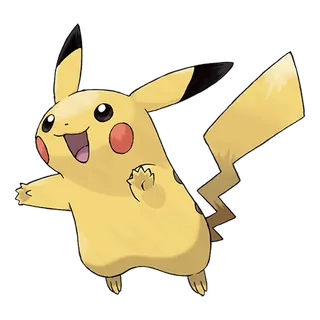
touch their tails together and exchange electricityas a greeting.
KANTO · HOENN · SINNOH · ALOLA · GALAR · HISUI POKÉDEX
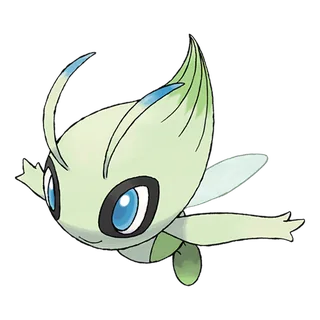
Celebi wanders across time, and grass and trees flourish in forests where it has appeared JOHTO. When it vanishes deep in a forest, it is said to leave behind an egg it brought from the future
.
Galar's records say it has been described as a forest deity in records from many different eras, and that it can heal wounds. In Sinnoh, Unova and Kalos records, it is said to appear only in peaceful times.
JOHTO · HOENN · SINNOH · GALAR POKÉDEX
Celebi's full story — the shrine, the time travel and the legends — is told in The Book of Legends, Book 5 on your shelf.
Towns and cities are a habitat too. They have food (rubbish), energy (power lines), shelter (houses) and warmth. Some Pokémon have simply moved in — and a few have turned up inside the most ordinary objects in your home.
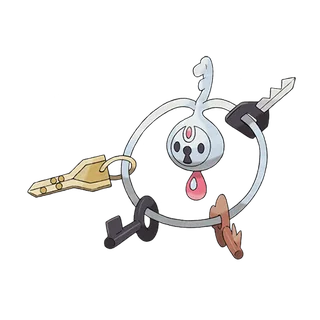
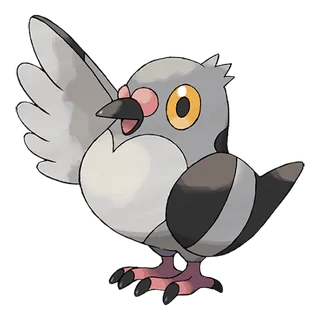
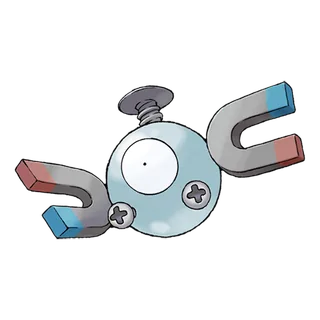
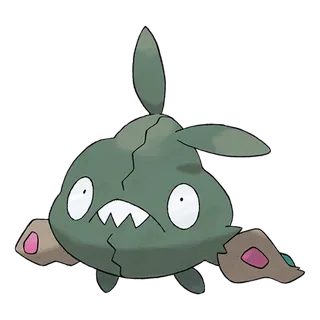
Flick the light switch. Nothing. Before you blame the storm, go and open the breaker box: a Hoenn record says you may find a large number of Magnemite clinging to it. While you're up, check your key ring. In Alola, Klefki sneak into homes to steal keys — and, apparently, they only like master keys. Outside, someone is scattering food for the Pidove in the plaza (careful: several hundred can gather at once), and a Trubbish is trailing a little way behind somebody who has just dropped litter. Then the sun goes down and the night shift begins. Alolan Rattata come out to run around town, gnawing through doors in search of good food for their boss. None of them ever asked permission to move in.
Long ago it lived in mines, but once the minerals that make up its diet became scarcer, Klefki began appearing in human settlements.
ALOLA
It inserts its horn into chinks in metal to absorb metal ions, and — for some reason — collects keys. It never lets go of a key it likes, so people give it the keys to vaults and safes to prevent crime KALOS. In Paldea, noble families of the past trusted their vault keys to a Klefki and passed it down in the family, from parents to children. But in Alola it sneaks into homes to steal keys, and it apparently only likes master keys.
KALOS · ALOLA · GALAR · PALDEA POKÉDEX
A Galar record jokes that Klefki loves keys so much its head needed to look like one too.

Lives in cities and is accustomed to people; flocks gather in parks and plazas UNOVA. If you're scattering food for them, be careful— several hundred of them can gather at once.
GALAR

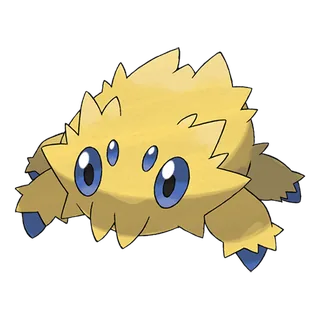
It can't make its own electricity, so in the wild it clings to big Pokémon for their static UNOVA — in Galar, They're often found sticking to Yamper's hindquarters.
But Joltik that live in cities have learned a technique for sucking electricity from the outlets in houses UNOVA.

If your house has a power outage, check your circuit breakers. You may find a large number of this Pokémon clinging to the breaker box.
HOENN An Alolan record wonders whether attacks on power plants have increased because power lines are often buried these days.

People call it “The Bomb Ball”. It feeds on electricity in the air — so on stormy days you can see Electrode exploding everywhere from overeating. Others gather at power plants and cause massive blackouts in nearby cities HOENN. A Johto record says that when it has too much electricity and nothing to do, it explodes for fun.

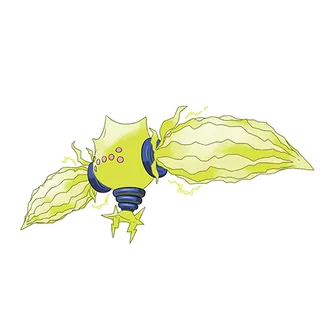
A cluster of electrical energy whose whole body is a single organ that generates electricity — capable of creating all Galar’s electricity
. GALAR
A chemical reaction between garbage bags and industrial waste created this Pokémon. Wanting more garbage, they follow people who litter.
UNOVA
Its evolution Garbodor makes poison whose main component depends on what sort of trash it ate GALAR.
UNOVA · GALAR POKÉDEX
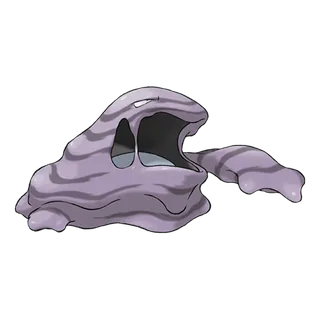
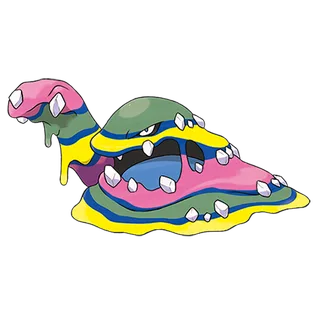
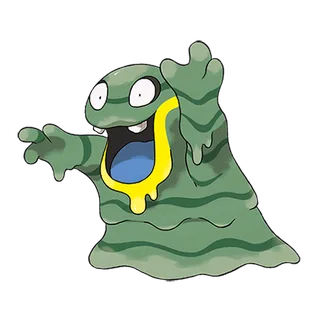
Here is one of the most surprising stories in all the Pokédexes, told in a handful of Alolan records. The ordinary kind of Grimer lives on sludge and dirty water. But The wastewater coming from factories is clean these days, so Grimer have nothing to eat.
They are said to be on the verge of extinction, and Muk's numbers have dropped so sharply that sludge ponds are being built to save them. After recent environmental improvements, the original Muk is hardly seen at all.
Meanwhile, Alola had a garbage problem — so Grimer were brought in to solve it. A Grimer, which had been brought in to solve a problem with garbage, developed over time into this form.
About a hundred of them now live at Alola's waste-disposal site, hard workers who eat a lot of trash. The garbage Alolan Muk eats causes continuous chemical changes in its body, which give it its vivid colours. (And if an Alolan Muk isn't fed any trash for a while, it may smash its Trainer's furniture and eat the pieces.)


Cleaner factories nearly starved one kind — while a rubbish-eating kind thrives. Helping the environment can still surprise you.
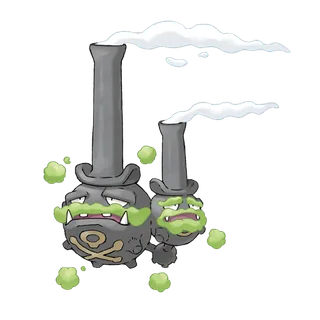
Long ago, during a time when droves of factories fouled the air with pollution, Weezing changed into this form for some reason.
It consumes particles that contaminate the air. Instead of leaving droppings, it expels clean air.
Galarian Weezing relish the fumes belched by Trubbish.
GALAR POKÉDEX
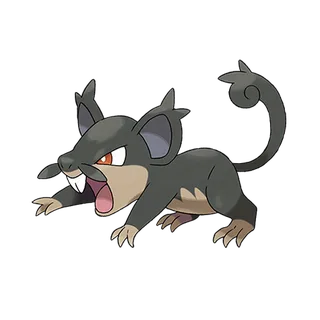
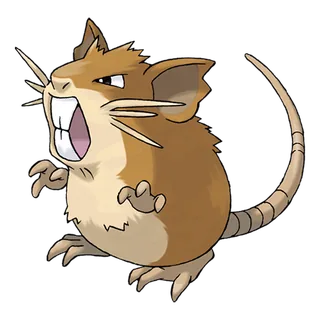
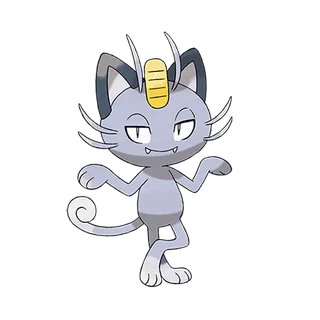
When the sun goes down it becomes active, running around town on a chase for good food for the boss of its nest—Raticate.
It gnaws through doors to sneak into people's homes. A massive outbreak of them has become an issue of public concern.
ALOLA POKÉDEX
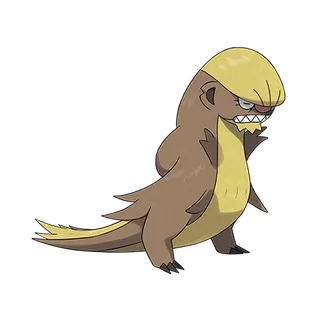
Its first stage, Yungoos, did not originally live in Alola. Gumshoos was brought over a long time ago, when there was a huge Rattata outbreak. It adores having Rattata and Raticate for dinner, but as it's diurnal, it never encounters them.
ALOLA POKÉDEX
Restaurants where Raticate live have a good reputation.
Said to have been born when a lonely spirit possessed a cold cup of leftover tea GALAR. Its teacup is a famous antique, and many forgeries are in circulation. If you drink it, it gets into your body and steals your vitality — It also tastes awful.
And some tea fanatics go to great pains to prepare the perfect tea and teacup, then wait for a Sinistea to move in PALDEA.
GALAR · PALDEA POKÉDEX
Lives in antique teapots — most of them fakes. It multiplies by pouring some of itself into leftover tea. Its tea is said to taste delicious, but drinking too much of it is dangerous.
GALAR · PALDEA POKÉDEX

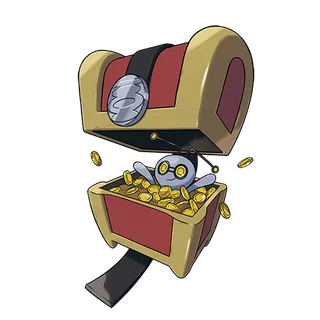
Born inside a treasure chest about 1,500 years ago, it drains the life force of scoundrels who try to steal the treasure PALDEA. Because no one realizes it's a Pokémon, it sometimes gets left in the corners of shops.

Born from passion that soaked into a coin, it wanders around trying to return to the chest it once lived in. If it senses it's about to be found, it turns invisible — leaving only its coin visible.

Its body seems to be made up of 1,000 coins.
It fires coin after coin at enemies, yet gets along well with others PALDEA. It likes lively places, and some wild Gholdengo even live in cities KALOS.

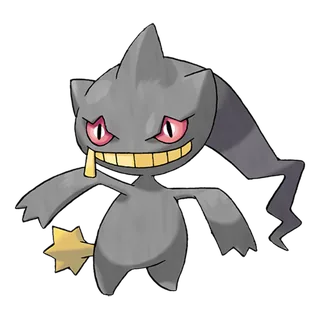
Once a plush doll that someone threw away; cursed energy soaked into its stuffing. It searches for the child who abandoned it, and one Hoenn record says Banette live in garbage dumps. But an Alolan record offers hope: treat a Banette well, and some say it will once more become a stuffed toy
.
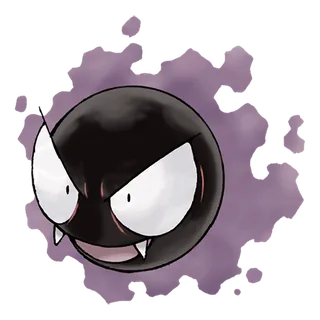
Not every Pokémon likes town life. An Alolan record says Haunter fears light — and may be close to dying out in cities that stay brightly lit at night. Hoenn records say strong wind makes Gastly's gas body dwindle, so groups of Gastly cluster under the eaves of houses to shelter from it. More about them in After Dark.
In the desert, water is treasure and a hiding place is life. On a volcano, the ground itself is on fire. The Pokémon that live in these places have some of the strangest bodies — and cleverest tricks — in this whole guide.
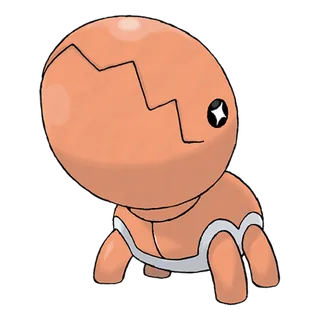
Walk across the sand and you may find a smooth, sloping hollow, shaped like a bowl. Don't step in. Hoenn records describe it exactly: Trapinch's nest is a sloped, bowl-like pit dug in sand.
Trapinch waits at the very bottom for prey to tumble down the slope. It is built for waiting. Hoenn says it can go a whole week without any water; Alola says it can live for a week without eating a thing. (Put those two records together and you get a Pokémon that could, in theory, do both.)
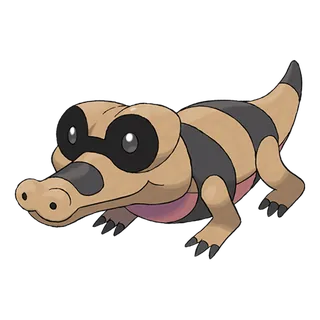
Trapinch has one weakness, though, and an Alolan researcher spotted it. Its jaws are strong enough to crush rocks — but so heavy that if it flips over, it can't get back up. Sandile seize those moments as their chance.
In fact, another Alolan record says Sandile's favourite food is Trapinch.
It lives buried in sun-warmed sand to keep its body temperature from dropping, and a dark membrane shields its eyes from the sun UNOVA.
Still poor at hunting, it mostly eats things that have collapsed in the desert. That is why it is called the cleaner of the desert.
UNOVA · ALOLA POKÉDEX
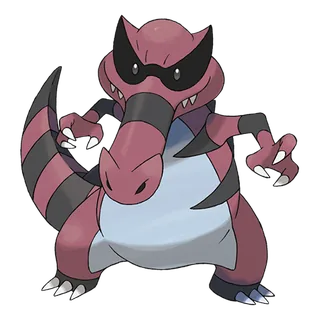
It conceals itself in sandstorms that Flygon whip up and waits patiently for prey to appear.
By flapping their wings, Flygon cause sandstorms that conceal Krookodile. The team then splits the prey they catch.
ALOLA POKÉDEX

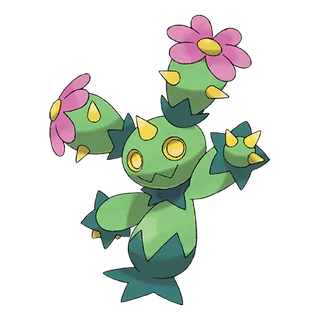
By storing water in its body, this desert dweller can survive for 30 days without water.
Once a year, a yellow flower blooms on it SINNOH HOENN.

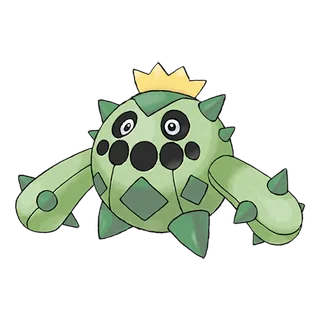
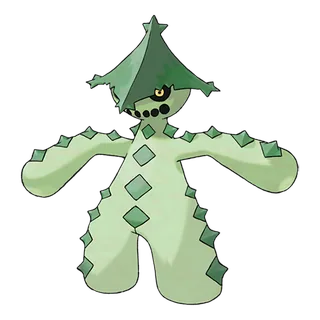
It stays perfectly still by day so it loses no moisture to the sun, and hunts at night. After thousands of years in harsh deserts, its blood turned into the same substances as sand HOENN. Hoenn warns that if a traveller crosses the desert in the thick of night, Cacturne follow in a ragtag group — and Johto says the packs keep following until the travellers can no longer move.

Instead of perspiration, it expels grainy sand from its body.
SINNOH It spends cold desert nights burrowed snugly into the sand GALAR, in colonies of around ten.

Once each year it scatters seeds jam-packed with nutrients, making them a precious food source out in the desert
GALAR. To drive away the bird Pokémon that prey on its seeds, it does an up-tempo song and dance UNOVA.
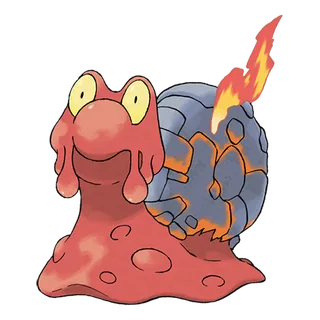
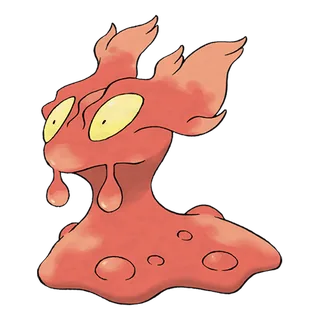
Its body temperature is roughly 18,000 degrees F.
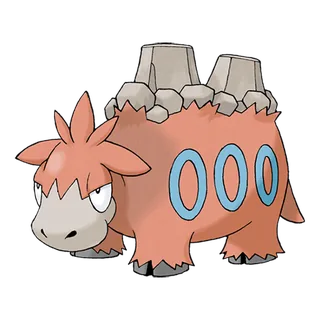
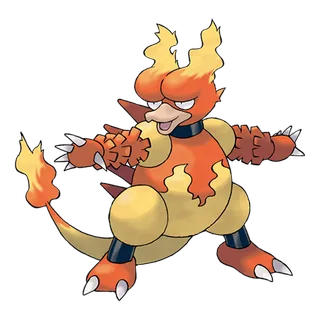
Water vaporizes the moment it touches Magcargo; rain falling on it turns straight into steam, wrapping the whole area in thick fog HOENN. Flames spout from the gaps in its hardened shell SINNOH.
That shell is really its own skin, cooled and hardened — so brittle that a touch makes it crumble. Magcargo gets back to full size by dipping itself in magma. One Hoenn record says tens of thousands of years spent in volcanic craters turned Magcargo's bodies into magma.
HOENN · SINNOH · UNOVA · JOHTO · KANTO POKÉDEX

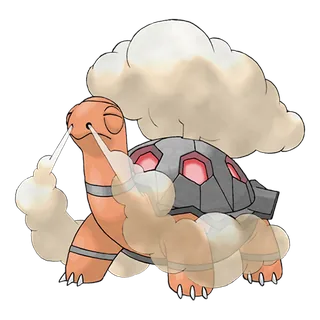
It has no blood — intensely hot magma circulates through its body instead. It must keep moving, or its body cools and hardens HOENN.

Lives in volcano craters. The volcanoes on its back erupt every 10 years HOENN JOHTO — or whenever it becomes really angry UNOVA.

Burns coal for energy. You find abandoned coal mines full of them.
JOHTO KALOS GALAR

Dwells in volcanic caves SINNOH. Stories in Hisui told of it being born from the boiling magma within Mount Coronet.

Legend has it that it was born from the crater of a volcano. When wounded, it bathes in lava to heal, much as one would soak in a hot spring
HISUI.
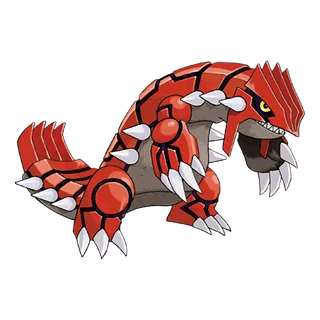
Hoenn mythology describes Groudon as the Pokémon that raised lands and expanded continents
. Its light and heat can scatter rain clouds and make water evaporate — and one Hoenn record says it came as a saviour to people suffering from terrible floods.
It sleeps in magma underground and is said to make volcanoes erupt when it wakes. Through Primal Reversion it takes back its true form, able to make magma erupt and expand the landmass of the world.
HOENN · JOHTO · SINNOH · UNOVA · KALOS POKÉDEX
Groudon has a mirror in the sea. Turn to Kyogre to see how the two saved people from each other's kind of disaster.
The sea covers more of the Pokémon world than anything else, and it is full of drama: a tiny fish that everyone wants to eat, a reef that is also a city, bullies, giants, and an anchor that can knock out the biggest Pokémon in the sea.
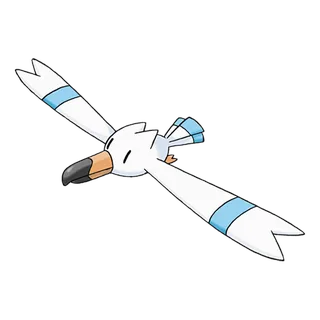
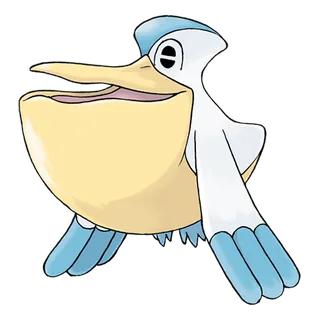
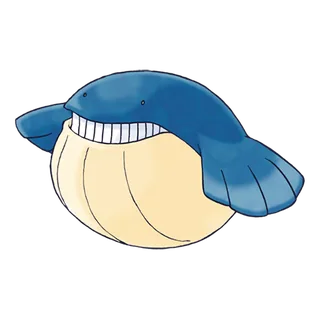
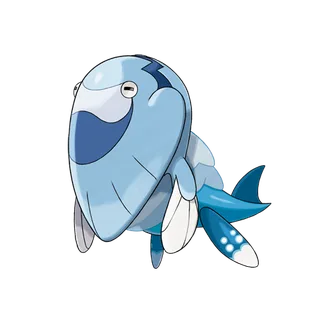
Stand at the end of a pier at dusk and watch the water. Out past the waves, a flock of Wingull is circling, hunting for its favourite food. A Pelipper swoops down and comes up with its big bill full. Further out there is a huge splash, then another: a pod of Wailord, leaping out of the water to herd their prey. Every one of them is after the same thing — a tiny, weak and, the records admit, notably tasty fish that everyone in the sea wants to eat. Somewhere under the waves, one of those little fish is in trouble right now. But it has a trick, and it is a very good one.
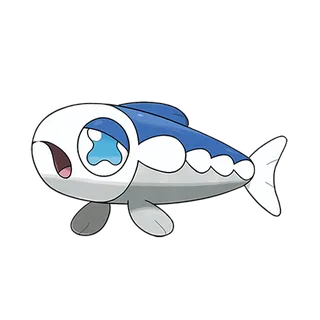
It's awfully weak and notably tasty, so everyone is always out to get it.
When it's in trouble, its eyes moisten and begin to shine. The light — visible almost 25 miles away
— calls its comrades, and they gather to stand together against their enemies. They're weak, so they move in schools, though a lone Wishiwashi that has strayed from its school is often seen too.
ALOLA · GALAR POKÉDEX
Solo Form0.2 m · 0.3 kg
School Form8.2 m · 78.6 kgFrom 0.2 metres to 8.2 metres! Apart from the Gigantamax and Eternamax giants on the Record Board, no Pokémon in this guide changes size so dramatically in a single moment. The records don't say exactly how many Wishiwashi make a school — but they do list who's hungry for them:

Circles the sea looking for its favorite food—Wishiwashi ALOLA.

Scoops them up: It can devour more than 30 at one go!
ALOLA

Especially fond of Wishiwashi ALOLA.

Eats a solid ton of Wishiwashi every day ALOLA GALAR.

Its pods can swallow entire schools of Wishiwashi whole.
ALOLA
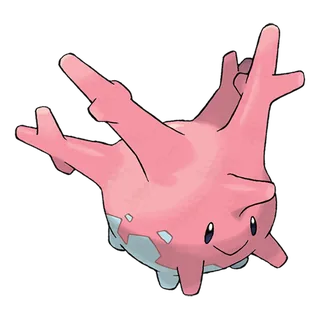
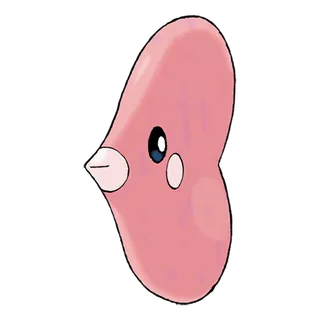
Clusters of Corsola congregate in warm seas, where they serve as ideal hiding places for smaller Pokémon HOENN. Luvdisc especially like sleeping in the spaces between Corsola's branches ALOLA. In sunlight the branches glitter in seven colours.
In a south sea nation, the people live in communities that are built on groups of these Pokémon.
JOHTO KANTO
Corsola need clean water. If the sea becomes polluted, their beautiful branches lose their colour and crumble away HOENN; they cannot survive in polluted water JOHTO. In Alola, they are a deep, vibrant pink thanks to seas filled with nutrition.
KANTO · JOHTO · HOENN · ALOLA POKÉDEX
Nobody knows which “south sea nation” the record means — the Pokédex never names it. One more mystery for your notebook.
Every town has its troublemakers. On the reef, it's Mareanie. An Alolan record says the coral on Corsola's head is as good as a five-star banquet
to it. Corsola have learned a desperate defence: when chased, a Corsola will sometimes snap off its own branches as a diversion while it escapes. In Alola, where Mareanie are plentiful, many Corsola have stubby branches. Mareanie's evolution, Toxapex, leaves a trail of Corsola bits scattered in its wake.
And here's a twist from Galar: Unlike their Alolan counterparts, the Mareanie of the Galar region have not yet figured out that the branches of Corsola are delicious.
Galar's Corsola had better hope nobody tells them.
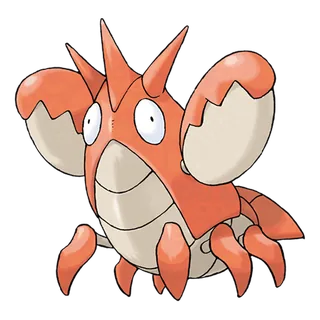
Mareanie isn't safe either. Bruxish's skin is thick enough to fend off Mareanie's spikes — and Bruxish crunches up those spikes and eats them. It stuns prey with psychokinesis and grinds it with its strong teeth: Even Shellder's shell is no match for it.
Corsolabranches regrow
Mareaniespiky reef raider
Bruxishtop of this chaingrows it back in just one night.
grow back in about three days.
Craftsmen in Alola work with branches that have naturally fallen off — and they hate Mareanie for eating them first.
Charges at any movement it sees, leading with its sharply pointed jaw — It's very proud of that jaw.
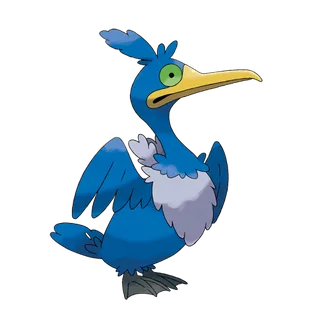
After it's eaten its fill, its movements become extremely sluggish. That's when Cramorant swallows it up.
GALAR POKÉDEX
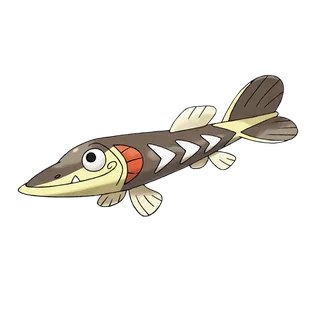
This hungry Pokémon swallows Arrokuda whole. Occasionally it makes a mistake and tries to swallow a Pokémon other than its preferred prey — and it may even forget what it's battling mid-fight.
GALAR POKÉDEX
Arrokuda grows into Barraskewda, whose jaw is as sharp as a spear and as strong as steel
and which spins its tail fins to surge forward at over 100 knots (≈ 115 mph — our conversion). A Galar record adds, rather alarmingly, that Barraskewda's flesh is surprisingly tasty, too.

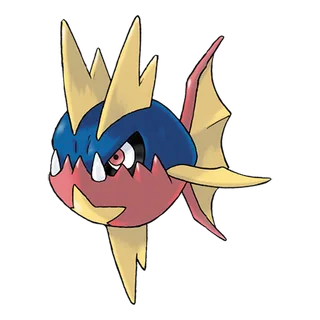
Nicknamed the bully of the sea
. Its fangs grow back immediately if they snap off. It jets seawater from its rear to reach 75 mph — but can't swim long distances HOENN. Its discarded fangs are carried as charms against mishaps at sea ALOLA.

Alone, timid. But When five or so of them get together, they suddenly turn ferocious!
It fights with Basculin over food ALOLA.

Other life-forms refuse to live in ponds inhabited by this Pokémon, making them desolate places.
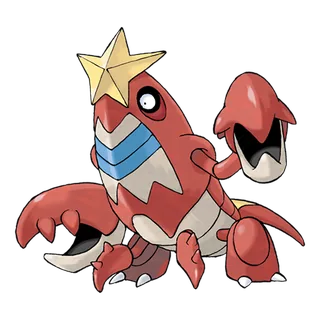
HOENN It picks other Pokémon up with its pincers and tosses them out of its pond SINNOH.

Originally foreign Pokémon imported as pets, which turned up in the wild HOENN. So hardy it thrives in filthy water: Feebas and Corphish are about the only Pokémon that live in stagnant ditches ALOLA.
Lapras was over hunted almost to extinction
KANTO. Hoenn records say that in the evenings it sang plaintively, seeking the few others of its kind that remained.
Protective regulations were brought in. Lapras were cherished — so much that there is now an overabundance of them ALOLA.
The fish Pokémon population has declined in waters with too many Lapras.
ALOLA
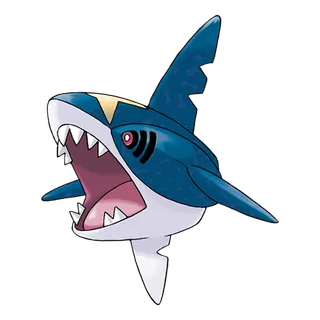
The same story repeats elsewhere. When Wailord become too numerous, they eat so many fish Pokémon that fishermen have to chase them off. And Sharpedo has what an Alolan record calls a sad history: its dorsal fin was once a treasured foodstuff, so it became a victim of overfishing. Protect one Pokémon, and you change life for all the others — that is the hardest lesson in this book.
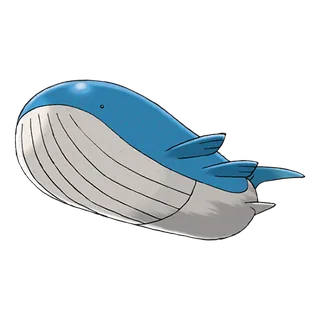
Hoenn records call it the largest of all identified Pokémon up to now
, and Sinnoh, Unova and Kalos call it the biggest of all Pokémon. It can dive to almost 10,000 feet on a single breath.
Wailord hunt in pods, leaping out of the water to herd prey with huge splashes. Wailord watching is a popular sightseeing activity. And when a small Wailmer is attacked by Sharpedo or Dhelmise, the whole pod works together to protect it ALOLA.
HOENN · SINNOH · UNOVA · KALOS · ALOLA POKÉDEX
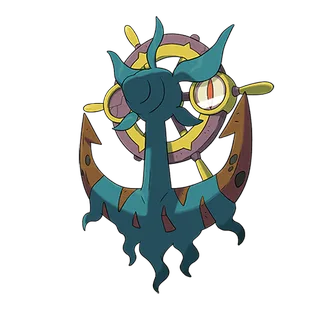
The green “seaweed” is actually its body. By swinging its massive anchor, it can KO Wailord in a single blow.
It only likes to go after big prey like Wailord, which it wraps in seaweed while draining their vitality ALOLA.
Galar records say it was born when a piece of seaweed merged with debris from a sunken ship; an Alolan record says the soul of drifting seaweed was reborn as Dhelmise. Its chain-like seaweed stretches out for hundreds of yards. And for some reason, it gets along well with Skrelp — and Dragalge gets along really well with it.
ALOLA · GALAR POKÉDEX
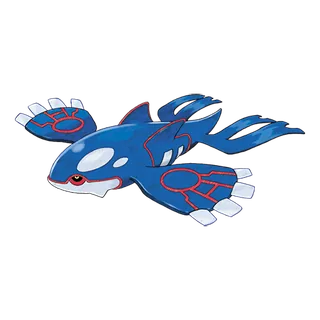
Kyogre can create rain clouds that cover the entire sky
and bring torrential downpours. Mythology names it as the Pokémon that expanded the sea, covering the land with torrential rain and towering tidal waves. After a cataclysmic battle with Groudon, it went to sleep at the bottom of the sea, or in a marine trench. Through Primal Reversion it can summon storms that make sea levels rise. Primal Kyogre stands 9.8 m tall.
HOENN · KANTO · JOHTO · SINNOH · UNOVA · KALOS POKÉDEX

A Hoenn record says it came as a saviour to people suffering from terrible floods.

Another Hoenn record says it saved people who were suffering from droughts.
Each one rescued people from the other one's kind of disaster. Legends say it was Rayquaza that finally put a stop to their clash.
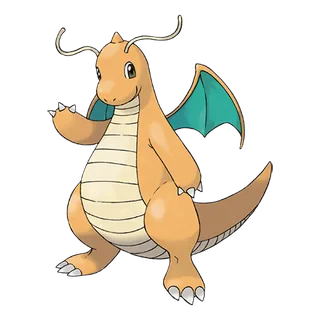
Kindhearted Dragonite guide lost and foundering ships in storms safely to land, and rescue people and Pokémon from drowning. Kanto records once called it an extremely rare marine Pokémon with intelligence said to match a human's.
Somewhere in the ocean, Johto records say, there is an island where only Dragonite gather. An Alolan record tells of a Dragonite that took a shipwrecked man to that remote island — a paradise of Dragonite. A ship's captain called it the sea incarnate, and figureheads shaped like Dragonite decorate the bows of many ships GALAR.
KANTO · JOHTO · HOENN · ALOLA · GALAR POKÉDEX
Go down far enough and the sunlight runs out. An Alolan record puts the rule of the deep in a single sentence: Deep down at the bottom of the ocean, prey is scarce.
Down here, Pokémon make their own light — to hunt, to lure, and to be seen.
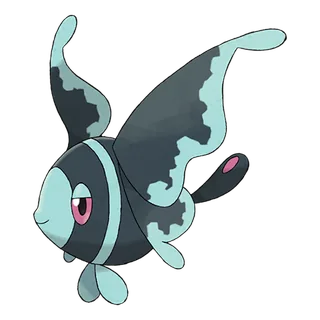
In Hisui, Lumineon schooling near the surface at night looked as though there were shining stars right there.

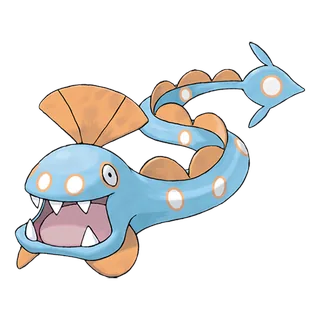
Huntail lives deep in the sea where no light ever filters down, and lights up its small fishlike tail to attract prey KANTO. It lives so deep that it went unnoticed by people for a long time HOENN.

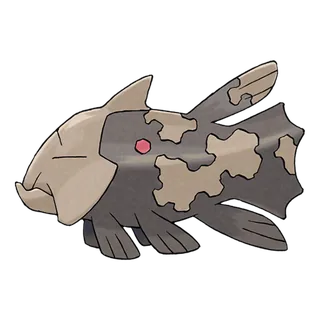
Relicanth walks on the seafloor using its pectoral fins HOENN. Its body is filled with fat, so it can withstand the water pressure of the deep sea ALOLA.

How deep Wailord can dive on just one breath SINNOH.

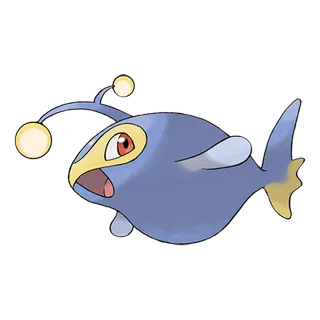
Lanturn's light is so bright it can light up the sea's surface from a depth of over three miles. Its nickname: The Deep-Sea Star.

Its appearance hasn't changed in 100,000,000 years, so it's called a living fossil.
It was discovered during a deep-sea expedition and named after a variation of its discoverer's name.
Rock-hard scales and oil-filled swim bladders help it survive the crushing pressure GALAR. Its teeth have withered away over time, so it now lives on microscopic organisms it sucks up ALOLA.
HOENN · ALOLA · GALAR POKÉDEX
Lumineon and Lanturn are rivals: they get into fierce disputes over food ALOLA — Sinnoh and Unova records say simply that Lumineon competes for food with Lanturn. Lumineon's fins haul it over the seabed in search of its favourite food, Starmie. Staryu get nibbled on by Lumineon and other fish Pokémon too, but thanks to their red cores they regenerate fast, so they don't seem to mind. Lanturn hunts by blinding its prey with a burst of light and swallowing it whole. And when Gorebyss has eaten, an Alolan record notes, its leftovers sink to the seafloor, where they become food for other Pokémon. Nothing in the deep goes to waste.
Right now, somewhere beneath the path you walk on, a Pokémon is digging. The ground of the Pokémon world is threaded with tunnels — and like any city, its streets are built by some and borrowed by others.
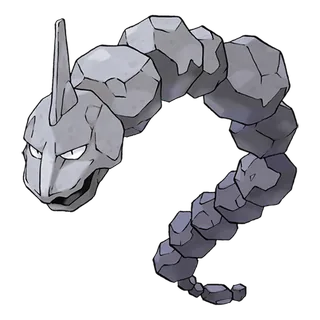
The digging starts with the biggest tunneller of all. Onix bores through the ground at 50 mph by squirming and twisting its huge, rugged body, eating boulders as it goes. A Hoenn record says it has a magnet in its brain that works like a compass, so it never loses its way. But Onix never stays long in one tunnel — and Kanto and Kalos records say the tunnels it leaves behind are used as homes by Diglett.
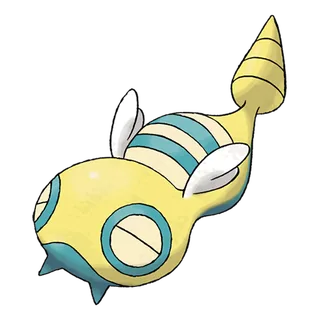
From there, the tunnel city fills up. An Alolan record says that Diglett and Dunsparce share one another's tunnels happily.
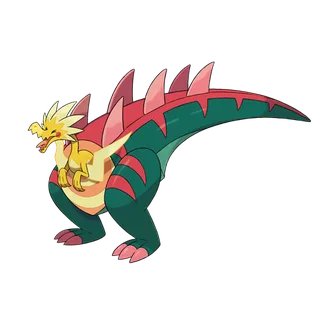
Not every visitor is friendly, though: Druddigon runs through the narrow tunnels made by Excadrill and Onix to catch prey UNOVA, and in Alola it sneaks into tunnels dug by Diglett and Dugtrio and quietly waits for prey to pass by.
Not drawn to scale — the bottom layer is a hundred times deeper than the one above it! Tap a digger to read its record.
Tap any digger in the cutaway.
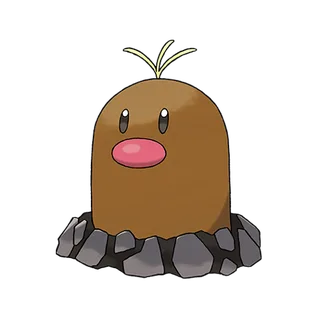
After living in soil with high iron content for some time, three steel whiskers sprouted from the top of its head.Its golden hairs work as sensors that it pokes out of its burrow to watch its surroundings, and they wobble when it talks with its comrades. Digging through volcanic rock has made Alola's Diglett more powerful than Diglett elsewhere. Onix · 8.8 m · 210.0 kgBores through the ground at 50 mph, eating boulders as it goes. A magnet in its brain acts as a compass HOENN. As it grows older its body becomes rounder and smoother HOENN, and its stone parts harden until they are like black diamonds KANTO. Its old tunnels become homes for Diglett. Dunsparce · 1.5 m · 14.0 kg
Diglett and Dunsparce share one another's tunnels happily.ALOLA A rare peaceful roommate story from underground. Druddigon · 1.6 m · 139.0 kgRuns through the narrow tunnels formed by Excadrill and Onix and catches prey with its sharp claws UNOVA. In Alola it slips into tunnels dug by Diglett and Dugtrio and quietly waits for prey to pass. Durant · 0.3 m · 33.0 kgDurant dig nests in mountains and
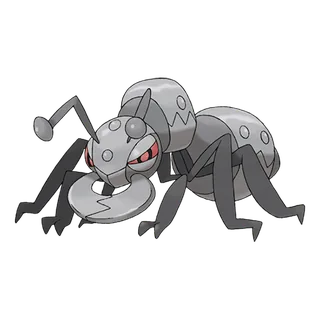
build their complicated, interconnected tunnels into mazesUNOVA, laying their eggs deep inside GALAR. The whole colony works together: each member plays a different role in driving away Heatmor, their natural predator. Heatmor · 1.4 m · 58.0 kgThe natural predator of Durant. It draws air in through a hole in its tail, turns it into fire, and uses the flame like a tongue to melt through Durant's steel armour UNOVA KALOS. If the hole in its tail gets blocked, Heatmor falls ill GALAR. Aggron · 2.1 m · 360.0 kgWhile seeking iron for food, it digs tunnels by breaking through bedrock with its steel horns SINNOH. Excadrill · 0.7 m · 40.4 kg
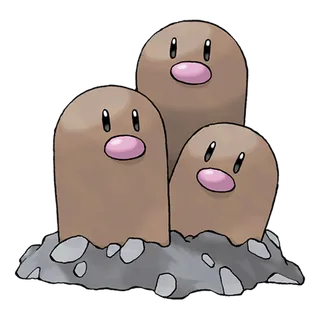
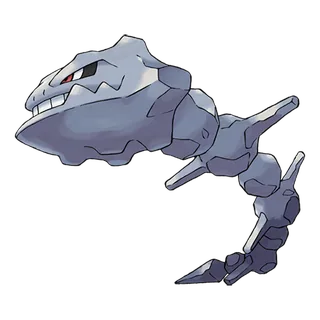
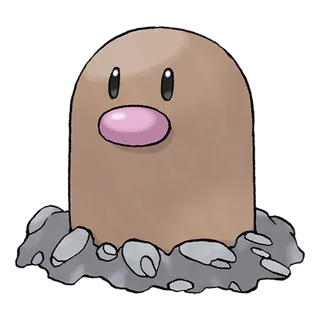
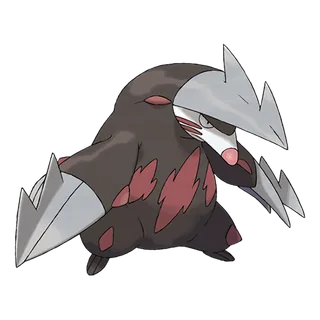
More than 300 feet below the surface, they build mazelike nests.Their digging can damage subway tunnels — but Excadrill can also help with tunnel construction UNOVA. Many tunnels that look natural were really dug by Excadrill. Known as the Drill King, it tunnels at over 90 mph GALAR. Steelix · 9.2 m · 400.0 kgLives even deeper than Onix, digging toward the planet's core, and has been recorded at depths of over six-tenths of a mile HOENN. Its body is harder than diamond — a Hisui researcher noted that not even diamond can scratch it. Dugtrio · 0.7 m · 33.3 kgRecords from Kanto, Johto, Sinnoh, Unova, Kalos, Alola and Galar put Dugtrio about 60 miles down — and several of them say over 60 miles. That is a hundred times deeper than Steelix's record. A Kanto record says it triggers huge earthquakes by burrowing 60 miles underground. That's why this layer has a question mark: see the debate below.
reaching a depth of over six-tenths of a mile underground.
The records clearly clash. If the Dugtrio records are right, Steelix's “record” isn't one. If the Steelix record is right, what is going on 60 miles down? You decide.
Dugtrio are triplets that split from one body, so each head thinks exactly like the other two, and they work together to burrow endlessly HOENN. They can burrow at over 60 MPH, so some people mistake it for an earthquake KANTO.
On rare occasions a huge fight breaks out over which head gets to eat first. And: no one has ever seen the parts of it concealed underground.
ALOLA
KANTO · HOENN · ALOLA POKÉDEX
Up near the surface, Diglett has an unusual job: farmhand. Hoenn records say the soil is left perfectly tilled wherever it burrows, so Diglett are raised on most farms. Alolan farmers cherish it because its droppings enrich the soil — and some go further, planting the kind of tree Diglett like to eat around their crops so that Diglett will plough the fields for them.
But Alola's records are honest about the other side. Some farmers there think Diglett is a pest that chews up their vegetables. One Pokémon, two reputations — it depends which farmer you ask.

Feeds on iron ore it digs from mountains to build its steel body. Occasionally, it causes major trouble by eating bridges and rails.
HOENN Kanto calls it a pest that comes down from the mountains to eat bridges and train tracks; Galar adds railroad tracks to its menu.

It nests on mountains where iron ore is buried, so it often clashes with humans mining the ore HOENN. It tempers its body by drinking mineral springwater until it is bloated.

Digs with its hard claws and crunches gems with its thick, pointy teeth. Carbink is its favorite food.
ALOLA

Discovered a hundred years ago in an earthquake fissure UNOVA KALOS. In Galar, Dwebble is the natural enemy of Roggenrola and Rolycoly.
You met another metal-eater back in Town & Home: Klefki, which lived in mines until the minerals it eats ran short — and then moved in with people.
Some Pokémon team up with a completely different species. Some live in a pack with a boss. And some are so close to their partners that it's hard to say where one Pokémon ends and the other begins.
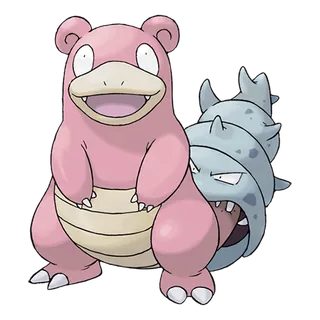
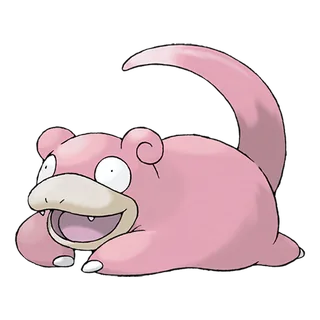
Slowpokefishing with its tail
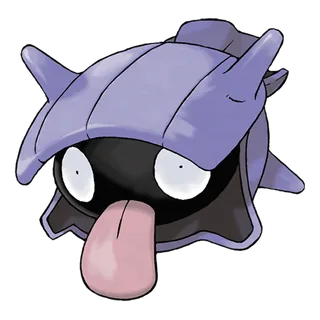
Shellderbites the tail
Slowbroone Pokémon, two passengersSlowpoke fishes by dangling its tail in the water. A sweet sap leaks from the tip JOHTO, and a Galar record says Slowpoke uses that sweetness to lure other Pokémon. But sometimes the thing that bites is a Shellder — and when a Shellder clamps onto its tail, the Slowpoke becomes a Slowbro.
What does each partner get out of it? The records have plenty to say:
The Shellder that latches onto Slowpoke's tail is said to feed on the host's leftover scraps.
KANTO It won't let go because of the tasty flavour oozing from the tail JOHTO. A Galar record says the sweet flavours make the Shellder feel as if its life is a dream. In Alola, its greed for more sweetness has even changed it into a spiral-shaped shell.
Sinnoh researchers say a Shellder bite seems to inspire it. Alola adds that it gets a flash of inspiration...which it forgets a moment later.
On the downside, its tail can't be used for fishing any more, so it has to grudgingly swim and catch prey itself HOENN. And if the Shellder is thrown off in a harsh battle, it turns back into an ordinary Slowpoke JOHTO.
It takes 5 seconds for it to feel pain when under attack.Johto: it won't notice a tail bite for a whole day. Sinnoh and Unova: it doesn't feel pain if its tail is bitten.
So — who gets the better deal? Shellder gets free food for life. Slowbro gets brilliant ideas it immediately forgets. You be the judge.
Also known as the Rainmaker Well. Locals believe that a Slowpoke's yawn summons rain. Records show that a Slowpoke's yawn ended a drought 400 years ago.

Slowpoke tails are its favorite food.
It has even come up on land to look for Slowpoke ALOLA.

It often breaks off and grows back without much pain ALOLA. Alolan home cooking dries the tails and simmers them into a salty stew; tails that fall off naturally are a precious ingredient. And in some places, Slowpoke is worshiped because people believe it rains whenever a Slowpoke yawns.
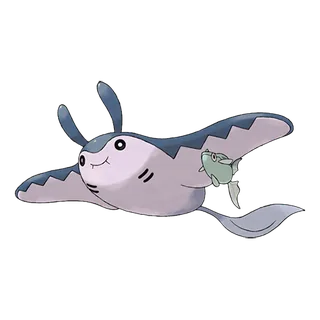
Remoraid use their dorsal fins as suction pads to cling to Mantine's underside and scavenge its leftovers JOHTO — Sinnoh calls it an adaptation to avoid foes.
Mantine doesn't mind its hitchhikers at all. An Alolan record says Remoraid clings to Mantine and shares in its prosperity
— and when its Mantine is attacked, Remoraid fights alongside it!
JOHTO · SINNOH · ALOLA POKÉDEX
…if a Mantyke spends much time with schools of Remoraid, it will eventually achieve evolution.
HISUI · RESEARCH NOTES · MANTYKEA Galar record adds that Mantyke swims along with a school of Remoraid, and they all fight together to repel attackers. Remoraid itself is no weakling: known as the sniper of the seas, it can hit prey with jets of water from over 300 feet away ALOLA — in Hisui it shot Burmy right off the branches they dangle from. Its evolution, Octillery, looks so different that, as the Hisui researcher wrote, for a long time, no one believed
one came from the other.

It lives inside the mouth of Dondozo to protect itself from enemies on the outside.

A brain that's 0.3 m tall, steering a body that's 12 m long. PALDEA

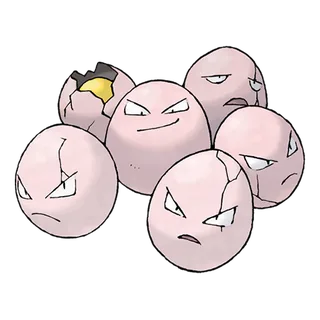
It looks like eggs, but was discovered to be a life-form more like plant seeds KANTO. Its six talk by telepathy and regroup fast if separated. Should one of the six be lost, the next morning there will once more be six.
ALOLA It gets nervous when it's not a group of six GALAR.

Each head has its own will; they discuss plans by telepathy before reaching a joint decision. When they want to go different ways, Exeggutor can't move at all ALOLA. A head that grows too big falls off and becomes an Exeggcute SINNOH.

Five of them are troopers, and one is the brass. The brass's orders are absolute.
They change formation constantly as they fight GALAR.

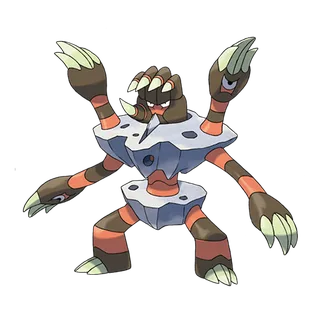
Seven Binacle come together to form one Barbaracle GALAR.

The trio is together from birth, constantly gathering honey to please Vespiquen SINNOH.
never appear to squabble.
The three don't seem to be very interested in one another.(And Alola says they freeze up when they disagree.)

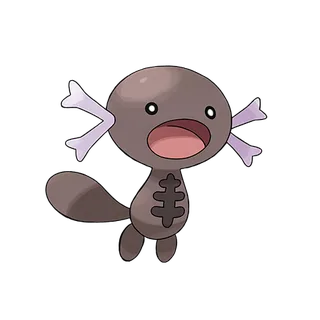
Lives at the bottom of ponds and swamps. It will carry Wooper on its back and ferry them across water from one shore to the other.
PALDEA (Paldean Wooper evolve into Clodsire — so this is a grown-up carrying the little ones.)

Acts as a caretaker for Dewpider, putting them inside its bubble and letting them eat any leftover food GALAR.

A messenger of the skies, carrying small Pokémon and eggs to safety in its bill SINNOH. Its beak is big enough for a small child to fit right inside. No one knows where it's taking them.
ALOLA

It can ferry people across the water.
KANTO
Climbs trees with its sharp claws and shares the berries it gathers, dropping them down to Sandshrew waiting below the tree.
GALAR
Pinsir gets into territorial disputes with Vikavolt. But for some reason, it apparently gets along well with Heracross in Alola.
They divvy up their prey evenly among the members of their pack.
ALOLA

Digs with its trunk and can carry loads of over five tons without any problem at all. Its copper body tarnishes in the rain, turning a vibrant green GALAR.

They came over from another region long ago and worked together with humans.
They live in herds GALAR.

Often found on construction sites and in mines, working alongside people and Copperajah GALAR.

Can carry over 10 tons across the Galar region without rest or sleep. In Alola it drags a 10-ton load along mountain roads for three days and three nights.

In Hisui, it voluntarily assists with tasks such as construction and clearing land.
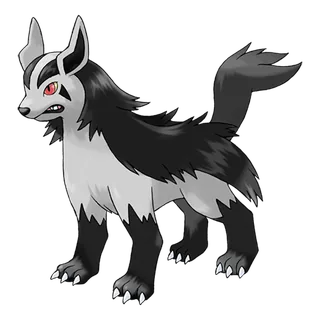
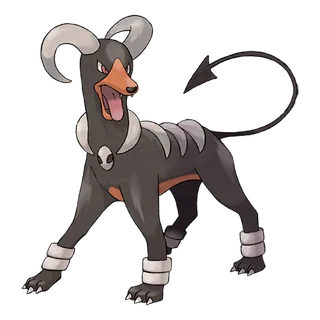
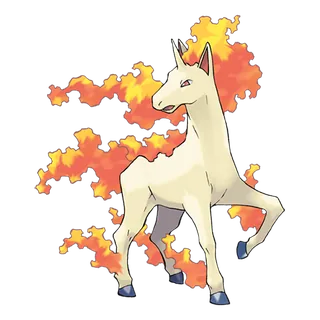
How do you choose a leader? Between them, the Pokémon of the world have tried almost every way there is. Houndoom settle it by fighting among themselves, and the one whose horns are raked sharply back leads the pack HOENN. Rapidash hold a race: The fastest runner becomes the leader, and it decides the herd's pace and direction of travel.
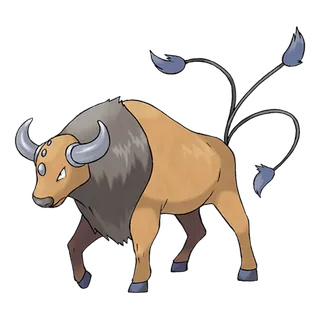
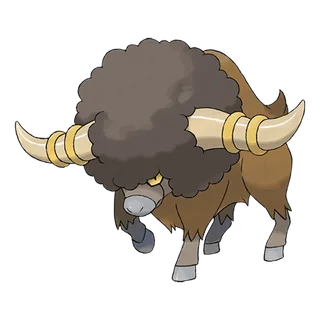
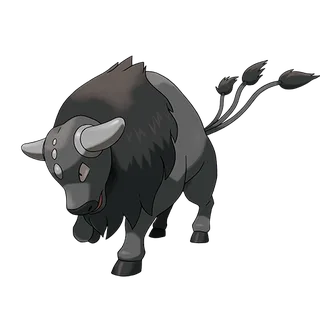
GALAR Tauros let their horns do the talking — The one with the longest, thickest, and most-scarred horns is the boss of the herd.
ALOLA They fight by locking horns JOHTO, and a Tauros with no opponent will charge at thick trees to calm itself down HOENN. In old Hisui, Luxray form packs, each having one male as leader.
Some bosses wear their rank where everyone can see it. Bouffalant live in herds of about 20, and the more hair on its head, the higher a Bouffalant's position. One that betrays the herd loses the hair on its head — for some reason GALAR. (Mind you, nobody argues with a Bouffalant for long: its headbutts can derail a train UNOVA.) And you have already met this rule out in the snow: the Delibird with the biggest tail is the boss of the flock.
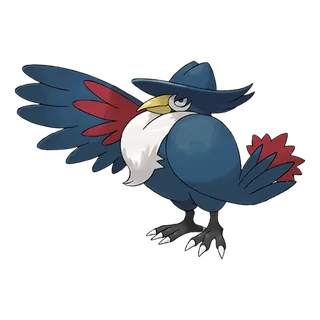
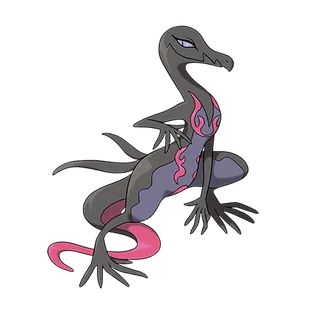
Not every boss is a kind one. Honchkrow makes its Murkrow cronies bring it food SINNOH. Salazzle punishes any Salandit that couldn't bring it food with a fierce slap of its flame-spewing palm ALOLA. Bisharp pursues its prey in the company of a large group of Pawniard UNOVA. And Pancham, which follows Pangoro around like a henchman, has its leaf taken away when it makes a big mistake ALOLA.
The strongest packs, though, are the ones that work as a team. Mightyena never defy their leader's orders.
They defeat their foes with perfectly coordinated teamwork HOENN and chase down prey in packs of around ten JOHTO — although their first stage, Poochyena, will chase prey until it is exhausted, then turn tail if the prey strikes back. Houndour check each other's location using barks that only they can understand, so they can corner their prey JOHTO.
And a herd is a family as well as a team. A newborn Ponyta has no fiery mane at all; it grows in about an hour after birth HISUI, and the foal's legs grow strong as it chases after its parents SINNOH. Even the toughest herds change with the weather: riding Tauros is said to have started in Alola, where they are a little calmer — perhaps because of the climate — while Galar's Tauros won't let anyone ride them at all.
They live in the fields and mountains, gathering in large flocks. … They form remarkably large flocks and are constantly fighting amongst themselves. … It has left the flock, having gained strength enough to survive on its own.
HISUI · RESEARCH NOTES · STARLY, STARAVIA, STARAPTORGroup sizes written down in the records. The bars use a stretched scale so the small groups still show up.
Some Pokémon don't just live in their habitat — they build it. They spin, weave, dam, dig, hammer and sew. Some of the things they make are so good that people use them too.
The web it spins can be considered its second nervous system.
It can tell what kind of prey is touching its web just from the tiny vibrations in the strands HOENN.
Its webs are so sturdy they won't break even if you set a rock on them — and some fishermen weave its thread into nets to catch fish Pokémon ALOLA.
HOENN · ALOLA POKÉDEX
In some areas, people weave the string Ariados spins into cloth, popular for its strength ALOLA. Ariados spins thread from its rear and its mouth; it attaches silk to prey, lets it go, then follows the silk back to the prey and its friends SINNOH.
Cloth made with the wool of this Pokémon is surprisingly strong.
GALAR
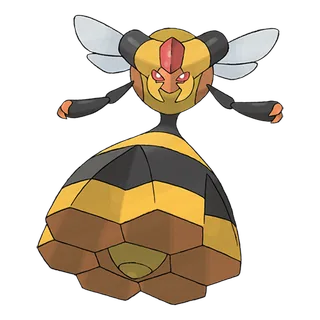
Its abdomen is a honeycomb for grubs, which it raises on honey collected by Combee. There is only one Vespiquen in a colony SINNOH, and it controls its colony with pheromones — a Vespiquen that gives off more pheromones has a larger swarm of attendants GALAR. In Hisui, it commanded its subjects to build its hive.
SINNOH · GALAR · HISUI POKÉDEX

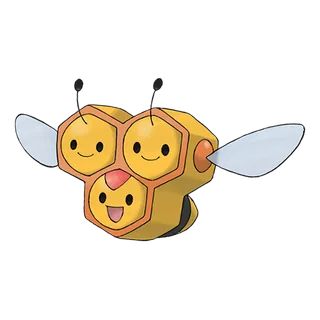
Each Combee is a trio, together from birth, gathering honey from flowers to please Vespiquen. At night they cluster together into a beehive to sleep. Each one has a slightly different taste in nectar GALAR — and Each swarm produces a different flavor of honey.
HISUI

Mothim loves honey but won't gather any itself. Instead it flutters around at night and steals honey from the Combee hive SINNOH JOHTO.

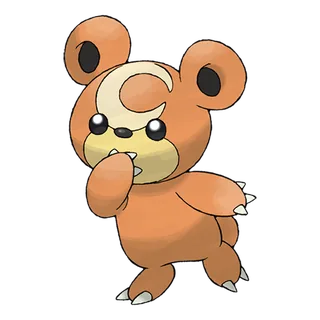
In Hisui, Teddiursa stole into Combee nests for the honey, and Beautifly chased Combee away from the nectar.
When they sleep, they gather up and form a giant hive of 100 Combee.
Researchers in Johto and Unova counted very differently. Ten times different! Perhaps hives come in many sizes — Galar's note about pheromones and swarm size might be a clue.
To shelter from cold, wintry winds, it covers itself with a cloak of twigs and leaves, and quickly remakes the cloak from nearby materials if it breaks SINNOH. Even if it is born where there are no cocooning materials, it somehow always ends up with a cloak.
The cloak is thinner when it's hot JOHTO. Underneath, the Hisui researcher found, the Pokémon is scrawny and vulnerable to the cold.
SINNOH · JOHTO · HISUI POKÉDEX
When Burmy evolved, its cloak became part of its body — the cloak is never shed. Its appearance changes depending on where it evolved: the materials on hand become part of its body SINNOH. It is said that a Wormadam that evolves on a cold day will have a thicker cloak JOHTO.
SINNOH · JOHTO POKÉDEX
Upon finding a small Pokémon, it weaves clothing for it from leaves
, using the cutters on its arms and sticky silk. It keeps its eggs warm with heat from fermenting leaves, and uses leaves to make warm wrappings for Sewaddle.
Sewaddle wear the clothes Leavanny made for them when they hatched — and also make their own, chewing up leaves and sewing them with sticky thread from their mouths. In the middle stage, Swadloon turn fallen leaves into nutrients, so forests where Swadloon live have superb foliage.
UNOVA POKÉDEX
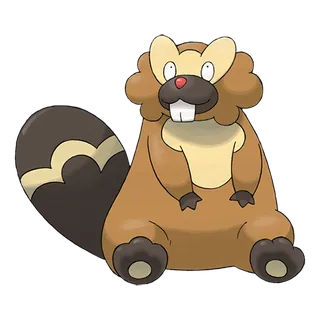
It makes its nest by damming streams with bark and mud, and is known as an industrious worker SINNOH. A river dammed by Bibarel will never overflow its banks, which is appreciated by people nearby.
Its fur repels water and is a fantastic material for keeping in heat HISUI.
SINNOH · HISUI POKÉDEX
There have been incidents involving Bidoof sauntering into villages and gnawing on the houses without a single care.
HISUI · RESEARCH NOTES · BIDOOFBidoof live in groups by the water JOHTO, gnawing logs and rocks to keep their front teeth worn down. A Sinnoh comparison found that Bidoof's front teeth grow at the same rate as Rattata's.
Dwebbleneeds a home
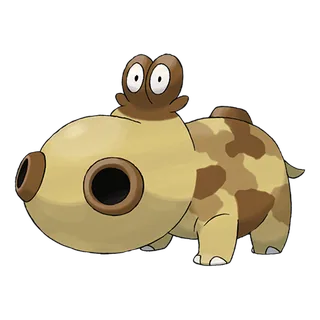
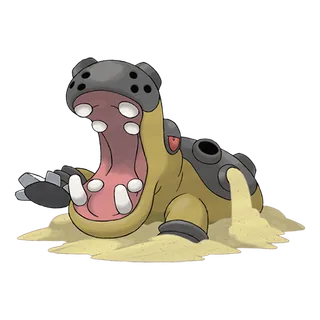
Hippowdonmoves into its ports!When Dwebble finds a stone it likes, it makes a hole inside and uses it as its home GALAR; it can easily melt holes in hard rock with a liquid from its mouth UNOVA. If the rock breaks, Dwebble stays agitated until it finds a replacement. And if there are no suitable rocks at all, Dwebble may move in to the ports of a Hippowdon.
No record says what Hippowdon thinks about it.
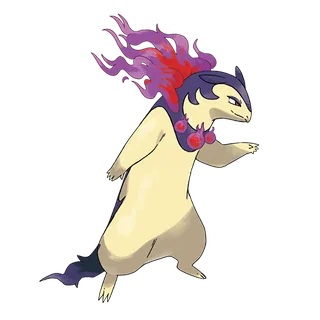
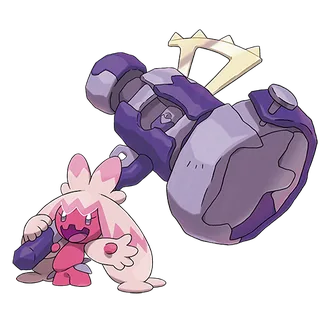
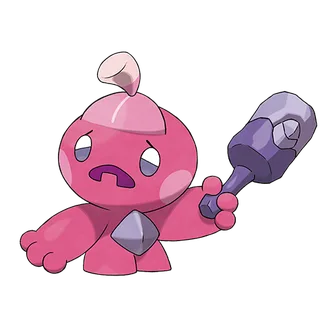
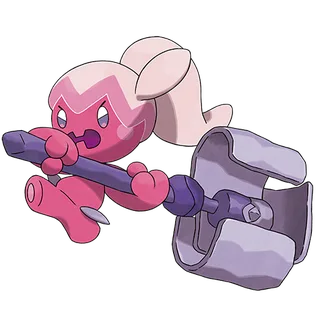
This Pokémon pounds iron scraps together to make a hammer.
It remakes the hammer again and again until it's satisfied — but the hammer is often stolen by Pokémon that eat metal PALDEA.

Makes its home in piles of scrap metal and tests hammers by smashing them against each other's. It attacks groups of Pawniard and Bisharp to gather metal for a large, sturdy hammer PALDEA.

Its hammer tops 220 pounds (≈ 100 kg — our conversion), yet it swings it easily, knocking rocks into the sky to hit flying Corviknight PALDEA.
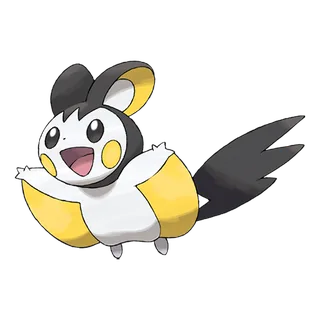
Pikipek can peck 16 times a second to drill holes in trees, which it uses for food storage and nesting ALOLA. Those holes don't stay empty: Emolga usually nests in the holes gouged by Pikipek. In the forest, as underground, one Pokémon's work becomes another's home.
It marks its territory with fluid that oozes from its tail tip, and over 5,000 different marks have been found. Each Smeargle's colour is set from birth JOHTO, though its hue changes with its mood ALOLA. In towns with many Smeargle, the walls are covered in graffiti — and some people pay big money for certain symbols.
JOHTO · HOENN · SINNOH · UNOVA · KALOS · ALOLA POKÉDEX
The chance of two Spinda having identical spot patterns is less than one in four billion
JOHTO KALOS. Spinda believes it is walking in a straight line ALOLA, and there are collectors who enjoy the tiny differences in spot patterns.
JOHTO · KALOS · ALOLA POKÉDEX
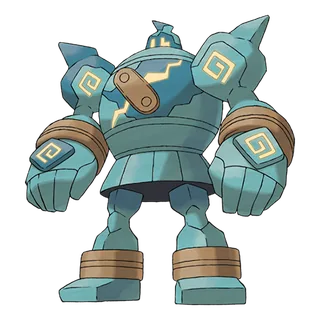
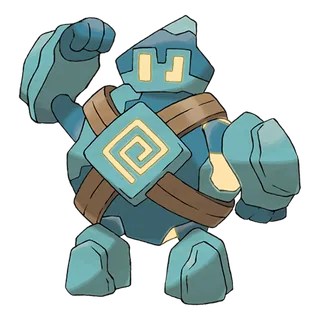
Made from clay by the science of an ancient civilization, it has been active for thousands of years. Nobody has been able to identify the energy that burns inside it. Galar records say some Golett are driven to keep lining up boulders, and no one knows why. Another Galar record says Golett still follows the orders its master gave it many thousands of years ago.
UNOVA · KALOS · HOENN · GALAR POKÉDEX
Its ancient makers are said to have ordered it to protect people and Pokémon. It flies across the sky at Mach speeds, and removing the seal on its chest sends its energy out of control. In Galar, artillery platforms built into the walls of ancient castles served as perches from which Golurk fired energy beams.
One theory says it holds a perpetual-motion machine inside — but that has never been proven.
UNOVA · KALOS · ALOLA · GALAR POKÉDEX
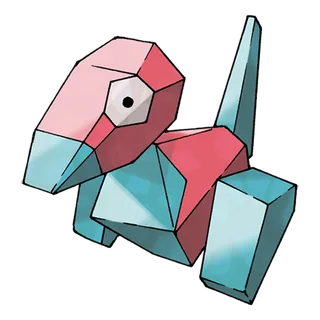
The first Pokémon ever created artificially, made entirely of programming code. It can turn back into data and move freely through cyberspace, and it is copy-protected, so it can't be duplicated by copying HOENN. Roughly 20 years ago, it was artificially created
by scientists who dreamed of exploring space — and many of its parts are now obsolete ALOLA. In Galar it patrols cyberspace, checking for suspicious data.
KANTO · HOENN · ALOLA · GALAR POKÉDEX
Long before calendars, people could tell the time of year by watching Pokémon. Some Pokémon change colour with the seasons. Some arrive with the first snow. And some set off on journeys across whole oceans.
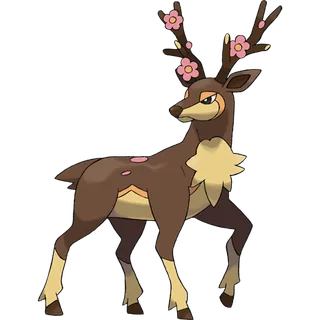
They migrate according to the seasons, so some people call Sawsbuck the harbingers of spring.
The plants growing on its horns change with the season, so people can tell the season just by looking at its horns. The leaders of the herd have magnificent horns.
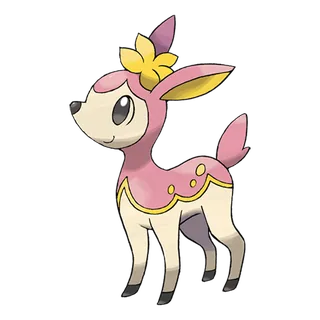
Its first stage, Deerling, changes the colour and scent of its fur as the seasons turn, and people use it to mark the seasons. Its colouring can also be slightly affected by temperature and humidity.
UNOVA · KALOS · HOENN POKÉDEX
Some Pokémon don't wait for the seasons to come to them — they travel to meet them. The clearest migrating bird in the records is Taillow, which dislikes cold seasons and flies over 180 miles a day in search of warmth (see Riders of the Wind). Jumpluff goes further still, circling the globe on seasonal winds. Under the sea, Corsola migrate to the southern seas when the water temperature falls HOENN.

Rumored to migrate across the oceans and visit Hisui's coastal waters only rarely.
HISUI

Can be seen floating offshore during seasons when the seas are warm HISUI.

People in Alola say it fled from its enemies by using its small webbed hind feet to swim from island to island.
Rivers have their travellers too. A Hoenn record notes that When evolution draws near, this Pokémon travels downstream from rivers
— that is Remoraid, heading for the sea. But the most famous river journey of all goes the other way.
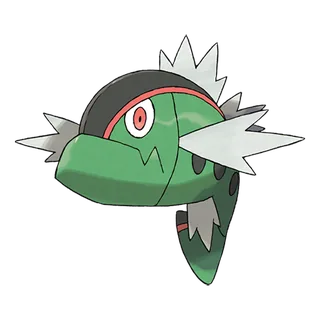
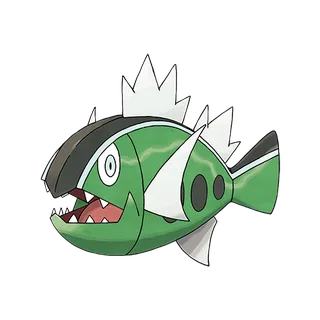
In the rivers of old Hisui, Basculin made a long journey upstream, against the current. Hisui had a gentle kind of Basculin with white stripes, too, and the researcher who studied it explained how it should be classed: I have categorized it as a regional form given the vast array of shared qualities.

Gentle — unlike the other kinds. Classed as a regional form in Hisui.

Evolves from the white-striped Basculin. The champion of Hisui's rivers.
Not every Basculin reaches the end of that journey. The Hisui notes say that Basculegion Clads itself in the souls of comrades that perished before fulfilling their goals of journeying upstream
— and that no other species throughout all Hisui's rivers is its equal. It is a Ghost-type Pokémon, but not a frightening one. You could say it carries its friends the rest of the way.
The air stored inside the rachises of Decidueye's feathers insulates the Pokémon against Hisui's extreme cold. This is firm proof that evolution can be influenced by environment.
HISUI · RESEARCH NOTES · HISUIAN DECIDUEYETake a Pokémon, put it somewhere new — snowy mountains, iron-rich mud, blazing sunshine, a town full of rubbish — and give it a very long time. What comes out can look like a completely different Pokémon. Researchers call these regional variants or regional forms.
The idea is older than you might think. In Alola, a white, calm, snowy-mountain Ninetales was revered as a deity incarnate before it was identified as a regional variant of Ninetales.
And long ago in Hisui, a researcher studying a gentle Basculin with white stripes made a careful decision: it was different in several ways, but shared so much with other Basculin that it counted as a regional form.
The best part about regional forms is that the records often tell us why they changed. Sunlight. Iron. Cold. Food. People. Even losing a fight. This chapter sorts them by cause — and ends with the ones where nobody knows.

Grass Psychic

Grass Dragon
The strong sunlight of the Alola region has awakened the power hidden within Exeggcute.
KANTO
Alola's records are proud of it. Alola is the best environment for this Pokémon.
Local people say this is how Exeggutor ought to look, and its image is carved into Alola's historical buildings and murals. As it grew taller and taller, it outgrew its reliance on psychic powers, while within it awakened the power of the sleeping dragon.
A Galar record agrees: blazing sunlight has brought out the true form and powers of this Pokémon. Even the Exeggcute produced in Alola are unusually heavy — their shells are packed full.

After living in soil with high iron content for some time, three steel whiskers sprouted from the top of its head.
KANTO

Living in mud with a high iron content has given it a strong steel body.
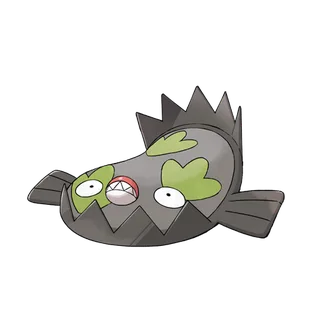
It lies in the mud using its lips as a lure, then clamps its jagged steel fins on prey. (The ordinary Stunfisk got its electricity organs thanks to bacteria in its mud flats.)

I suspect its metallic shell developed as a result of the mucus on its skin reacting with the iron in Hisui's water.
HISUI

After fleeing a volcanic eruption, it ended up moving to an area of snowy mountains.
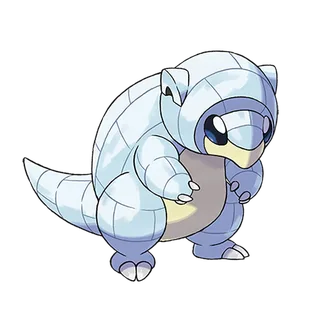
Its steel-hard ice shell is so hard it can't roll into a ball. An ancient Alolan festival tradition, still kept today, is a contest to slide Sandshrew across ice as far as you can!

A long, long time ago, it lived in the desert. It developed thick, sharp claws to plough through snow, and can climb an iceberg without slipping. Kanto: This is Sandslash's form after adaptation to a frigid environment.

It lived in snowy areas for so long that its fire sac cooled off and shrank; it now has an organ that makes cold instead. It freezes its breath into snowballs for playful snowball fights GALAR.

Air trapped in its hollow feather shafts insulates it against Hisui's extreme cold — the researcher's “firm proof” that environment can shape evolution.

It only evolves into this form in Alola. According to researchers, its diet is one of the causes of this change.
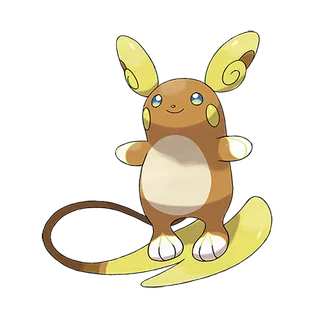
A Kanto record says it loves pancakes made with a secret Alolan recipe — and some wonder whether that recipe holds the key. It rides its own tail like a surfboard, lifted by psychic power; another name for it is “hodad”.

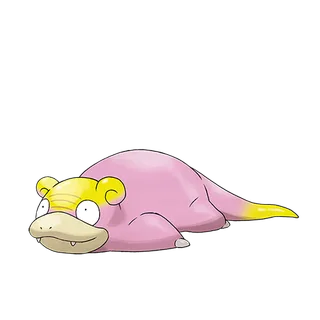
Because Galarian Slowpoke eat the seeds of a plant that grows only in Galar, their tails have developed a spicy flavor.
Sweet tails in most regions, spicy tails in Galar!

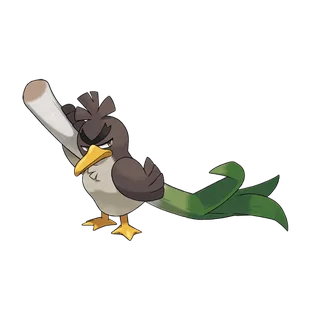
The stalks of leeks are thicker and longer in the Galar region. Farfetch'd that adapted to these stalks took on a unique form.
They are brave warriors who wield their thick, tough leeks in battle.

Brought to Alola to eat its garbage, it developed over time into this form. (Its full story is in Town & Home.)

A royal house that flourished in the distant past brought it here from another region.

Living with a savage, seafaring people has toughened this Pokémon's body so much that parts of it have turned to iron.
One species, two histories: pampered by royalty in one place, toughened by sailors in another.

Patrols its territory in pairs. I believe the igneous rock components in the fur of this species are the result of volcanic activity in its habitat.

The researcher believed its form has been influenced by the energy of the sacred mountain towering at Hisui's center — Mount Coronet.

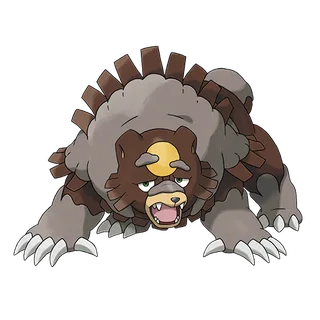
Not a regional form but a new evolution, found in Hisui: I believe it was Hisui's swampy terrain that gave Ursaluna its burly physique
and its power over peat.

The rich greenery of the Alola region is hard on Marowak. It controls fire to stay alive.
Its custom is to mourn its lost companions: mounds of earth by the roadside mark the graves of Marowak. A gentle, sad Pokémon that remembers.
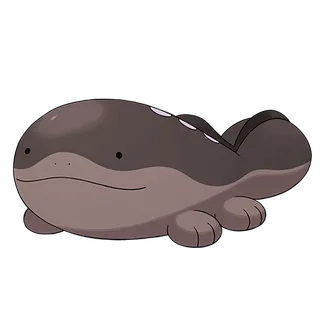
After losing a territorial struggle, Wooper began living on land. The Pokémon changed over time, developing a poisonous film to protect its body.
It's dangerous for Paldean Wooper to travel alone, so they line up in groups of three or four and help each other as they walk through the wetlands. Their evolution, Clodsire, ferries Wooper across the water on its back.
PALDEA POKÉDEX
Losing a fight changed a whole species' way of life — and gave it a new type. The underdog of the regional forms.
Sudden climate change wiped out this ancient kind of Corsola.
It absorbs others' life-force through its branches. Watch your step in places oceans once covered: what looks like a stone could be one — and it will curse you if you kick it.
GALAR POKÉDEX
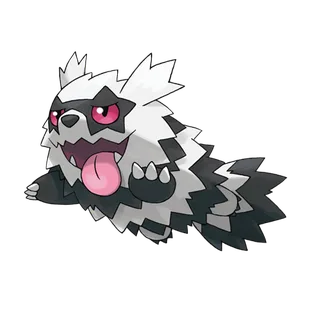
Thought to be the oldest form of Zigzagoon, it moves in zigzags and wreaks havoc upon its surroundings.
It even runs into other Pokémon on purpose to start fights.
GALAR POKÉDEX
Zigzagoon that adapted to regions outside Galar acquired this appearance.That kind is friendlier and calmer than the kind native to Galar. So which is the “regional form” — the Galarian one, or yours?
Turn the pages of the old Hisui notebook and the strange forms keep coming. On Hisui's precipitous cliffs, the researcher met a Sneasel with sturdy, curved claws made for climbing them, dripping a venom that affects the nerves of its prey. Meeting the ordinary, spiteful kind of Sneasel too, the researcher wrote that it shares roots with the Sneasel of Hisui — and then made a careful guess: I hypothesize that water and earth can affect Sneasel's mind and body.
The Hisuian Sneasel's evolution, Sneasler, prefers solitude and does not form packs. On the frozen highlands, no other species could hope to beat it.
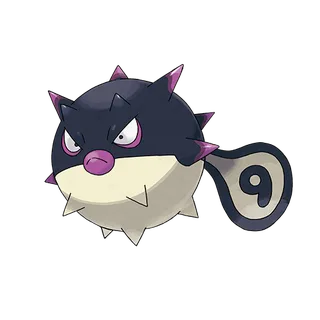
Down on the water, fishers detested Hisuian Qwilfish, which sprays poison from its spines and gets it everywhere. (A different form of Qwilfish lives in other regions,
the notes add.) Hisuian Braviary blasts lakes with shock waves, then scoops up any prey that floats to the surface. And Hisuian Avalugg barrels along snowy mountain paths behind an armour of ice on its lower jaw that puts steel to shame, shattering rocks as it goes.
Some entries are simply puzzling. Hisuian Voltorb is an enigmatic Pokémon that happens to look like a Poké Ball — and lets out a great, uproarious laugh after discharging electricity. Hisuian Zorua is described as a once-departed soul, returned to life in Hisui: a ghostly little fox from the old days.

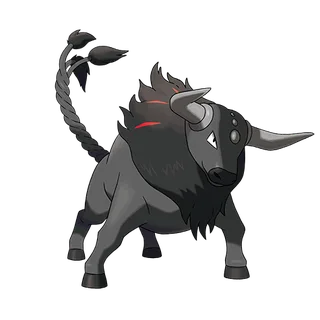
This kind of Tauros, known as the Combat Breed, is distinguished by its thick, powerful muscles and its fierce disposition.
It strikes weak spots with its short horns.

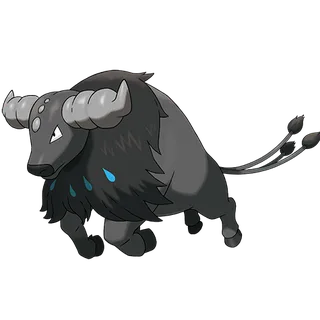
Named for the hot air it snorts from its nostrils. Its three tails are intertwined, and when heated by fire energy its horns can get hotter than 1,800°F.

Swims by jetting water from its horns; high body fat helps it float easily. Its high-pressure jets pierce right through its enemies.
Why did these change?
Alolan Vulpix and Ninetales, Galarian Ponyta, Galarian Mr. Mime and Paldean Tauros: the records describe them in detail — Galarian Mr. Mime tap-dances all day on a floor of ice it makes with its feet! — but none of them says why these forms appeared. Any explanation you hear is a guess. A careful naturalist says: “Unknown.”
Some Pokémon vary from place to place without becoming a separate form. Shellos's colours and shapes differ from region to region — two types are confirmed in Sinnoh, and one Galar theory says life in warm ocean water causes the variation. In Hisui, two Gastrodon of different colours that meet will inevitably fight. Vivillon's wing patterns depend on the climate and landscape where it lives, so Vivillon with many patterns are found all over the world. The pattern on Mantyke's back differs by region, and Galar's Mantyke seem sluggish, perhaps because of colder seas. Alola's Corsola and Gorebyss are especially vivid.
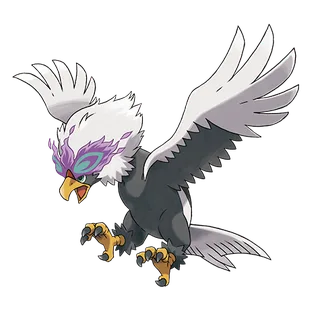
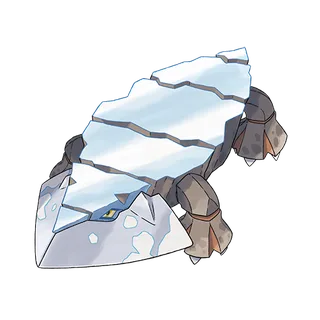
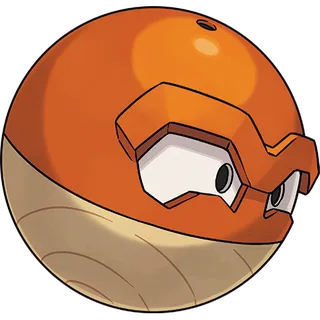
Some Pokédex records read like they were written by a researcher who couldn't quite believe what they were seeing. This chapter collects the strangest of them — every one of them true, as far as the records go.
the more deeply Abra sleeps, the farther its teleportations goGALAR
KANTO · HOENN · SINNOH · UNOVA · ALOLA · GALAR POKÉDEX
induce headaches just by being close by.
An Alolan record adds that Alakazam's overflowing psychic power gives headaches to anyone nearby — so perhaps it runs in the family.
Clocks run backward near a Kadabra KANTO.
Precision machines malfunction around it JOHTO KALOS.
Eerie shadows appear on TV screens, said to bring bad luck SINNOH ALOLA.
“A boy with psychic powers turned into a Kadabra.”
Several regions tell this rumour. In Hoenn's telling the boy was helping with research into extrasensory powers; in Kanto's, he simply woke up in bed one morning as a Kadabra. Alola calls it a theory. And the Hisui notes say it outright: however, this remains unverified
. A rumour that has lasted a very long time — but still just a rumour.
Apparently, gold spoons are no good.ALOLA
KANTO · HOENN · ALOLA · HISUI POKÉDEX
Hoothoot has an internal organ that senses and tracks the earth's rotation HOENN, which is why it always keeps perfect time. In Alola, people of old considered it a divine messenger sent to tell the time.

It works hard to keep its pitch-black tail hidden, living quietly in dark caves and moving only at night. It is said to be proof the tail hides a secret.
SINNOH Attack the tail and it won't put up with it HOENN. What's the secret? No one has written it down.

First seen at a company that makes Poké Balls. Why it looks like one is still a mystery HOENN. Johto research found it was discovered around the time Poké Balls were introduced, and that its components are not found in nature
. A rumour says it was created when a Poké Ball was hit by a powerful pulse of energy.

It never attacks first — it only endures. When two or more Wobbuffet meet, they hold endurance contests, sometimes to see who can go longest without food.
Ditto rearranges the structure of its cells to turn into whatever it sees. A field checklist, from nine regions of records:
if made to laugh, it can’t maintain its disguiseJOHTO PALDEA
KANTO · JOHTO · HOENN · SINNOH · UNOVA · KALOS · ALOLA · GALAR · PALDEA POKÉDEX
Once a Gyarados starts rampaging, its violent blood doesn't calm until it has burned everything down. There are records of this Pokémon’s rampages lasting a whole month.
HOENN Another Hoenn record blames its temper on the brain cells of Magikarp undergoing a structural transformation when it evolves.
Ancient literature records a Gyarados that razed a village SINNOH KALOS, and some regions call it the deity of destruction ALOLA. In Hisui, a researcher suspected that Gyarados was the true identity of a dragon in ancient texts that destroyed a village with white-hot beams from its mouth.
KANTO · HOENN · SINNOH · KALOS · ALOLA · HISUI POKÉDEX
Lays several highly nutritious eggs a day and shares them with injured people and Pokémon — though a Sinnoh record says it won't share with those who have evil in their hearts. Its eggs were overharvested in the past, so Chansey numbers are still very small ALOLA.
This species was once very slow.
It learned to flee quickly to protect its eggs GALAR — and Alola adds that egg thieves made it a faster runner.
SINNOH · ALOLA · GALAR POKÉDEX
It senses sadness through its fluffy fur and rushes to a sad person, however far away
, to share an egg that brings a smile to any face HOENN. Anyone who takes even one bite becomes unfailingly caring and pleasant to everyone JOHTO.
Even the fiercest Pokémon calm down after eating one, and the eggs fetch the highest prices on the market ALOLA. It nurses sick Pokémon back to health, and Hisui records say its eggs bring good fortune.
HOENN · JOHTO · ALOLA · GALAR · HISUI POKÉDEX
Turn the lamp down low. These are the records researchers wrote about Ghost-type Pokémon — spooky, sometimes sad, often surprisingly funny. Read them as the old warnings they are.
This Pokémon’s body is 95% made up of gases
, so strong gusts of wind blow it away SINNOH. Groups of Gastly cluster under the eaves of houses to shelter from the wind HOENN. A faint sweet smell lingers when one is near ALOLA.
SINNOH · HOENN · ALOLA POKÉDEX
Its tongue is made of gas, and old records warn that its lick steals life force and sets off shaking that won't stop. If a Haunter beckons to you while floating in the dark, you must never approach it
HOENN. If you feel watched in darkness when no one is around, a Haunter is there KANTO KALOS.
KANTO · HOENN · KALOS POKÉDEX

An old folktale calls it the Signpost for Wandering Spirits. Sinnoh records say it tugs on children's hands to steal them away — However, it gets pulled around instead.
Alolan stories say it dislikes heavy children, and in Galar it often runs off again when children play too roughly with it.

Bound to a crack in an odd keystone — 500 years ago, one Sinnoh record says, as punishment for its misdeeds. Galar says a traveller bound it with a mysterious spell, and counts exactly how many spirits it is made of. Writings found in Hisui describe it as born from five score and eight malevolent spirits
.

A discarded bug shell that came to life.
Its body never moves, not even a twitch, and it doesn't breathe; it floats though its wings stay still. It turns up, unasked for, in a Poké Ball when a Nincada evolves. Peering into the crack on its back is said to steal your spirit.

It carries a mask that was its face when it was human, and sometimes looks at it and cries UNOVA. Each Yamask keeps memories of its former life.

It pretends to be an elaborate coffin covered in pure gold; grave robbers who get too close end up trapped inside its body. Galar says pictures of it decorate ancient tombs as symbols of kings' wealth — and that people believe it no longer remembers that it was once human
.
Five twenties make 100; add eight and you get 108 — exactly the number of spirits the Galar records count. And look at the weight on the card: Spiritomb's Pokédex weight is exactly 108.0 kg. The records never point that out. It's our own observation — maybe a coincidence, maybe not.
Its actual appearance is unknown.
A lonely Pokémon, it hides under an old rag so it can get closer to people and Pokémon. The rag is shaped like a Pikachu — which, Galar researchers note, only makes it creepier.
The records tell of those who saw underneath: a scholar ALOLA, a passing Trainer who glimpsed it when a gust of wind lifted the rag, and a scientist who peeked “in the name of research” GALAR. All of them came to a terrible end. And if anyone breaks the neck of its disguise, Mimikyu never forgets who did it.
Paldean records say it was only recently identified as a Pokémon; people used to think it was a ghost wearing a cloth.
ALOLA · GALAR · PALDEA POKÉDEX
In Lavender Town, in Kanto, stands the Pokémon Tower, where people come to remember the Pokémon they have lost. For a time, anyone who climbed to its upper floors met something that would not let them pass: a ghost that nobody could identify, which wanted only for them to go away. Without a Silph Scope, nobody could even tell what Pokémon it was.
Then a young trainer climbed the tower carrying a Silph Scope, and at last the ghost could be seen for what it was. It was the restless soul of a Marowak — the mother of a little Cubone — lost because of Team Rocket. Her spirit had stayed behind in the tower. When the trainer faced her, the mother's soul was calmed, and she departed in peace.
Every Cubone, the Pokédex says, wears the skull of its departed mother, so no one has ever seen its real face. Hoenn records say a Cubone sees its mother's likeness in the full moon, and cries. But they also say that one day a Cubone overcomes its grief and grows tough — and that is a Marowak. Johto records add that, somewhere, there is a graveyard just for Marowak.
Not every ghost story ends in fear. Remember Banette, the discarded doll from Town & Home, still searching for the child who threw it away? The Alolan records give it a gentle ending too: some say that if you treat a Banette well, it will be satisfied — and once more become an ordinary stuffed toy.
A Pokémon that looks like a relative but isn't. Fossils that don't fit together. Creatures from a lost expedition's book. And visitors from other worlds. This is the chapter for detectives.
You'd think that if two Pokémon look alike, they must be related. Researchers in Paldea and Kitakami found three pairs that prove otherwise. Their explanation of the first pair is one of the cleverest sentences in any Pokédex: the likeness seems to be a coincidental result of environmental adaptation
. In other words, if two Pokémon live similar lives in similar places, they can end up shaped the same way — without being family at all.

Ground

Water
a coincidental result of environmental adaptation
— entirely different species. PALDEA

Water Poison

Ground Grass
Toedscool is a completely different species
— sea versus forest. PALDEA

Ghost

Grass Ghost
It looks like a regional form of Sinistea — but researchers recently discovered the two Pokémon are entirely unrelated
. KITAKAMI

Its mouth is on top of its head, so it struggles to eat what it catches.

Its legs can run at over 40 mph — but it can't breathe unless it's underwater.

It has a hard time walking.

Its upper half is far too small for its lower body.
Deep in the Great Crater of Paldea lies Area Zero. Long ago, an expedition went down into it — and came back with stories that nobody believed. Its members described the creatures they had seen down there, and the author and natural historian Heath wrote them up. Accounts of his book differ. In one, the Scarlet Book, he names ancient-looking creatures such as Great Tusk and Scream Tail. In another, the Violet Book, he names strange, machine-like beings such as Iron Treads and Iron Bundle.
Either way, it ended badly. People believed the creatures were made up, and Heath and his team were discredited.
Now read what today's Paldea Pokédex says — and notice where it keeps pointing.

said to have split the land with its bare fists. Nothing is known about its ecology.

Both look like Cyclizar — which can sprint at over 70 mph while carrying a human — but far burlier, or far more ruthless.
They weren't made up. The creatures in Heath's writings are real, and they live in Area Zero to this day. Researchers now call them the Paradox Pokémon — and that is why the Paldea Pokédex can point straight back to a book that people once refused to believe. Heath and his team had been telling the truth all along.
Which leaves one last question, and nobody has settled it yet.
The time machine was eventually shut down. Ancient relatives, future relatives, or something else entirely? Researchers still argue.
Several Paldea Pokédex entries quote a magazine that the Pokédex itself calls “paranormal” or “dubious”. Its headlines are wonderful — and completely unproven. A good naturalist enjoys them, then files them under rumour.
OCCULTURETHE PARANORMAL MAGAZINE · HEADLINES QUOTED IN THE PALDEA POKÉDEX

Scream Tail resembles a Jigglypuff from one billion years ago!

Iron Thorns: a Tyranitar from one billion years in the future?

Sandy Shocks looks slightly like a Magneton that lived for 10,000 years!

Walking Wake matches an illustration said to show a super-ancient Suicune!

Iron Leaves: a Virizion from the future?

Gouging Fire looks like an Entei regenerated from a fossil!

Raging Bolt touted as Raikou's ancestor!

Iron Moth: a UFO sent to observe humanity?

Iron Jugulis: offspring of a Hydreigon that fell in love with a robot!

Iron Hands resembles a cyborg said to be a modified athlete!

Iron Valiant: a mad scientist's invention?
They came through Ultra Wormholes into Alola: life-forms from other worlds, labelled “UBs”. The International Police gave each one a code name, and the Aether Foundation's Faba created Beast Balls to catch them.
A life-form from another world, thought to produce a strong neurotoxin
. It appears to be a parasite, and witnesses report that people it clings to suddenly turn violent. Nobody knows whether it is sentient, though it sometimes behaves like a young girl. The International Police notes say it doesn't control its host directly — instead it awakens the host's own abilities and boosts them to extremes, to protect itself.
BuzzwoleSeen pulverizing a dump truck with one punch.
PheromosaSeen running across the land at terrific speeds — over 120 mph in an instant, says its file.
XurkitreeRaided a power plant. Some stand still like trees, arms and legs stuck in the ground. (Read it closely: the International Police file says “Lighting”, not “Lightning”.)
CelesteelaSeen flying at high speed — and burning down a forest by shooting a flammable gas from its two arms. 9.2 m · 999.9 kg: tied heaviest on record.
KartanaIts body, as thin as paper, is like a sharpened sword
. Witnesses saw it cut down a gigantic steel tower in one stroke. 0.3 m · 0.1 kg: tied lightest on record.
GuzzlordReported to have gobbled up mountains and swallowed whole buildings. It seems to eat constantly — yet its droppings have never been found
. It was the target of a top-secret mission.
PoipoleLiked so well in its own world that it's chosen as a first partner Pokémon there. Evolves into Naganadel (UB Stinger), which stores hundreds of litres of poisonous liquid.
StakatakaLooks like many life-forms stacked on top of each other. Discovered when stone walls started moving and attacking.
BlacephalonMakes its own head explode without warning.
Perhaps “in an instant” is about how quickly it gets going, not its top speed — but that's only a researcher's guess. Officially, the records clash.
Tallest. Heaviest. Tiniest. Lightest. These boards are sorted straight from the Pokédex height and weight records of all 1,025 species — so every ranking is exact, ties and all.
Some forms are so enormous that nobody has ever weighed them — their Pokédex weight is written simply as ????. They are kept off the sorter above, and get their own board here.


Eternamax Eternatus was seen during the Darkest Day crisis at Hammerlocke in Galar.
Speeds in the records come in different units — mph, knots, “Mach”, even “around the globe in 16 hours” — so this board keeps each kind of speed in its own lane.
Pidgeot — Mach 2.
Talonflame — dives at up to 310 mph.
Golurk, Garchomp and Latios are fast fliers too — meet them all in Riders of the Wind.
Rapidash — 150 mph, reached after just 10 steps; its hooves barely touch the ground, and the faster it runs the longer its mane's flames grow.
Pheromosa — over 120 mph in an instant.
Cyclizar — over 70 mph carrying a human.
Dodrio — nearly 40 mph. Dracovish — over 40 mph. Toedscool — 30 mph.
Barraskewda — over 100 knots (≈ 115 mph, our conversion).
Sharpedo — up to 75 mph, though it can't swim long distances.
Excadrill — over 90 mph.
Dugtrio — over 60 mph.
Onix — 50 mph.
Arcanine — over 6,200 miles in a single day and night (that averages ≈ 258 mph — our own sum). Dragonite — around the globe in 16 hours. Rapidash — across all of Hisui in a day and a half. Mudsdale — over 10 tons across Galar without rest.
Ninjask moves so fast it can't be seen even while its cry is clearly heard — so it was long believed to be invisible HOENN. Hearing that cry for too long gives you a lasting headache. Its “twin” from the same evolution, Shedinja, never moves at all.
“Regieleki is the fastest Pokémon.”
Ask any trainer who has battled one and they'll tell you Regieleki almost always strikes first. But read its Pokédex records and speed never comes up at all. Galar's researchers wrote only about electricity: Regieleki is a cluster of electrical energy whose whole body is a single organ that generates it — capable of creating all Galar’s electricity
— and removing the rings on its body is said to unleash its hidden power. Quickest in a battle and fastest on record are two different questions. For the second one, the records' answer is Pidgeot, Talonflame and Rapidash.
Kabuto has not changed in 300 million years. Living ones are found only very rarely.
Rayquaza has lived in the ozone layer for hundreds of millions of years.
Relicanth, the living fossil, unchanged for 100,000,000 years.
Eternatus arrived inside a meteorite that fell 20,000 years ago.
A frozen Mamoswine was dug from ice dating back 10,000 years.
A Bronzong was dug up at a construction site after a 2,000-year sleep.
Gimmighoul was born in a treasure chest about 1,500 years ago.
Spiritomb was bound to its keystone 500 years ago.
A Slowpoke's yawn ended a drought, says the sign at the Slowpoke Well.
Roggenrola was discovered in an earthquake fissure. And an Onix that lives over 100 years is said to become a Steelix.
Elgyem is said to have appeared from a UFO that fell about 50 years ago.
Lunatone was first discovered at the site of a meteor strike.
Porygon was artificially created roughly 20 years ago.
Jirachi is awake for only seven days out of a thousand years. It wakes if someone sings to it in a voice of purity, and legend says wishes written on the notes on its head come true. (Its full story is in Book 5.)
Type any Pokémon — by name or by Pokédex number — and see it standing next to a 10-year-old trainer, drawn to the height in its Pokédex record. Then pin it, pick another, and compare.
Wailord is 14.5 m long; Steelix is 9.2 m. Which is heavier?
Cosmog weighs just 0.1 kg. Its evolution, Cosmoem, is only 0.1 m tall — smaller than your hand. How heavy can that be?
The same Pokémon, raised in two different places.
One Wishiwashi, then the whole school.
Diglett and Wiglett look alike above the ground. Below?
Haunter is taller than a trainer. Can you guess its weight?
The little boss and its giant partner.
Eternatus, and the form it took on the Darkest Day.
The trainer is 1.4 m tall and weighs about 32 kg — roughly a 10-year-old. Each Pokémon is drawn so its longest side matches its Pokédex height — for long Pokémon such as Wailord, Onix or Steelix, that number is really their length, so they lie along the ground at full size. Weights in pounds and heights in feet are converted the same way the Pokédex does.
Remember the three kinds of sentence from Chapter 1? Here's where you use them. Some famous “facts” are recorded. Some are only rumours. And some aren't in any record at all. Sort them.
“Mew is the ancestor of all Pokémon.”
Every record hedges. Mew is said to have the genetic makeup of all Pokémon (Hoenn, Johto). Many scientists believe it is the ancestor of Pokémon (Sinnoh, Unova, Kalos). Johto records say researchers began studying whether it is the ancestor, because it can learn any move. No record confirms it. Mew is so rare that many experts still call it a mirage; it can make itself invisible at will, and appears only to those who are pure of heart and truly want to see it.
Where did Mewtwo come from?
The Pokédex says Mewtwo was created by recombining Mew's genes, the work of a scientist after years of gene-splicing experiments. A journal found in the Pokémon Mansion on Cinnabar Island records that Mew gave birth, and that the scientists named the newborn Mewtwo. Read side by side, both can be true at once.
“Arceus made the universe with its 1,000 arms.”
Every word about Arceus is framed as myth. Sinnoh's mythology describes it as the Pokémon that shaped the universe with its 1,000 arms
. It is told to have been born before the universe existed, said to have hatched from an egg in a place where there was nothing. Hisuian mythology calls it the creator of all things. What no text says: that anyone has seen it with 1,000 arms (its body has four legs), that it personally made each species, or that it made the Ultra Beasts. Always say: “the myths say…”
“Cubone is a baby Kangaskhan.”
A tempting guess — and not in any record. What the records do say is gentler: Cubone wears the skull of its departed mother, and grows up into Marowak once it has overcome its grief.
Fifteen questions, every answer somewhere in this guide. No guessing from what “everyone knows” — only from what the records say.